Interview
No more rely on cheap labour, rather focus on developing workers’ skills
Professor Dr. M. Niaz Asadullah
01 May 2026 20:43 PM
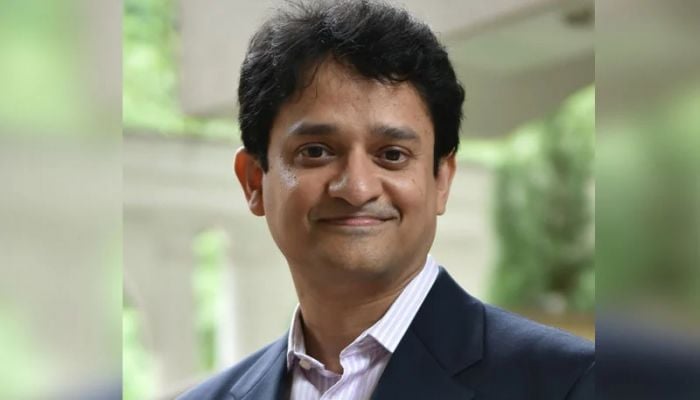
Dr. M. Niaz Asadullah is a professor in the Department of Economics at the University of Dhaka. He is also a Senior Fellow at IDEAS in Malaysia and a Visiting Professor of Economics at the University of Reading in the United Kingdom. He taught at the University of Malaya and Monash University in Malaysia for ten years from 2013 to 2024. Dr Niaz Asadullah, who serves as the South Asia head of the Global Labour Organization, obtained his PhD in the Economics of Education from Oxford University. He completed his undergraduate studies at Aligarh Muslim University in India and received his master’s degree in Economics from the University of Dhaka. The interview was conducted by Mahfuzur Rahman Manik, Senior Sub-Editor of Daily Daily Samakal.
Daily Samakal: How would you evaluate this year’s May Day in Bangladesh?
Niaz Asadullah: This May Day comes at a time when Bangladesh’s economy is facing high inflation as well as new challenges following the transition from Least Developed Country status. In the present global and domestic situation, the main theme of this May Day should be the protection of workers’ rights, dignity, and purchasing capacity. We need to seriously consider how much of the benefit of the high economic growth of the past decade has actually reached the workers. May Day is no longer just a formal event. It has become a reminder of the daily struggle workers face to survive in a market where commodity prices are very high.
Daily Samakal: Does that mean you are giving importance to market stability for workers?
Niaz Asadullah: For workers, the fall in purchasing ability is a major challenge. Real wages decline sharply because of high inflation. Job security is also under threat. Due to the global economic slowdown, employment opportunities have decreased in many sectors. In addition, the lack of skills among workers is becoming increasingly important. With the fourth industrial revolution, unskilled workers face a real risk of losing their jobs. We also need to address the slow growth in wages and the irregularities and discrimination in wage payments.
Daily Samakal: How effective are the existing laws in ensuring fair wages and workers’ rights?
Niaz Asadullah: Although our labour laws look quite modern on paper, their practical limitations are very clear. One major problem is the long delay in forming a wage board and putting its decisions into practice. Another important limitation is that the laws mainly protect workers in the formal sector. However, the majority of our workforce is in the informal sector and remains outside the protection of labour laws. Women workers and daily wage earners are particularly vulnerable. In their case, there is almost no opportunity for collective bargaining or effective representation.
To make the laws truly effective, we must strengthen the capacity and transparency of the monitoring agencies, such as the Department of Inspection for Factories and Establishments. However, fair wages cannot be ensured through legal measures alone. For long-term and sustainable progress, we need to move towards a productivity-linked wage system. In this model, the rise in workers’ wages is directly connected to the rise in their productivity. This benefits both employers and workers. It is important to remember that Bangladesh cannot become a high-income country by depending only on cheap labour. The government must increase investment in better quality education, vocational training, and healthcare for workers. Without improving the living standards of workers, it will be difficult to raise national productivity and build a strong foundation for the country’s economy.
Daily Samakal: You mentioned that most workers are in the informal sector. What policy changes are needed to protect their rights?
Niaz Asadullah: Around 85 percent of the workers in our labour market belong to the informal sector. Three areas need special attention for their protection. Firstly, we must introduce a universal pension and social security system and provide them with special insurance or safety nets. Secondly, workers should be properly registered. They can be brought under state recognition through digital databases, using their National Identity cards, and by improving systems such as the Bangladesh Labour Information Management System. Thirdly, a minimum wage structure should be introduced for the informal sector as well, with wages set according to different sectors.
Daily Samakal: What progress has been made in improving working conditions in export-oriented industries?
Niaz Asadullah: Since the Rana Plaza tragedy, there have been noticeable improvements in workplace safety and physical infrastructure over the past decade. Bangladesh now has the highest number of LEED-certified green factories in the world. However, further improvements are still needed in areas such as worker-management relations, fair wages, prevention of sexual harassment, mental health support, and the freedom to form trade unions.
Daily Samakal: How important and effective is the role of labour unions today?
Niaz Asadullah: Strong and independent trade unions are essential for a balanced labour market. However, there is much discussion about whether current trade unions are truly free from political influence and able to represent the genuine demands of workers. If there were effective and independent labour unions, many conflicts between employers and workers could be resolved through dialogue instead of street protests.
Daily Samakal: What changes are coming to the labour market because of technology and automation, and what is their impact?
Niaz Asadullah: Automation is a double-edged sword for us. In the garment sector, particularly in sewing and cutting sections, the use of automatic machines is putting the jobs of many women workers at risk. At the same time, technology is creating new types of employment opportunities. Our main goal should be to focus on reskilling and upskilling workers so that they can work alongside technology rather than being replaced by it.
Daily Samakal: What steps are necessary to ensure safety and equal opportunities for women workers in the workplace?
Niaz Asadullah: Three important steps should be considered. Firstly, safe transportation for commuting and affordable hostel facilities must be provided. Secondly, wage inequality must be eliminated by ensuring equal pay for men and women with equal skills doing the same work. Thirdly, sexual harassment must be strictly prevented by setting up active and effective complaint cells in every factory and by properly implementing ILO Convention 190. At the same time, public awareness should be raised about the legal provisions to protect women’s rights at work, as outlined in the Prevention of Sexual Harassment in Workplaces and Educational Institutions Ordinance 2026.
Daily Samakal: What can be done to protect workers employed abroad and to export skilled workers?
Niaz Asadullah: Expatriate workers are the main driving force of our economy. However, the current model of sending workers abroad may not be sustainable in the long run. For a major change in this sector, I would emphasise three key points. Firstly, we must focus on skill development and the export of quality manpower. We need to move away from sending only unskilled or low-skilled workers. If we can send skilled workers in areas such as nursing, information technology, caregiving, and high-tech manufacturing according to global demand, our remittance earnings will increase significantly. Secondly, we need to diversify our labour markets. A large part of our remittance income currently comes from the Middle East, which can be risky due to geopolitical issues. We should therefore open new migration corridors in East Asia, such as Japan and South Korea, as well as in Eastern European countries. Thirdly, we must reduce the influence of middlemen and brokers by promoting direct recruitment through government channels and digital processes. This would significantly lower the migration cost for workers.
Finally, we should not only call expatriate workers ‘remittance warriors’. We also need proper policies to protect their investments and to make use of their skills when they return home.
Daily Samakal: The rate of unemployment among highly educated people in the country is rising. At the same time, there is a shortage of skilled technical workers in the industrial sector. What changes do you think are needed in our higher education and technical education system to match the needs of the labour market and bridge this skill gap?
Niaz Asadullah: As a university professor, this issue concerns me greatly. Bangladesh is facing a clear paradox. On one hand, millions of graduates remain unemployed, while on the other hand, employers struggle to find workers with the right skills. To bridge this skill mismatch, we need to redesign university curricula and create stronger links between industry and academia. University courses should be aligned with actual market needs. Every degree programme should include at least one semester of mandatory industry internship. Technical and vocational education should be better integrated with general education so that even polytechnic students have the opportunity to pursue higher studies and research. There is also a serious lack of communication skills, problem-solving ability, and advanced digital skills in our workforce. These soft skills should be developed from the primary and secondary school levels. In addition, the National Qualifications Framework must be properly implemented.
In short, our current certificate-oriented education system needs to become skill-oriented. Investment in creating quality, work-ready human resources, rather than focusing only on physical infrastructure, will be the real driving force for Bangladesh’s future.
Daily Samakal: Thank you for your time.
Niaz Asadullah: Thank you. Best wishes to Daily Samakal.
The article was originally published in the print and online editions of The Daily Samakal and has been rewritten for the English version by Mohammed Humayun Kabir, Assistant News Editor.

