Experts call for tobacco harm reduction framework
Online Desk
29 May 2023 11:33 AM
Courtesy Photo
International
health experts speaking at a harm reduction summit stressed the need to
regulate less harmful alternatives of nicotine delivery in a risk-proportionate
manner, while urging authorities for stricter restrictions on traditional
cigarettes.
Notable public
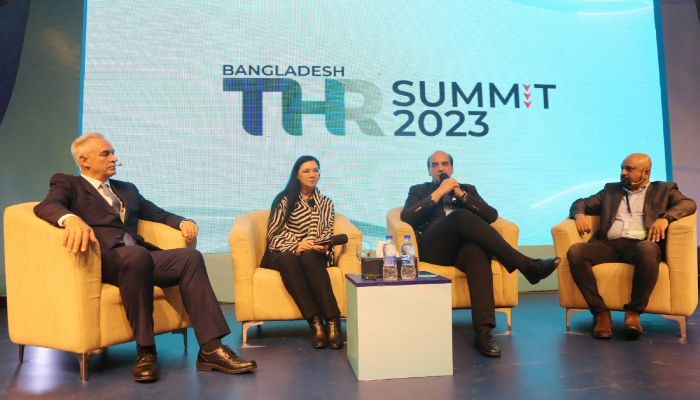
health experts, policymakers and media personnel gathered at the Bangladesh THR
Summit 2023 on May 27, 2023, to discuss the role of Tobacco Harm Reduction
(THR) in achieving the prime minister’s vision of a ‘Smoke-free Bangladesh’ by
2040, reads a press release.
THR is a
public health strategy to reduce or minimise the health risks to individuals
and wider society associated with the use of conventional tobacco products. THR
amplifies the value of smoking cessation, but where smokers are unwilling or
unable to quit, the use of innovative smoke free technologies, that deliver
nicotine without the harmful bits - smoke or tar.
These are
also referred to as Reduced Risk Products or RRPs including the likes of vaping
devices, oral nicotine pouches, heated tobacco products and other
non-combustible alternatives of nicotine delivery.
Currently,
the UK, Sweden, New Zealand, Canada and many other progressive nations of the
world are encouraging the use of such products to reduce smoking incidence by
regulating them through a risk-proportionate regulatory framework.
Moderated
by Dr Delon Human, the event featured globally renowned public health experts
such as Dr Derek Yach, Prof Mihaela Raescu, Dr Kgosi Letlape, Dr Marewa Glover,
Dr Konstantinos Farsalinos, and other experts such as Michael Landl, Masud-Uz-Zaman,
Federico Fernandez with representation in the audience
from ministries of industries, finance, commerce, home affairs, and other
institutions such as Bangladesh Investment Development Authority (BIDA).
While
delivering his keynote speech, Dr Derek Yach, former WHO cabinet director and
the person who co-led the development of the Framework Convention on Tobacco
Control (FCTC) said, “Harm reduction strategies have always been part of the
FCTC and tobacco control, but thus far not fully implemented.
“Bangladesh
has the opportunity to translate its economic transformation into accelerating
tobacco control through harm reduction. It will save lives."
Dr Delon
Human, a former secretary general of World Medical Association and an adviser
on global public health strategies to three Directors-General of the WHO and to
UN Secretary-General Ban Ki Moon, expressed his concerns at the event.
“The
fundamental principle of public health is to prevent and control disease and
premature death. With traditional tobacco control, there is little to no hope to
achieve the aim of a smoke free world by 2040,” he said.
“Frankly,
this is a death sentence for the almost 1.4 billion current smokers in the
world, which include 20 million kind citizens of Bangladesh. How can this
message of doom be turned into one of hope? By fully integrating harm reduction
policies, science and regulated products into tobacco control,” he added.
During her
panel session, Dr Marewa Glover, a New Zealand public health academic
specialising in smoking cessation opined, “The poor and indigenous people in
most countries suffer disproportionately from high smoking rates and
tobacco-related disease
“All
stakeholders need to work together to improve access to smoking cessation services,
including smokefree nicotine alternatives, as has been done in New Zealand,
through vaping products."
Dr Konstantinos
Farsalinos, a Greek cardiologist and the most cited THR researcher in the world
suggested, “The evidence is clear, smoke free nicotine alternatives such as
vaping products are at least 95 per cent less harmful than cigarettes and the
preferred method of quitting for most smokers.
“Along
with oral nicotine pouches, these are gateway products out of smoking and should
be made available in Bangladesh within well monitored, risk-proportionate
regulatory frameworks.”
Former
president of the World Medical Association and founder of Africa Medical Association,
Dr Kgosi Letlape emphasized on ensuring access to harm reduction tools as basic
human rights and highlighted the role of health professionals in contributing
to the goal.
He said, “Consumers
have a human right to receive accurate health information and risk
communication. Prohibition has never worked in public health. Rather empower
consumers and patients with the truth and accurate risk assessments of
products.
“Help them
migrate from more to less harmful products, if they can't quit. It is the
ethical duty of health professionals to assist consumers in this journey, to
help prevent tobacco-related disease and save lives."
According
to the speakers present at the event, Bangladesh has been known to be resilient
against all odds with the world taking notice of its immense potential – from
being a “basket case” to becoming one of the fastest growing economies in the
world.
With a
practical THR framework in place, Bangladesh too, can become a global role
model yet again by achieving the Honourable Prime Minister's vision of a
Smoke-Free Bangladesh by 2040.

