Bangladesh makes notable progress in occupational health and safety
Online Desk
24 Jan 2024 12:37 PM
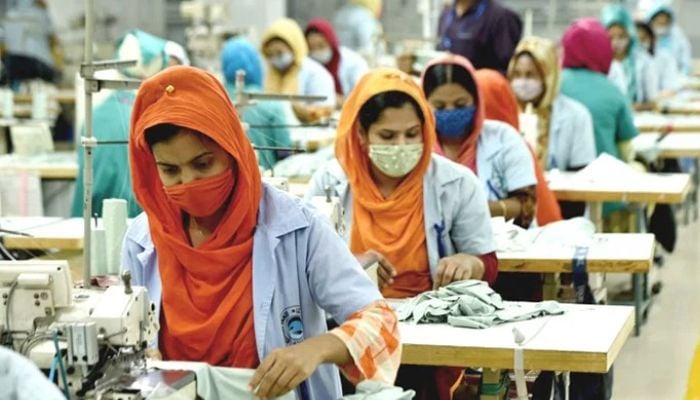
File Photo
Occupational Safety and Health (OSH) frameworks are proving to be effective means of preventing and addressing violence and harassment in the world of work. Bangladesh has made notable progress in improving OSH in the readymade garment (RMG) sector, according to a new ILO report.
The report, released on the United Nations website on
Wednesday (January 24), aims to shed light on how Occupational Safety and
Health (OSH) regulatory frameworks can help to prevent violence and harassment.
It has been highlighted in the report whether the general
duty of care for workers’ health provided for by OSH legislation is sufficient
to prevent violence and harassment in the world of work. It also focused on the
type of regulations best suited for work environments that provide safety and
dignity.
In Bangladesh, Occupational Safety and Health (OSH) is
primarily regulated by the Bangladesh Labour Act, which outlines the
responsibilities of employers, workers, and labour inspectorate.
The Government also developed a National Occupational Safety
and Health Policy 2013, and the Domestic Workers Protection and Welfare Policy
2015 to promote health, safety, and dignity in the world of work. OSH in
Bangladesh has recently focused on hazards related to physical health and
safety.
On violence and harassment, the Labour Act provides
protection for women at work in section 109, which prevents a woman being made
to work at night without her consent; and section 332, which stipulates that no
one in the workplace shall behave with a woman “[in a way] which may seem to be
indecent or unmannerly or which is repugnant to the modesty or honour of that
woman”.
“It is understandable that Bangladesh’s OSH framework is
focused on prevention and physical safety of workers given the history of
industrial accidents and disasters. These new findings show that Bangladesh can
leverage and expand the scope of its OSH frameworks to also address violence
and harassment at the workplace,” says Tuomo Poutiainen, ILO’s Country Director
for Bangladesh.
Bangladesh has made notable progress in improving OSH in the
readymade garment (RMG) sector but faces challenges in extending OSH and
protection against violence and harassment in other sectors including in the
informal economy.
The report titled Preventing and addressing violence and
harassment in the world of work through occupational safety and health measures
, is part of a research project aimed at providing “Practical guidance and
tools to prevent and address violence and harassment in the world of work: An
OSH perspective ”.
Jointly funded by the European Commission and the ILO, the
research findings are under discussion at a global conference taking place at
the ILO headquarters in Geneva on Wednesday.
The report highlights and lauds the Supreme Court of
Bangladesh’s critical role in the prevention and elimination of sexual
harassment, resulting in changes in the labour law. In 2009, the High Court
Division of the Supreme Court issued Directives in the form of guidelines on
Sexual Harassment for all workplaces and educational institutions in both the
public and private sectors.
The Directives require all organizations to form complaint
committees to receive sexual harassment-related complaints, conduct
investigations, and make recommendations.
They also provide for preventive measures, such as regular
training and information dissemination on gender equality and on the
prohibition of sexual harassment and place a general obligation on employers to
ensure a workplace that is not hostile to women employees.
Their implementation and enforcement are crucial for making
the world of work in Bangladesh a safe and dignified place for women.
/KN/

