Bangladesh risks rise in blindness unless ROP is addressed
Online Desk
04 Nov 2024 22:54 PM
Bangladesh risks an increase in the number of people with blindness unless it effectively addresses retinopathy of prematurity (ROP), an emerging cause of irreversible childhood blindness.
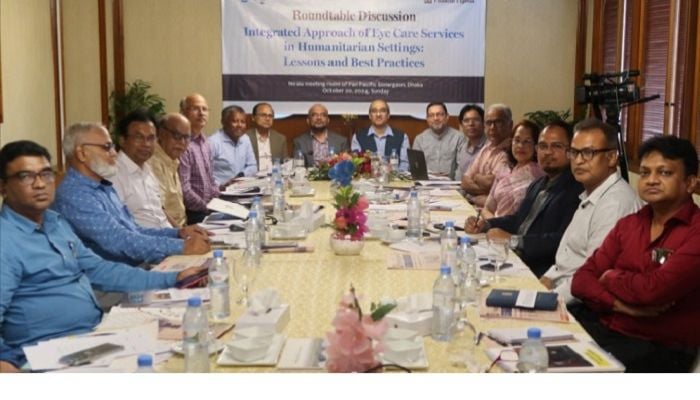
Prof Dr AHM Enayet Hussain, Bangladesh Chapter Chair of International Agency for the Prevention of Blindness (IAPB) and President of Ophthalmological Society of Bangladesh, issued the warning at a consultative meeting in the capital on Sunday, said a press release.
He said that annually 400 children would be added to the people with blindness if the country fails to prevent ROP-caused vision loss.
ROP is an eye disease that can happen in babies who are born premature – before 35 weeks’ gestational period – or who weigh less than 2 kilograms at birth.
According to UN, more than three million children are born every year in Bangladesh, of them 12.5 per cent or around 400,000, are born premature.
Laying emphasis on prevention to fight ROP, Prof Enayet said, “We need to give more attention to the prevention of premature delivery. If we can prevent premature delivery and take timely measure for premature babies, we will succeed in prevention of ROP.”
The leading ophthalmologist of the country said the eight RetCams, a modern digital imaging system for screening of ROP, available at different tertiary hospitals have to be fully utilised in the fight against ROP.
Speaking at the meeting titled “National ROP Program: Options and Opportunities” organised by Orbis International, Prof Mohammod Shahidullah, President of Bangladesh College of Physicians & Surgeons (BCPS), said Bangladesh had made tremendous progress in ROP management, but still the screening coverage is low here for lack of trained human resources.
He suggested imparting training to nurses to make them capable of ROP screening to enhance its coverage. “Why we’ll be depending on ophthalmologists for ROP screening. Doctors and nurses trained on the matter can perform it,” he said.
Prof Dr Khair Ahmed Choudhury, Director of National Institute of Ophthalmology and Hospital (NIO&H) said had necessary human resources in eye health been created, ROP services could have been decentralised.
Health experts, public health specialists, ophthalmologists, obstetricians, neonatologists and representatives from the government, donor agencies and NGOs working for eye health attended the meeting.
Several discussants said Bangladesh cannot effectively handle ROP due to the lack of awareness and proper referral despite having necessary modern equipment. They warned that the country’s fight against the disease would not succeed unless the situation changes.
Dr Nuzhat Choudhury, a professor at the Vitreo Ratina Department of BSMMU, said most premature babies are not timely referred from hospitals to the equipped tertiary eye hospitals.
“Even the medical staff there seldom send retinal image of the babies with ROP risk to the tertiary health facilities – a primary step of ROP screening,” she said.
Suggesting focus on the grassroots level awareness, Dr Nuzhat said, “We need a mapping of NICUs (neonatal intensive care units) and SCANUs (special care newborn units). We have to examine whether all the delivery facilities have NICUs or SCANUs. And ROP screening should be mandatory where there are NICUs or SCANUs.”
Health experts said obstetricians and neonatologists have a big role in combating ROP.
“Nowadays, when an obstetrician or a neonatologist treats a preterm baby, he or she, in most cases, advises the parents that the baby must undergo ROP screening. But the advice written on prescription is not enough. The doctor has to be sure that the parents understand the risk and are convinced to ensure the screening and referral care,” said ophthalmologist Prof Nazmun Nahar.
Dr Munir Ahmed, Country Director of Orbis International, said obstetricians and neonatologists have to adequately warn the parents that skipping their preterm babies’ eyes screening might result in the loss of their vision.
“When doctors and nurses communicate to the parents of preterm babies, they tend to take it lightly. So they have to give more emphasis on the risk of blindness,” he said.
If not detected and treated timely, ROP can quickly progress to blinding stage. Timely screening – within 20-30 days of birth – and treatment on early stage of ROP can prevent childhood blindness due to ROP.
Centre for Medical Education (CME) Director Prof Dr Syeda Shahina Subhan, paediatricians Prof Md Monir Hossain and Prof Md Abdul Mannan, obstetricians and gynaecologist Prof Dr Laila Arjumand Banu, retired Primary Health Care Director Dr Khaleda Islam, neonatologist Prof Sanjoy Kumar Dey, paediatric ophthalmologist Dr Kazi Shabbir Anwar, IRD Global Country Director Dr Tapash Roy, ophthalmologists Dr Tariq Reza Ali and Dr Mahjabeen Chowdhury, Orbis Associate Director Dr Lutful Husain, UNICEF consultant Dr Zahid Hassan and DGHS Program Manager Dr Md Zahurul Islam also spoke at the meeting.

