Discrimination observed in birth and death registration
Online Desk
17 Nov 2024 15:47 PM
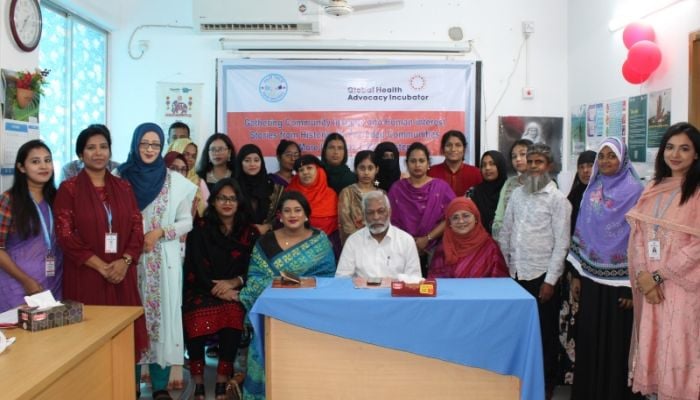
In a significant step toward creating a more inclusive Civil Registration and Vital Statistics (CRVS) system, a community listening session was held on November 10, 2024 at Nari Maitree’s headquarters in the capital. Organized by Nari Maitree and the Global Health Advocacy Incubator (GHAI) under Bloomberg Philanthropies’ Data for Health Initiative, the session aimed to amplify the experiences of marginalized groups and identify barriers they face in accessing CRVS services.
The event brought together 20 representatives from five distinct communities—ethnic minorities, gender minorities, persons with disabilities, women, and youth. Participants shared personal challenges in birth and death registration processes, highlighting systemic inequities and the urgent need for reforms.
Objectives of the Session
The primary goals of this session were:
1. To identify the challenges marginalized communities face in accessing CRVS services.
2. To document personal experiences related to birth and death registration.
3. To propose policy recommendations for a more inclusive CRVS system.
4. To equip participants with advocacy skills to engage decision-makers effectively.
Key Issues Highlighted by Communities
Gender Minorities:
Rani Chowdhury representing the transgender community mentioned, “From birth, many of us are given names—often male—that do not align with our true identities. As we grow and embrace who we are, our identities, behavior, and self-expression often diverge from the names assigned to us at birth. However, when we attempt to update these names to reflect our authentic selves, we encounter numerous obstacles. Society frequently stigmatizes our choice to adopt names and identities aligned with our community. This misalignment creates barriers in nearly every aspect of our lives. It affects our ability to secure jobs, access quality healthcare, pursue education, and even obtain housing. Essential documents like birth certificates, NIDs, and passports become sources of exclusion rather than empowerment.”
Nur-e-Alam, an intersex individual stated, “Many intersex babies, including myself, undergo unnecessary and repeated surgeries soon after birth, often to fit into a male or female category. These surgeries are harmful and can cause lifelong physical and emotional suffering. We demand an end to such practices. The birth registration process also fails us. There are only two options—male and female—forcing intersex individuals to fit into identities that aren’t ours. This lack of recognition causes significant hardship. For example, during my school years, I enrolled as a boy. But as I reached puberty, my body began to change, and I faced severe harassment. My peers ostracized me, teachers failed to support me, and I was ridiculed with graffiti labeling me as neither male nor female. To address these challenges, we urgently need reform. The birth registration form must include "intersex" as an identity alongside male and female. This simple but vital step would acknowledge our existence, give us the dignity of identity, and protect us from discrimination.”
Participants like Rani Chowdhury and Tanushree Ahmed shared how transgender individuals face misrepresentation in official documents, as they are often registered under birth-assigned male names, creating legal and social barriers.
The absence of targeted data on gender minorities in the CRVS system makes their inclusion in national statistics challenging.
Current registration forms restrict gender identification to binary categories (male and female), excluding intersex and non-binary individuals.
Ethnic Minorities:
Representatives, including Leon Richil from the Garo community, emphasized recurring errors in official documents due to linguistic and cultural misunderstandings. These errors result in additional administrative hurdles and costs.
Persons with Disabilities:
Rimon, representing persons with disabilities, shared that individuals in low-income areas often lack formal addresses, complicating registration. He also noted the financial burden of navigating the system, especially for those without parental support.
Women and Youth:
Women like Rahima, who live in rented accommodations, struggle with registration due to the lack of permanent address documentation.
Mitu Akhter and other youth participants highlighted delays and errors in documentation, which impact their access to education and employment opportunities.
The session featured an advocacy training module, empowering participants to communicate their needs to policymakers and advocate for systemic changes.
Mohammad Ruhul Kuddus, Country Lead of GHAI Bangladesh, emphasized the importance of integrating marginalized voices into the CRVS system. "An inclusive CRVS system ensures equitable access to essential services and fosters greater social and economic development," he stated. Nari Maitree’s Executive Director, Shaheen Akhter Dolly, reaffirmed the organization’s commitment to working with underserved communities. "The stories shared today will inform future policy recommendations and strengthen efforts to make the CRVS system truly inclusive," she said.
Insights from this session will serve as a foundation for policy reforms aimed at reducing barriers and ensuring equitable access to CRVS services for all communities.

