Donors reluctant to invest in off-grid solar systems
Samakal Correspondent
18 Jan 2026 20:14 PM
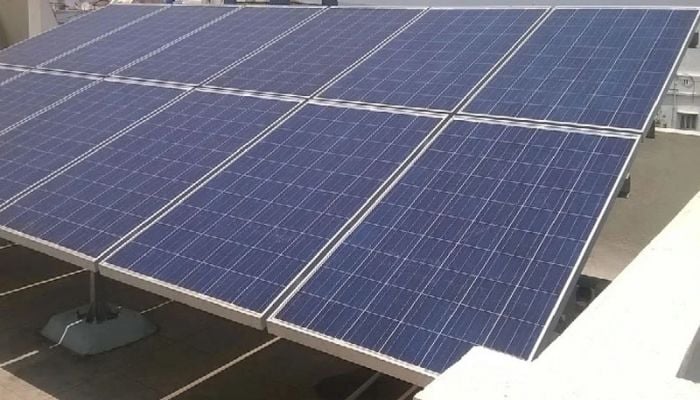
The Solar Home System (SHS) programme in Bangladesh is a very special example in the country's history of bringing electricity to people. The Infrastructure Development Company Limited (IDCOL) started this programme in 2003. Its goal was to give electricity to millions of homes that were not connected to the main power grid (these are called off-grid systems). The programme has continued for almost 20 years, with money from donors, help from non-government organisations (NGOs), and support from government policies.
In the past, people often praised Bangladesh's distribution of solar home systems as a big success. However, a recent review by the donor groups says there are still serious concerns about whether this investment will last for a long time. Without good planning, better coordination with the growing main grid, and regular technical repairs, it would have been hard to get the full long-term advantages from such a huge amount of investment.
Many international organisations funded the programme. These include the World Bank, Asian Development Bank (ADB), German development agency GIZ, KfW, Global Environment Facility (GEF), Japan International Cooperation Agency (JICA), IDA, Norway's NORAD, and the UK's DFID (which is now called FCDO).
The World Bank gave more than $700 million at the start while ADB provided around $200 million for different projects. Germany (through GIZ and KfW) gave grants and loans worth about €100 million. JICA offered technical help and some funding. In total, from 2003 to 2020, donors provided between $700 million and $800 million in grants and loans to the solar home system sector in Bangladesh.
Progress in bringing electricity to rural areas
Around six million families now have solar electricity. This has ended the darkness at night and made it easier for children to study and for small businesses to run. The World Bank and the International Energy Agency (IEA) have called Bangladesh's SHS programme a very successful renewable energy project known around the world. After having solar power, more girls are going to school, and small businesses have grown. Children no longer have to breathe in dangerous smoke from kerosene lamps. The country has saved billions of dollars every year by importing less kerosene. According to IDCOL, the programme has also reduced carbon emissions by about three million tonnes each year.
Problems and limitations
Since 2015, the market for solar home systems has fallen sharply because the main electricity grid has spread very quickly to rural areas. Almost no new systems are being installed now. Many NGOs have not been able to collect the monthly refunds from customers. Because of this, those NGOs have failed to repay their loans to IDCOL. This has created problems in returning money to the donors. A lot of customers' solar devices have broken down. Since many service centers have closed, people cannot get them repaired anymore. Some of the donor money has not been spent at all, while other parts of the money are stuck in an unclear situation.
What surveys and studies have shown?
A survey done by Daily Samakal and the research group Center for Policy Dialogue (CPD) found that the use of off-grid solar systems grew very fast in the middle of the 2010s for different kinds of setups. But now, keeping that growth going has become a big challenge. The number of working systems has gone down, mostly because the equipment is getting old and there is not much effort to replace or repair it.
A survey in 30 districts showed that 98.54 percent of the people asked said they now have a connection to the main grid. Only a very small number (1.46 percent) are still completely without grid power. The analysis by district shows that most homes in the chosen areas now have full grid connections. Only in a few places, like Chapainawabganj (6.25 percent), Chattogram (2.78 percent), Gaibandha (8.33 percent), and Noakhali (16.67 percent), are some homes still off-grid.
What donors think now
A review by the World Bank said that Bangladesh's Solar Home System Project was once the biggest off-grid renewable energy programme in the world. But now, its future looks uncertain because the market has changed and the grid has largely expanded.
An official from the German agency GIZ said that this project showed how solar energy can work well in developing countries like Bangladesh. However, there has been no integrated long-term plan to keep it going strong over many years. Consequently, donors are not very interested anymore in putting money directly into solar home systems for the future. Instead, they are more focused on bigger renewable energy projects, such as rooftop solar panels, solar power plants connected to the grid, and wind power.
IDCOL has also recently said that the old SHS project will not continue or be extended. Still, some donors believe that new fund should be provided to take care of and maintain the systems that are still working. This way, at least some of the benefits from the original investment can continue for a longer time.

