Still, villages are relying on solar power
Samakal Correspondent
21 Jan 2026 21:20 PM
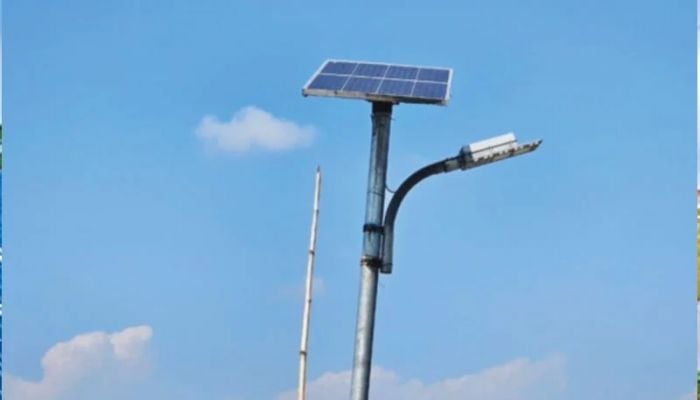
Home solar is now playing an important role in lighting up homes and supporting education in rural areas of the country. A recent nationwide survey conducted jointly by Daily Samakal and research organisation Center for Policy Dialogue (CPD) found that almost all families are getting enough solar power to fully illuminate their homes. About 96.12 percent of Infrastructure Development Company Limited (IDCOL Home Solar) users and 98.63 percent of TR-KABITA users said that their homes are fully lit. This brings the total home lighting rate in the country to 97.7 percent.
These results prove that home solar is capable of effectively providing light where grid power is limited or unreachable. Experts say that home solar can be relied upon for rural electrification. However, long-term maintenance and quality improvement are badly needed.
According to district-wise data, most areas are getting full house lighting. In both the IDCOL Home Solar Programme and TR-KABITA systems, most districts have achieved 100 percent illumination. However, there are some exceptions. For example, in Brahmanbaria, the IDCOL Home Solar Programme has a house illumination rate of 95.65 percent, and in Patuakhali, the lowest in both systems; about 72 percent.
The importance of solar lighting in education is also clear. The survey showed that 94.57 percent of families using the IDCOL Home Solar Programme and 95.43 percent of families using TR-KABITA reported that their children had enough light for their studies. The overall rate of sufficient light for education stood at 95.11 percent. However, in Gazipur, it decreased to 70.6 percent and in Patuakhali, it dropped to 55.6 percent. In Barguna and Kishoreganj, this rate was above 90 percent.
Differences were also seen in the household satisfaction index. The average satisfaction score of the IDCOL Home Solar programme users is 5.98 out of 10, while the average score of TR KABITA users is 8.21. The standard deviation of satisfaction for the IDCOL Home Solar programme is 2.88, meaning that user experiences vary by district. The TR KABITA score is relatively consistent; only 0.99. District-wise, users of the IDCOL Home Solar programme are less satisfied in Brahmanbaria and Chattogram, while scores are higher than 9 in Jamalpur and Sunamganj.
Experts say that home solar not only provides light, but also helps in education. However, in some districts, quality improvement and maintenance need to be increased so that all families get equal benefits. This presents both new challenges and opportunities for the government and policymakers. Expanding home solar is now essential to address the electricity shortage in rural areas and for other effective uses of the home, including education.

