Rooftop solar is a potential sector for Bangladesh
BSS
22 Jan 2026 17:18 PM
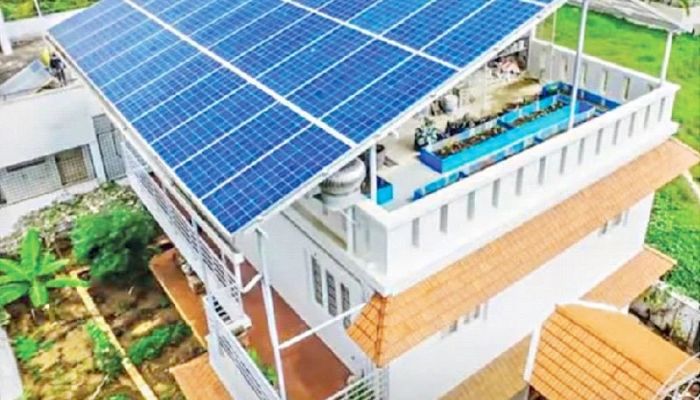
Bangladesh's success in subsidised solar home systems was enviable. But that success has waned. The use of solar home systems has decreased. However, consumers are interested in solar power as alternative, affordable and environmentally friendly electricity. In this case, rooftop solar power (rooftop solar) is showing hope. Especially, the sector stakeholders see the future of renewable energy in the country in the net-metering system (grid-connected) rooftop solar.
According to the latest information from the Sustainable and Renewable Energy Development Authority (SREDA), the total solar power capacity in the country stood at about 1,084 MW by the end of 2024. But only 190 MW of this came from rooftop systems. According to SREDA, the number of net-metering approved units in the country is 2,747, from which more than 110 MW is being generated. There are another 258 non-net metering systems, with a production capacity of about 88 MW.
Progress in the industrial sector
There is a glimmer of hope in the industrial sector. Yongwon Corporation has installed about 37 megawatts of solar panels in the Korean Export Processing Zone in Chattogram. They are generating electricity equivalent to the needs of 30 to 40 thousand households every day.
Similarly, the use of solar is increasing in the country's pharmaceutical sector. Renata has installed a 5.6 megawatt system. About 10 percent of the company's total electricity needs are being met from here.
Industrial group Ha-Meem Group has also come forward. They have installed 12.2 megawatts of rooftop solar on their roofs. As a result, their total carbon emissions have decreased by about six percent. The group has pledged to reduce carbon emissions to zero by 2050. To achieve this goal, they will need to install another 300 megawatts of solar panels.
State-funded company IDCOL has already installed 165 megawatts of solar panels in 52 factories. According to IDCOL, Bangladesh can get 4,000 megawatts of solar power if only industrial roofs are utilised. According to IEEEF researcher Shafiqul Alam, a large part of the solar plants will not be used effectively due to the limited power demand of government buildings.
What the survey found
A recent nationwide survey conducted jointly by Daily Samakal and the research organisation Center for Policy Dialogue (CPD) found that the use of solar systems has been declining for several years after 2020. The use of IDCOL's solar home systems and TR/KABITA solar panels is decreasing. Interest in using private rooftop solar installations has increased over the times.
An analysis of the effectiveness of solar home systems installed under various programmes shows that about 54% of solar installations are effective. Of these, the effectiveness of private rooftop solar systems is the highest - about 77 percent. In contrast, the effectiveness of systems installed under IDCOL and TR/KABITA programmes is relatively low; about 49% and 44%, respectively. The effectiveness of the installations in the 'other' category is at an intermediate level. These statistics show that rooftop solar systems are more successful in maintaining their effectiveness in the relatively long term.
Where are the challenges
The biggest problem is financing. It costs several crores of taka to install a five-megawatt solar on the roof of a medium-sized factory. Many companies are lagging behind in meeting the initial investment. Commercial banks are also reluctant to provide long-term loans in many cases. And the interest rates on the loans that are provided are so high that the project is not economically viable. Another major problem is the net-metering process. If consumers want to sell excess electricity to the grid, they have to go through lengthy paperwork and approval procedures. Some say it takes months to get approval.
In addition, there is the burden of duties and taxes. Advance income tax and various charges ranging from 14 to 28 percent are still in force on the import of solar equipment. Industry entrepreneurs say that if the government does not withdraw this tax, it will be difficult to expand rooftop solar on a large scale. The technical problems are also not small. Dust accumulation reduces the production of solar plants by half. But in many cases, projects cannot deliver the expected production due to the lack of a long-term maintenance plan.
The budget for the 2025-26 fiscal year did not include any special incentives for the rooftop solar sector. This has disappointed investors. Many believe that this policy inconsistency will be the biggest obstacle to the implementation of the government's ambitious announcement.
Despite all the obstacles, rooftop solar is a potential sector for Bangladesh. On the one hand, it will reduce import dependence, and on the other hand, it will keep the industrial sector competitive in the global market.

