Historic March 7 today
Samakal Correspondent
07 Mar 2026 19:33 PM
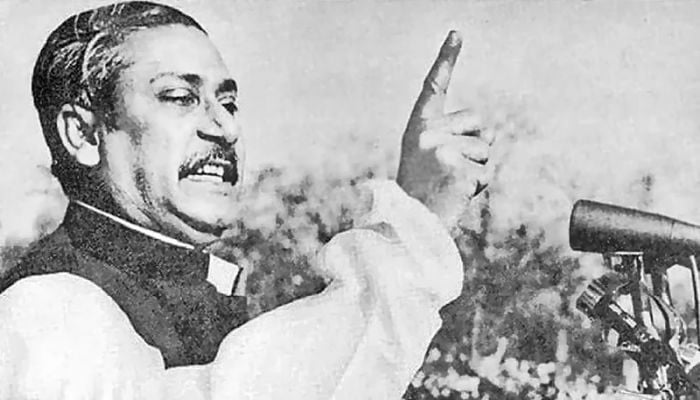
Today marks a historic March 7, an unforgettable day in the liberation struggle of the Bengali nation.
On this day in 1971, Bangabandhu Sheikh Mujibur Rahman delivered his iconic speech at a massive public gathering at Dhaka's Ramna Racecourse Maidan, now known as Suhrawardy Udyan, where he effectively called for independence.
In that powerful address, Bangabandhu proclaimed the central slogan of the Bengalis' fight against Pakistani oppression: "This time the struggle is for liberation, this time the struggle is for independence."
Dhaka, then the capital of East Pakistan, had become a city alive with processions as people from across the country arrived on foot, by bus, launch, or train to assemble at the Maidan.
The vast ground was filled with millions of individuals from every walk of life, irrespective of religion, caste, or tribe, creating an immense sea of humanity eager to hear Bangabandhu speak.
At around 3:20 in the afternoon, Bangabandhu appeared on stage, dressed in white pyjamas and Punjabi with a black coat, and took his place before the microphone.
Amid deafening slogans and thunderous applause, he waved to the crowd in acknowledgement before beginning his historic speech.
Delivering his words with the cadence of poetry, Bangabandhu declared: "Be ready with whatever you have. Remember, I have given blood and I will give more blood – I will free the people of this country, Insha Allah. This time the struggle is for freedom, this time the struggle is for independence. Joy Bangla."
In just eighteen minutes, this speech elevated the Bengali nation to extraordinary heights of resolve.
Bangabandhu put forward four key demands: the withdrawal of martial law, the return of the army to barracks, compensation for those martyred, and the transfer of power to elected representatives of the people.
The Dhaka Radio authorities had prepared to broadcast the speech live from the Maidan, and transmission had begun.
However, military authorities intervened to halt it, prompting all Bengali staff at the radio station to walk out in protest, bringing all broadcasting to a standstill.
Rumours quickly spread beyond Dhaka, but late that night the military relented and permitted the full speech to be aired.
Bangabandhu's March 7 speech stands as one of the most pivotal and meaningful events in Bangladesh's history of independence.
It kindled an undying flame of aspiration in the hearts of Bengalis who had grown doubtful, and it was largely in response to his call that the nation plunged into the liberation war.
Following the Pakistani forces' brutal crackdown on the night of March 25, Bangabandhu formally declared independence in the early hours of March 26, marking the official start of the armed struggle.
After nine months of fierce fighting, victory came on December 16, achieved through the sacrifice of three million martyrs, the violation of honour suffered by two hundred and fifty thousand mothers and sisters, and the unparalleled dedication of the entire nation.
Thus emerged an independent and sovereign Bangladesh.
Bangabandhu's speech now holds a unique and distinguished place on the global stage.
On 30 October 2017, the United Nations Educational, Scientific and Cultural Organisation (UNESCO) inscribed it in the Memory of the World Register as documentary heritage.
This recognition affirmed its international historical importance.
Earlier, a BBC poll had ranked it among the greatest speeches of all time.
The address has been translated into numerous languages worldwide, serving as an everlasting source of inspiration for the Bengali nation and continuing to instil boundless strength and courage even today.
This historic day arrives this year in a markedly different context.
Following the mass uprising that toppled the Awami League government on 5 August 2024, most of the party's senior leaders have gone into hiding either within the country or abroad, while many others face imprisonment on various charges, including those related to the July massacre.
In May 2025, the interim government imposed a ban on all activities of the party, a prohibition that has remained in place since the Bangladesh Nationalist Party assumed power through the 13th National Parliament election held on 12 February this year.
Consequently, as occurred last year, the Awami League has been unable to organise any programmes to mark the occasion.
This time, no official state-level events have taken place around the day either.

