Bangladesh may face severe fuel oil and gas crises in April
Sarwar Suman, Chittagong
04 Apr 2026 19:48 PM
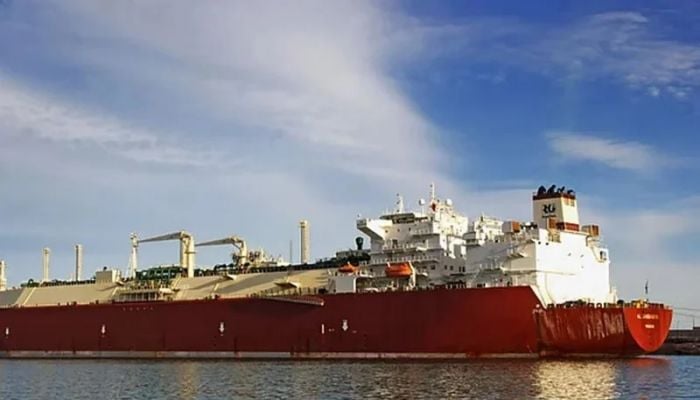
The fuel oil and gas situation remains critical. Even if the challenges could somehow be managed in March, April is proving far more difficult.
The new month has begun amid a severe shortage of fuel oil and gas. Although the effects of the war that started on February 28 were felt throughout March, four liquefied natural gas ships were still able to cross the Strait of Hormuz during that period.
The government managed the situation by drawing on previous stocks, and the ministry has continued to assure the public that the energy crisis will not worsen in the coming days.
However, the reality on the ground suggests otherwise.
Not a single ship has crossed the Strait of Hormuz since the war began. On March, 31, some 38 ships arrived in the country from alternative sources, carrying various fuels including liquefied natural gas, liquefied petroleum gas, gas oil, and base oil.
Nevertheless, despite confirmed bookings, only 15 out of 26 ships carrying liquefied natural gas and liquefied petroleum gas actually reached Bangladesh in March. Two-thirds of the bookings for April have not yet been confirmed.
Akhtar Kabir Chowdhury, General Secretary of the Chittagong District unit of Citizens for Good Governance (Shujan), has stressed that urgent steps must now be taken with clear priorities in place.
He added that order must also be restored in the distribution system. The situation is becoming increasingly complicated because of oil smuggling out of the country, illegal storage, panic buying of excess fuel, weak administrative oversight, and the failure to punish those responsible with exemplary measures. If the war in the Middle East continues for a prolonged period, the crisis could become even more severe.
As an advance preparation, the Cabinet Committee on Procurement granted permission on Tuesday to purchase 260,000 tonnes of fuel through spot and government-to-government methods.
In March, the Bangladesh Petroleum Corporation had expected 17 ships carrying diesel and furnace oil to arrive. However, only 10 ships reached the country throughout the month, delivering just 250,000 tonnes of oil.
Despite bookings, the remaining six ships, which were supposed to bring 150,000 tonnes of fuel oil, did not arrive.
A similar picture emerged with liquefied natural gas. Although nine ships carrying liquefied petroleum gas were scheduled to arrive in March, only five came.
Despite bookings, four liquefied petroleum gas ships carrying around 300,000 tonnes failed to reach the country. Likewise, even though schedules had been fixed, neither of the two ships carrying crude oil arrived.
The government has reached out to alternative countries to address this crisis in fuel oil and gas supply. In the past month, 38 ships brought fuel oil and gas from 12 different countries.
However, if the war persists, even these alternative sources may gradually become unavailable. In that case, it will become extremely difficult to purchase fuel from the spot market, where prices will be significantly higher.
The Minister for Power, Energy and Mineral Resources, Iqbal Hassan Mahmud, stated that even if the crisis in the Middle East affects fuel oil and gas supplies, the government has alternative plans.
He expressed hope that the situation could still be managed in April and May. However, he emphasised that the tendency to buy more fuel than necessary, illegal hoarding, and attempts to smuggle oil through border areas must be stopped. Stricter measures will be taken in the future to address these issues.
According to the Vessel Arrival Log of Chittagong Port, 38 ships were unloaded during the 31 days of March after the war started. Of these, eight carried liquefied natural gas, nine carried liquefied petroleum gas, eight carried gas oil, four carried high-sulphur fuel oil, two carried base oil, one carried monoethylene glycol, one carried ethylene, and one carried condensate.
Nine of the ships came from Qatar, Oman, and the United Arab Emirates.
Most vessels in March arrived from alternative countries, with nine from Singapore, eight from Malaysia, and five from India.
Ships are now also bringing fuel from Australia, Indonesia, and Thailand. So far in April, three ships have arrived.
A ship carrying 27,000 tonnes of gas oil anchored at the port on Friday, while two other ships brought liquefied natural gas and ethylene this month.
Md. Nurul Alam, Senior Deputy General Manager of Uni Global Business Limited, a local representative company for liquefied natural gas imports, said that on average, nine to ten liquefied natural gas ships are imported through them every month. Only five arrived in March, and so far only one liquefied natural gas ship has reached the country for April. The products on this ship were also purchased from the spot market.
Despite bookings, several ships failed to arrive.
The General Manager of the Bangladesh Petroleum Corporation (Trade and Operations), Muhammad Morshed Hossain, explained that although China’s Unipec and Malaysia’s Petco Trading are two of the major suppliers for the corporation, oil was not received from them on time because of the war.
A ship that was supposed to bring 100,000 tonnes of crude oil from the Ras Tanura terminal in Saudi Arabia on March 3 remains stuck in the Strait of Hormuz. The contract for the ship MT Omera Galaxy, which was hired from the Abu Dhabi National Oil Company to transport oil, has also been cancelled.
As a result, no new shipment of crude oil reached the country in March. Because of the obstruction in the Strait of Hormuz, four booked liquefied natural gas ships from the Middle East did not arrive last month.
One ship named Libretha is unable to reach Chittagong even after loading liquefied natural gas, while another ship named Wadi Al Sail cannot cross the Strait of Hormuz to load liquefied natural gas at the terminal.
According to the Bangladesh Petroleum Corporation, the country imports between 6.5 and 6.8 million tonnes of fuel oil annually. Of this, about 1.5 million tonnes is crude oil, which mainly comes from Saudi Arabia and the United Arab Emirates.
Twenty percent of the total demand is imported in crude form and refined locally, while the remaining 80 percent is imported in refined form.
More than 600,000 tonnes of liquefied petroleum gas are normally brought into the country every month, yet less than 300,000 tonnes arrived in March. This supply system has been severely disrupted by the war.
The Deputy Commissioner of Chittagong, Mohammad Zahidul Islam Miah, said that because of the war, fuel is not arriving according to demand. Even the supplies that are reaching the country are not being properly distributed to consumers.
The Border Guard Bangladesh has now stepped in to help restore order, he said, adding that temporary base camps have been established at 19 depots in nine districts to prevent artificial shortages and smuggling.

