PM’s visit to Malaysia and China: The first test of foreign policy
Samakal Correspondent
21 Jun 2026 17:08 PM
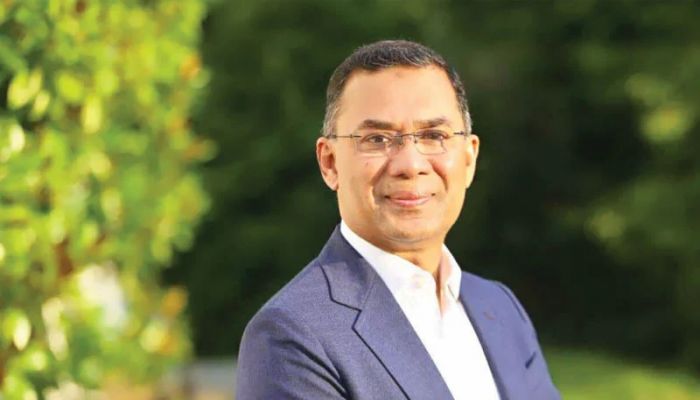
Prime Minister Tarique Rahman is making for his first foreign trip on Sunday after taking office as Prime Minister. After an 18-hour visit to Malaysia, he will leave for China from Kuala Lumpur for four days. Only one memorandum of understanding will be signed during the visit to Malaysia. Seventeen bilateral documents, including the expansion of the Mongla port, will be signed in China.
Diplomatic analysts believe that choosing China as the first visit instead of neighbouring India also carries political significance. They say that Dhaka is eyeing a strategic partnership. This visit is taking place at a time when the politics of the region, including India-China competition, the Indo-Pacific strategy, global economic uncertainty and development cooperation, are all undergoing new equations.
According to diplomatic analysts, the importance of Prime Minister Tarique Rahman’s first foreign visit is not limited to where he is going; rather, the message he is carrying is also important. According to them, the new government is trying to bring forward three issues through its visit to Malaysia and China – increasing economic partners, maintaining balance with regional powers and clarifying Bangladesh’s strategic position.
In the reality of the changing relations between India, China and the Western world, the biggest challenge for Bangladesh will be to protect its own interests by maintaining relations with all parties. From that perspective, the diplomatic community is seeing the Prime Minister’s visit as the first major test of the new government’s foreign policy.
According to diplomatic analysts, by choosing Malaysia as the destination of the first visit, Dhaka wanted to send a message of balance. At the same time, the new government’s priority for economic and strategic partnerships is also becoming clear through the visit to China.
The day before Prime Minister Tarique Rahman’s visit, Foreign Minister Dr Khalilur Rahman met with US Ambassador to Dhaka Brent T. Christensen on Saturday. He used the victory of the US football team as a metaphor and said, “It would not be wrong to bet on the US in the long run.”
Christensen spoke to reporters for the first time yesterday, five months after arriving in Dhaka. However, he did not answer any questions. He told reporters, “I have raised an important issue. Last night (Friday), the US won a great victory in the World Cup. I encourage the Foreign Minister and the people of Bangladesh to support the US team because it would not be wrong to bet on the US in the long run.”
After the ambassador left with this suggestive statement, the Prime Minister’s Foreign Affairs Adviser Humayun Kabir said that Christensen met as part of a regular diplomatic meeting. The adviser said that no other country will decide which country the Prime Minister of Bangladesh will visit. Bangladesh now follows a sovereign foreign policy.
Although the ambassadors of three influential countries, Japan, the UK and Sweden, also met Khalilur Rahman at the Foreign Ministry in Segunbagicha yesterday, the day before the Prime Minister’s first visit. Japan is also known as China’s rival in global politics.
Kuala Lumpur before Delhi-Beijing
India and China are of great importance in Bangladesh’s foreign policy. During the Awami League era, the BNP used to openly express its anger over Delhi’s influence. After the fall of the Awami League government in the 2024 mass uprising, China quickly established close contacts with the then interim government and the anti-Awami League parties, including the BNP-Jamaat. On the other hand, although India’s relations with the interim government have reached a low point, Delhi has shown interest in working with the new government after the February elections.
India’s initiative to enhance relations with the BNP is visible. After the death of former Prime Minister Khaleda Zia, Indian Foreign Minister S Jaishankar came to Dhaka and paid his last respects. After BNP’s landslide victory in the 13th parliamentary elections, Indian Prime Minister Narendra Modi sent Lok Sabha Speaker Om Birla to Tarique Rahman’s swearing-in ceremony.
Immediately after the oath-taking, Indian Speaker Om Birla formally invited Prime Minister Tarique Rahman on be half of Indian Premier Narendra Modi. On behalf of China, on February 24, Chinese Ambassador Yao Wen invited Tarique Rahman to visit China. Later, the invitation letter from the Chinese Prime Minister arrived in May.
Again, after the formation of the government, senior leaders including BNP Secretary General Mirza Fakhrul Islam Alamgir visited China at the invitation of China. None of them went to India. However, both India and China invited Prime Minister Tarique Rahman to visit.
Meanwhile, during the visit of the Bangladesh delegation to Malaysia last April, Prime Minister Anwar Ibrahim invited Prime Minister Tarique Rahman. Analysts believe that Malaysia is preferred by policymakers in Dhaka as a third country to avoid geopolitical tensions between India and China on their first foreign visit. According to them, Malaysia is a country with which Bangladesh has long-standing friendly relations. At the same time, the country conducts diplomacy in a balanced manner with China, the United States and the Western world. As a result, an opportunity has been created for Dhaka to send a message of balance.
According to analysts, the new government wants Bangladesh’s foreign policy to move forward on the path of multilateral relations, not centred on a single power, but keeping national interests in mind.
Focus on strategic partnerships in China
The visit to Beijing is not limited to investment or trade, but also Bangladesh’s regional position. Arriving in China the night before, Tarique Rahman will meet with World Economic Forum President and CEO Børge Brende on the morning of June 23.
This evening, the Prime Minister will attend an event titled ‘Climate Leadership in a Changing Global Context’ at the Dalian International Conference Centre. He will participate in discussions on the global economy, technology, innovation and the future of Asia at the World Economic Forum’s ‘Annual Meeting of the New Champions’ in Dalian on June 24. There is also a possibility of meetings with representatives and business leaders from different countries outside the forum.
The Bangladesh Prime Minister will arrive in Beijing from Dalian this evening. The next day, on the morning of June 25, he will attend the Bangladesh Investment Forum conference. In the afternoon, Tarique Rahman will hold a bilateral meeting with the Chinese Prime Minister. After that, a private meeting is scheduled between the heads of government of the two countries. On the last day of the visit, on the morning of June 26, the Prime Minister will meet with Chinese President Xi Jinping. Tarique Rahman will leave for Dhaka that afternoon.
Bangladesh Foreign Secretary Asad Alam Siam is reported to have gone to Beijing to finalise the details of the Prime Minister’s visit and held meetings with senior officials including the Deputy Foreign Minister of China.
Diplomatic sources say that this visit will give an important indication of the direction in which Beijing’s relations with the new government will go.
Foreign Ministry officials said that the Prime Minister’s wife Dr Zubaida Rahman, Foreign Minister Dr Khalilur Rahman, Foreign Affairs Adviser Humayun Kabir, Information and Broadcasting Minister Zahir Uddin Swapan, Bangladesh Investment Development Authority Executive Chairman Ashiq Chowdhury, Prime Minister’s Finance and Planning Adviser Rashed Al Mahmud Titumir and a high-level delegation will participate.
Seventeen MoUs and Protocols to be signed in China
Dhaka does not want to limit the Prime Minister’s visit to diplomatic formalities alone. Rather, more emphasis is being placed on increasing access to Chinese investment, technology and markets. Thirteen MoUs, two agreements, one plan and one protocol each may be signed during the visit. This was announced by Foreign Secretary Asad Alam Siam at a press conference at the Foreign Ministry on Saturday morning.
The proposed agreements include strengthening cooperation under the Belt and Road Initiative, partnership in the artificial intelligence sector, facilitating access to the Chinese market for Bangladeshi products, support for free trade agreements and multilateral trading systems, green development in the energy sector, a protocol for the export of fresh jackfruit from Bangladesh, development cooperation, implementation of global development initiatives, expansion of Mongla Port, human resource development, Chinese language education, technical education and media cooperation.
Government officials say the main goals of these initiatives are to increase Chinese investment, bring technology and increase Bangladesh’s production and export capacity.
Discussion on Teesta
The Teesta project is not on the list of proposed MoUs. Despite that, it is known that the Teesta master plan will be discussed during the visit. Bangladesh will want to know whether China is interested in financing this project that has been under discussion for a long time. The Foreign Secretary said that there is a possibility of discussion on the Teesta project as well.
According to observers, Teesta is not just a matter of river management, but also involves India-China relations and the country’s strategic reality. As a result, if the topic of Teesta comes up during the visit, it will not be limited to discussions on development cooperation, but will also be important in terms of regional politics.
Focus on Chinese investment
A major investment conference is being organised in Beijing during the Prime Minister’s visit to China. There, Bangladesh’s investment potential will be highlighted to Chinese entrepreneurs. Discussions may be held on increasing investment in Chinese economic zones, infrastructure development, renewable energy, electric vehicle production and technology sectors in Bangladesh.
In addition, there are also discussions on cooperation on the Mongla Port expansion and modernisation project. The government considers the project important to increase the trade capacity of the south-western region of the country. There is also potential for cooperation in the health sector. Progress may be made on establishing a 1,000-bed Bangladesh-China Friendship Hospital in Nilphamari.

