MAB-Practical Action in Bangladesh Online Discussion
Concerted efforts needed to protect dignity of waste and sanitation workers
Samakal Correspondent
13 Dec 2020 09:12 AM । Update: 13 Dec 2020 12:30 PM
Waste and Sanitation Workers perform one of the most important responsibilities of the society and it has been continuing even in the tough time of Corona pandemic. Despite this, they have to live an uncertain life on a poor salary. Moreover, the traditional social narrowness and discriminatory attitude are added to this. They have no social status although they want a dignified life. However, it is possible to establish a dignified life for the waste and sanitation workers through concerted efforts, including increasing the sensitivity of the policy makers and making the people aware in this regard.
The speakers on Saturday came up with the opinions at an online discussion meeting titled 'What we have to do to establish a dignified life of waste and sanitation workers'.
The webinar was jointly organized by the Municipal Association of Bangladesh (MAB) and Practical Action in Bangladesh where The Daily Samakal was the media partner.
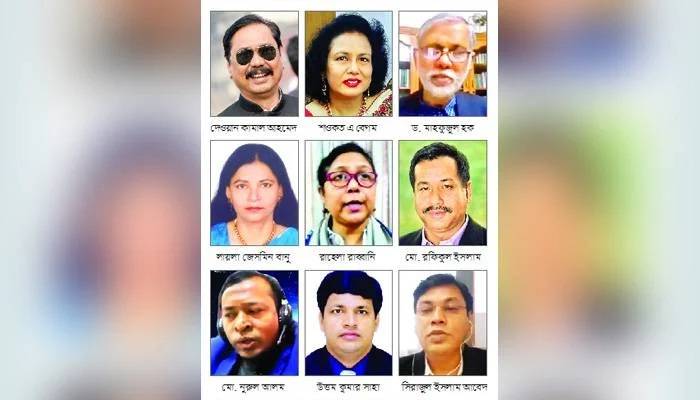
Sirajul Islam Abed, Assistant Editor of The Daily Samakal and Editor of Samakal Suhrid Samabesh conducted the discussion.
In his introductory speech, Dewan Kamal Ahmed, President of the Municipal Association of Bangladesh (MAB) and Mayor of Nilphamari Municipality, said that their organization represents all the municipalities in Bangladesh. Since 2003, MAB has been working to realize the rights of the municipality and to formulate municipal-friendly activities and policies. MAB has played an active role in formulating institutional and legal framework for waste management. MAB and Practical Action in Bangladesh are working with other governmental and non-governmental organizations to protect the dignity, honour and rights of the waste and sanitation workers.
He said the waste and sanitation workers worked hard to clean the country's cities and towns but they endured discrimination and assault. They are in dire need of drinking water. It is also difficult to marry their children.
Shawkat A Begum, Country Director of Practical Action in Bangladesh, said they had seen the impact of Coronavirus in all sectors. They also conducted a survey on waste and sanitation workers where it is seen that their lives were greatly disrupted. Their working hours have increased a lot but wages have dropped much. Besides, women workers are facing more challenges.
She said it is good news that the corona vaccine is coming. Congratulations to the Prime Minister as she has taken a step for the vaccine. It is decided that Corona's frontrunners will receive the vaccine first and a list of them is also prepared excluding waste and sanitation workers although their role is very important to keep our lives healthy.
Shawkat A Begum said “We have set goals. Everyone is working to achieve SDG; we are also participating there. We don't have to stop after achieving our goals. Goals have been set for 2020-30 and we are working towards that goal. Hopefully our donor will be with us. We have to raise our voice in favour of the waste and sanitation workers,”
Former Secretary and Consultant Mahfuzul Haque said that in 2018, Practical Action in Bangladesh conducted a survey on the socio-economic status and welfare of waste and sanitation workers. Some 20 companies were interviewed and 75 percent of those have expressed interest in working for waste and sanitation workers. They have spent about Tk400 crore in three years where the issue of waste and sanitation workers was not included. They said they would work if they get the project which is a matter of hope. Governments and NGOs can play a pivotal role in finding out the ways of raising CSR funds.
Aminul Islam, secretary of the National River Protection Commission, said the social stereotypes about cleaners need to be shattered. Many have already come forward in this regard. “We have to work for the welfare of the cleaners’ organizationally." he said.
Ziaul Haque, director of the Environment Department, said, “We are talking about improving the health and quality of life of waste and sanitation workers. Three to four ministries are working for this. We have to work for the welfare of all through integrated work. We have some rules from the Department of Environment - such as medical waste and shipwreck rules. Solid waste and e-waste management regulations are awaiting implementation. We are talking about the health risks of workers and sanitation workers. There is the issue of taking action on occupational safety, health and accidents of the workers on the condition of giving environmental clearance. We have brought up the issue of CSR in solid waste management.”
Khandaker Morshed Millat, General Manager, SFD Branch, Bangladesh Bank, said that the circular issued by Bangladesh Bank on April 30 this year included the issue of financing of banks. It also describes how the cleaners can be given benefits. Bangladesh Bank has given its opinion on CSR in the National Policy. Once the policy is finalized, Bangladesh Bank will be able to take action. In some cases, CSR has been made compulsory. Bangladesh Bank has issued a circular on June 17 this year asking the government to spend Tk60 (60%) of the Tk100 of the CSR fund on health or sanitation. Bangladesh Bank is behind the cleaners, he reiterated.
SM Shahjahan, deputy director of the Bangladesh Technical Education Board, said, “Although there are initiatives to create staff for all sectors, we do not have a waste management program. The Municipal Association of Bangladesh (MAB) and Practical Action in Bangladesh are working to create a skilled manpower in waste management. The Technical Education Board is working for them. It has already adopted a curriculum for waste management and meanwhile, educational materials have been created. The actions that need to be taken should be sustainable.”
Uttam Kumar Saha, Strategic Lead (Energy and Urban Services) of Practical Action in Bangladesh, said that waste management is a daily need of the people of the city. Four lakh people across the country are involved in sanitation and waste management. The lives and livelihoods of four lakh people depend on it. They have no facilities. They work empty handed. They need to think about developing technical skills and management skills and using technology. They will develop economically and develop the work environment themselves by giving ideas about business development. This is not the sole responsibility of the city corporation or the municipality. It is very possible to provide their services through the collective efforts of each ministry.
Rahela Rabbani, director of Research and Policy Advocacy for Working Women, said women are involved in various clean-ups, including household waste. Women are sweeping a large part of the city corporation where inequality is observed. Women are at risk when working in the evenings, she said, adding there is no toilet for them.
Laila Jasmine Banu, program manager for the European Union's Governance and Human Rights, said the European Union took part in the program under the Multi-Annual. A program is running from 2014 to 2020 and it is coming to an end this month. The timing of the consultation stage is very important, she said, adding negotiations with the European Union will continue in this case. The media has a big role in this regard.
Nurul Alam, director of the Bangladesh Pet Flex Manufacturers and Exporters Association, said, “If the opportunity is created to negotiate with the EU, we will be able to present details. We will be able to recycle every waste. No waste will be thrown away.”
Mehedi Hasan, deputy inspector general of the mills and establishments inspection department, said training could be arranged for waste and sanitation workers. It can be done by private and government institutions. Employers can do the same, he opined saying that it can be mentioned in the training that which kinds of waste are at risk.
Habibur Rahman, an associate professor at People's University, said the SDGs could not be achieved if the most backward people were not brought to the frontline. The waste and sanitation workers have to be taken forward, he said, adding research is needed in this regard and teachers can play a big role in research.
Sirajul Islam Abed, assistant editor of Samakal and editor of Samakal Suhrid Samabesh, said the need for cleanliness and waste management workers is universally acknowledged among people of different walks of life. Especially in this age of urbanization, in spite of the inevitability of waste and sewage management, the dignity, honour and rights of the workers engaged in cleaning work are never seriously raised. The background of the workers in the cleaning sector is a bit different.
He said the waste and sanitation workers do not get the same facilities as the workers in the institutional sector. Usually they have no appointment letter, no fixed wages, no working hours, no pension or gratuity. They work in all seasons - winter-summer-monsoon. On the day of Eid, on the day of worship, when everyone goes out to rejoice, they still have to work. Their work begins before the sun rises and it goes until nightfall. But we have left them untouched. Waste and sanitation workers want a dignified life, a healthy accommodation, pure drinking water, clean toilets, and school for children, health insurance and a special hospital. They also have long-standing demands for machine-operated vacuum trucks and personal safety equipment for waste disposal.
Journalist Atiqur Rahman Tamal said when they move to cover news about the cleaners, statements or help are not available. Mayors should help in this regard, he said.
In his concluding remarks, Rafiqul Islam Kotowal, General Secretary of MAB and Mayor of Shariatpur Municipality, said that it is very difficult to run a family with the salary that the cleaners get. They need to be financially self-sufficient and livable, he said, adding their basic rights should be fulfilled.

