Skill agenda tremendously important for BD: UK envoy
Online Desk
10 Mar 2016 06:24 AM
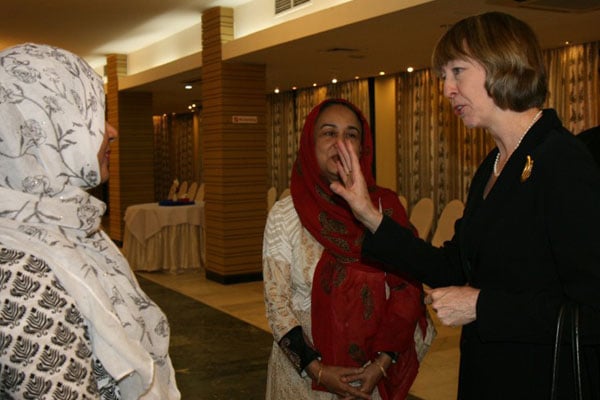
British High Commissioner to Bangladesh Alison Blake- file photo
British High Commissioner to Bangladesh Alison Blake on Thursday said the skill agenda is tremendously important for Bangladesh, as it seeks to keep pace with countries like China and India in the global garment trade and construction industry.
“With a growing, young population, the country has a great opportunity to drive up productivity and improve the skills of its workforce,” she said.
The British High Commissioner was addressing the launching ceremony of a project titled ‘Sudokkho,’ reports the UNB.
The project designs and facilitates private-sector led training for more than 110,000 people from poor and marginalized groups across Bangladesh. “That’s why Sudokkho is a crucial project and why the British government, through UK aid, is very proud to be its lead funder,” said the High Commissioner.
Sudokkho, previously known as the Skills and Employment Programme in Bangladesh, is a five-year program co-financed by UK aid through the Department for International Development (DFID) and the Swiss Agency for Development and Cooperation (SDC).
Palladium International is implementing Sudokkho in partnership with Swisscontact and the British Council. The total implementation budget is £21.63 million (approx. US $32 million).
Charge d' Affaires, Switzerland Embassy in Dhaka, Beate K Elsaesser said every year around 2.5 million people enter the labor market in Bangladesh, most of whom get no opportunity to acquire skills required for productive and decent work either in Bangladesh or abroad.
Switzerland provides a substantial contribution to skill development in Bangladesh to help those people, Elsaesser said.
“The main goal of Swiss development cooperation is the well being and empowerment of the poor and disadvantaged and therefore we are happy to see that the Sudokkho project, in addition to having a market-driven focus is duly targeting inclusion.”
Sudokkho Team Leader Paul Weijers said, “We recognize that in order to change the training landscape in Bangladesh and ensure work-based training has real value, we need to take a new approach that will change the training market.”
The government of Bangladesh provides supervision and monitoring, via the Directorate of Technical Education.
Working with some of the world’s biggest and best-known retailers and industries, including Debenhams, Primark, Lafarge and Berger, the program seeks to test and scale up market-driven quality skill training models within the ready made garment and construction sectors that will improve workers’ career prospects and earning capacity, as well as improving productivity and efficiency for participating organisations.
The program also works extensively to improve opportunities for women and people from socially and economically disadvantaged groups.
Sudokkho collaborates with the existing Private Training Providers, developing short courses for workers in both sectors. In parallel to this, Sudokkho administers a grant-fund, known as the Industry-led Training Fund (ITF), that shares with employers the financial burden of developing and facilitating workplace training.
The first pilot-training programs in both sectors began running in November 2015 and resulted in 100 percent of trainees in the garment sector immediately gaining paid employment.

