Rich-poor split could tighten grip of poverty: World Bank
AFP
18 Jul 2023 12:58 PM । Update: 18 Jul 2023 14:28 PM
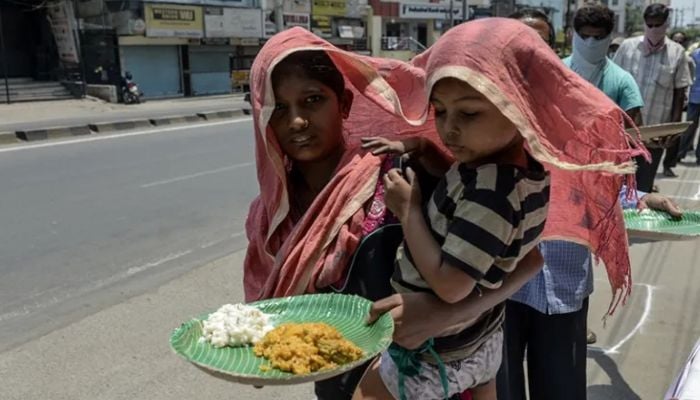
Representational Image
The new head of the World Bank said Tuesday that growing
divides between rich and poor nations risked deepening poverty in the
developing world, at a meeting of G20 finance ministers in India.
Many countries are still recovering from the double blow of
the coronavirus pandemic and fallout from Russia's war in Ukraine – which hit
global fuel and commodity prices.
Climate change, meanwhile, is most painfully affecting some
of the poorest countries least able to cope.
Ajay Banga, president of the World Bank, said he feared a
lack of progress was in danger of splitting the global economy, to the
detriment of the world's poorest.
"The thing that keeps me up at night is a mistrust that
is quietly pulling the Global North and South apart at a time when we need to
be uniting," Banga told the two-day meeting of finance ministers and
central bank chiefs in Gandhinagar, Gujarat state.
"The Global South's frustration is understandable. In
many ways they are paying the price for our prosperity," said Indian-born
Banga, a naturalised American citizen who took up the bank post last month
after being nominated by US President Joe Biden.
"When they should be ascendant, they're concerned
promised resources will be diverted to Ukraine's reconstruction, they feel
energy rules aren't applied evenly, constraining ambition, and they're worried
the grip of poverty will pull down another generation."
The World Bank said it is working to increase its financial
capability – including by raising hybrid capital from shareholders – to spur
growth and jobs, but said the future economy could not rely on expansion at the
cost of the environment.
"The simple truth is: We cannot endure another period
of emission-intensive growth," Banga said.
Indian Finance Minister Nirmala Sitharaman, chair and host
of the get-together, launched talks on Monday by reminding leaders of their
responsibility "to steer the global economy towards strong, sustainable,
balanced and inclusive growth".
The United States says efforts to reform multilateral lenders
such as the World Bank and other regional institutions could unlock $200
billion over the next decade.
Little progress on debt
Debt restructuring deals for low-income nations have been a
key focus of The Group of 20 major economies, but officials suggest there has
been little headway.
China, the world's second-largest economy and a major lender
to several stressed, low-income countries in Asia and Africa, has so far
resisted any one-size-fits-all debt restructuring formula, officials said.
More than half of all low-income countries are near or in
debt distress, double the amount in 2015, US Treasury Secretary Janet Yellen
said.
Yellen on Sunday said a deal on Zambian debt had taken
"too long to negotiate", but added she hoped debt treatments for
Ghana and Sri Lanka could be "finalised quickly".
Finance ministers from regional rivals and neighbours India
and China met early Tuesday, without commenting to reporters.
The G20 talks have also focused on multilateral development
banks' reform, cryptocurrency regulations, and easier access to financing to
mitigate and adapt to the impact of climate change.
A newly agreed first step on a fairer distribution of tax
revenues from multinational firms – reached by 138 countries last week – is
also set to be delivered.
Multinationals, especially tech firms, are currently able to
shift profits easily to countries with low tax rates even though they carry out
only a small part of their activities there.
/KN/

