IMF to revise regional outlook over Israel-Hamas conflict
AFP
02 Dec 2023 12:02 PM
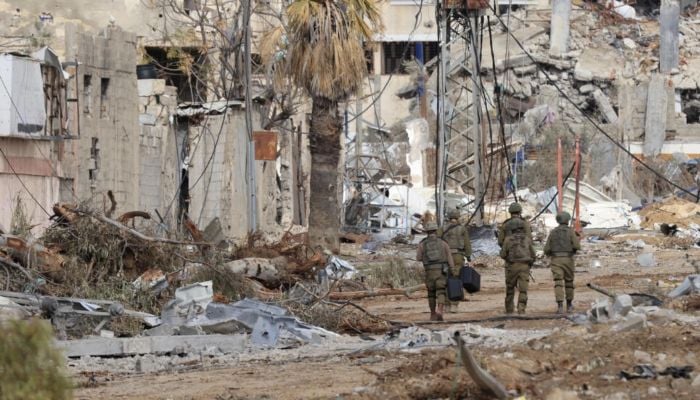
The IMF said it is revising the economic outlook for MENA countries due to the Israel-Hamas conflict. AFP Photo
The IMF announced Friday that it will revise its economic
outlook for the Middle East and North Africa region due to the ongoing
Israel-Hamas conflict.
The conflict will have wide-ranging consequences for
"both people and economies" in the region, although the extent of the
impact remains "highly uncertain," the International Monetary Fund
staff wrote in a blog post.
It did not say if the revisions would be released ahead of
its next outlook publication, which is due in January.
"A large-scale conflict would constitute a major
economic challenge for the region," they said, calling on the
international community to act to prevent further escalation.
In the event of a large-scale conflict, "what is
certain is that forecasts for the most directly exposed economies will be
downgraded and that policies to buffer economies against shocks and preserve
stability will be critical," the post added.
Tourism hard hit
Israel resumed its deadly bombardment of the Gaza Strip on
Friday after a fragile truce broke down, saying it had struck more than 200
targets in the densely inhabited Palestinian territory despite international
calls for a renewed pause.
The conflict between Israel and Hamas broke out on October
7, when gunmen from the militant group stormed across the border from Gaza into
Israel, killing around 1,200 people, most of them civilians, and taking around
240 people hostage, according to the Israeli authorities.
In response, Israel announced it would destroy Hamas and
began a relentless bombardment of the Palestinian territory.
More than 15,000 Palestinians, mostly civilians, have been
killed across the Gaza Strip since then, according to the Hamas government's
Ministry of Health, including at least 178 people on Friday alone.
Among the hardest-hit sectors in the region outside of
Israel and the Palestinian territories has been tourism, which the IMF said
accounted for between 35 per cent and almost 50 per cent of goods and services
exports in MENA economies in 2019.
"Tourism-dependent economies like Lebanon, where hotel
occupancy rates fell by 45 percentage points in October compared to a year ago,
will see knock-on effects for growth," the IMF officials said.
Elevated risk due to the conflict could push up borrowing
costs, with knock-on effects for highly indebted economies, they warned.
In the event the conflict continues, "fragile and
conflict-affected states in the region, such as Somalia, Sudan, and Yemen,
could experience a decline in critical aid flows, if the focus of donors shifts
away," the IMF officials said.
They added that refugee flows could also increase
"significantly," which would add to "social and fiscal pressures
in the countries that receive them."

