US delegation to visit Dhaka to continue trade agreement talks
Meshbahul Haque
11 Sep 2025 17:23 PM
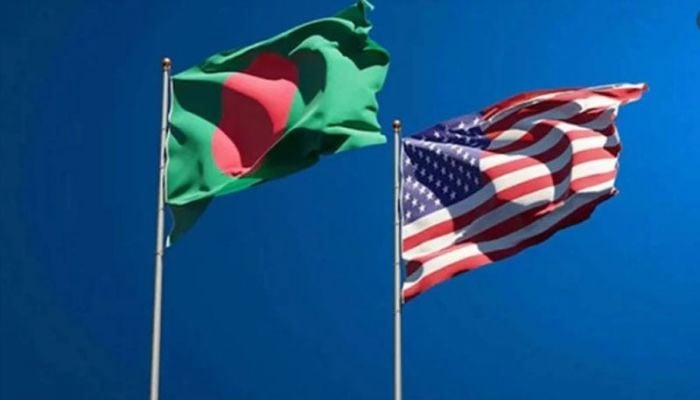
A United States government delegation, led by Assistant United States Trade Representative Brendan Lynch, is scheduled to arrive in Dhaka for a three-day visit starting September 14 to discuss trade-related matters.
The delegation aims to engage in another round of negotiations concerning the countervailing duties imposed by the United States on Bangladeshi products.
Simultaneously, the visit will focus on finalising a bilateral trade agreement between the United States and Bangladesh, building on prior discussions.
This information was disclosed by sources within the Ministry of Commerce.
According to Commerce Ministry officials, on August 7, the United States reduced the countervailing duty rate on Bangladeshi products to 20 percent and implemented the change.
However, no formal trade agreement has been finalised between the two nations.
Bangladesh is trying for a further reduction of the countervailing duty to at least 15 percent and has requested additional time from the United States Trade Representative (USTR) for negotiations.
In response, the delegation led by Assistant USTR Brendan Lynch, who oversees United States trade policy for South and Central Asia, is visiting Dhaka to continue these discussions.
Commerce Secretary Mahbubur Rahman informed Daily Samakal that Bangladesh will propose further tariff reductions during the talks.
If both parties reach a consensus, the bilateral trade agreement between the United States and Bangladesh is expected to be finalised, he added.
Sources from the Ministry of Commerce confirmed that, in addition to meetings with ministry officials, the United States delegation is scheduled to meet with the interim government’s Chief Adviser, Dr. Muhammad Yunus, Foreign Affairs Adviser Md. Touhid Hossain, and Foreign Secretary Asad Alam Siam during their visit.
It is understood that the United States-Bangladesh bilateral trade agreement was initially planned for signing in August but was postponed with mutual consent.
Bangladesh seeks further tariff reductions, while the United States is reviewing Bangladesh’s arguments in favour of lowering duties.
The USTR has prepared a draft of the agreement, which will be finalised once both countries agree on its terms, after which a signing date will be set.
Previously, United States President Donald Trump had announced retaliatory tariffs of 37 percent on Bangladeshi products, later reducing them to 35 percent, leaving room for negotiation.
Following the third round of talks in Washington, the tariffs were further lowered to 20 percent on July 31.
However, Bangladesh made several concessions to achieve this reduction.
A Ministry of Commerce source told Daily Samakal that the government had hoped these concessions would lower the tariffs to 15 percent or less.
To address the $6 billion trade deficit with the United States, Bangladesh has committed to increasing imports from the United States by $1.5 billion over the next one to one-and-a-half years.
The government plans to purchase 25 aircraft from the United States-based company Boeing in the coming years, at an estimated cost of approximately Tk50,000 crore in local currency.
Additionally, Bangladesh will import seven lakh tonnes of wheat annually for five years at a slightly higher price.
The country will also increase imports of military goods, civil aircraft parts, fuel oil, edible oil, wheat, cotton, and liquefied natural gas through long-term agreements.
To facilitate United States investment, Bangladesh will streamline the approval process for no-objection certificates, making it easier for United States capital to enter Bangladesh and for investments to flow to the United States.
Furthermore, customs and duty exemptions will be provided to boost imports of United States products.
Ministry of Commerce sources indicated that the United States has urged Bangladesh to take action against illegal exports and, if necessary, conduct joint investigations with the United States, to which Bangladesh has agreed.
Bangladesh will also make laws and regulations easily accessible online to incorporate public opinion.
Import permits will not be required for food or agricultural products from the United States, and Bangladesh will recognise the validity of United States electronic bills of lading, ensuring prompt release of products from the United States.
Additionally, Bangladesh is offering concessions in areas such as customs, trade, investment, intellectual property, imports, the service sector, environment, and labour rights.
The country will accept United States Food and Drug Administration (FDA) approvals for importing medical equipment and recognise the United States dairy safety system for importing meat, poultry, processed meat, egg products, and dairy products from cows, sheep, or goats.

