Govt wants to take creative economy to 3 per cent of GDP: Finance Minister
Samakal Correspondent
07 Sep 2026 18:18 PM
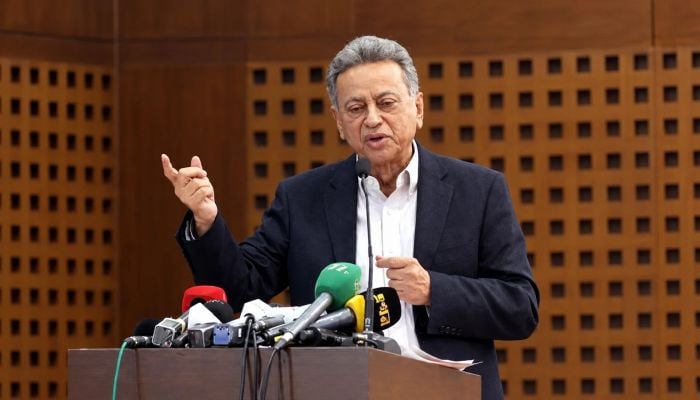
The government wants to increase Bangladesh’s creative economy to two to three per cent of the gross domestic product (GDP). If this is possible, a large number of people will be involved in this sector, said Finance Minister Amir Khosru Mahmud Chowdhury.
He said this as the chief guest at the inauguration of the Small Business and Small Entrepreneur Financing Fund initiated by Karmasangsthan Bank at the Osmani Memorial Auditorium in the capital on Monday.
The Finance Minister said that there is a great opportunity for women to join this sector. Along with creativity, there is an opportunity to take the country’s food, music, culture, theatre, films and various online-based works to the global market.
Amir Khosru Mahmud said that the contribution of the creative economy to the economy of some countries in the world is up to 10 per cent. Even if Bangladesh cannot reach 10 per cent, if it can reach 2–3 per cent, a large number of people will be able to join this sector. Especially, the opportunity for women to participate is greater in the sector.
He emphasised on developing the country’s rural songs, food and local culture as products and selling them in the global market. The Finance Minister said that many songs and creative works from rural areas of Bangladesh have not been monetised so far. These need to be turned into marketable products through proper support.
He said when a small song becomes a hit, when a song by a common man becomes a hit, doesn’t it become a product worth hundreds of crores of taka? We have it in us, creativity is in our country.
Also highlighting the potential of freelancers in the information technology sector, the Finance Minister said that the creativity of people working in the ICT sector and associated with freelancing should be made suitable for the national and international market through value addition.
Giving the example of Thailand’s ‘One Village, One Product’ programme, Amir Khasru said that he saw villagers in Thailand making products in their own homes. But the quality of the products was suitable for sale in the global market. Behind this was government support, from raw materials to skill development, design and branding.
He said that the products made in the village would be packaged and collected by a van in the afternoon and taken directly to the airport. From there, they would go to different countries of the world. If such a support structure can be established in Bangladesh, the creative people of the village can be connected to the global market.
The Finance Minister said that the standard of living of these people will not only change, but will also make a major contribution to the economy. This will increase foreign exchange earnings, have a positive impact on the reserves and create new employment opportunities.
He said to the Karmasangsthan Bank that it is not enough to just give loans, but plans should be made to upgrade the products of the borrowers. Local products should be made suitable for the national and international markets through skill development, design, branding and marketing.
Highlighting various aspects of the Karmasangsthan Bank’s activities at the event, the Finance Minister said that although there is a lot of creativity among the educated, semi-educated and poor people in the country, they cannot utilise it due to lack of financial capacity. Again, many are afraid to go to banks or do not have access to banking services. Therefore, ensuring ‘access to finance’ is very important.
He said that if there is a cost or interest attached to the loan, it creates a responsibility for the entrepreneur to repay it by earning it. On the other hand, grant money often does not give the desired results. Therefore, it is important to create the capacity to do profitable business with loans and to identify entrepreneurs and provide them with money.
He said that the Employment Bank has already been able to create employment for about 1.3 million people. If another nine million people are employed through the new programme, a total of 2.2 million people will be able to create employment opportunities.
The Finance Minister said that small, medium and micro enterprises and cottage industries can create employment for a large number of people. Along with big industries and big projects, the rural economy and small enterprises should be given importance. Because many families have been doing the same type of work for three to four generations, but due to lack of necessary support, they are not able to get out of that stage.
Highlighting the support taken by the government for the creative economy, he said that entrepreneurs are not only being provided loans, but also skill development, design, branding and marketing support. As a result, it may be possible to upgrade a product worth Tk100 to a product worth Tk200 to Tk300. Once these products become internationally tradable, it will be possible to reach global markets through various online platforms including Amazon and Alibaba.
The Finance Minister also highlighted the potential of the music, culture, theatre, film and OTT sectors. He said that these creative products have no geographical boundaries. People around the world are now enjoying songs, culture and entertainment from different countries. Therefore, talented artists and creative people of Bangladesh should also be brought under the scope of support.
He said this is a GDP, this is the economy. This is not charity. No one’s life is improved through charity. It has to get an economic return.
The Finance Minister urged Karmasangsthan Bank to bring not only entrepreneurs in the conventional sector, but also potential people in music, culture and other creative sectors under the scope of loans.
He said, financing is not enough. You have to have a bond with the person you are financing, with whom you are doing it. You have to support him. He is a partner, he is not a borrower.
At the event, the Finance Minister also emphasised on reducing the defaulted loans or NPL of Karmasangsthan Bank. Stating that the bank’s NPL is about 4.8 per cent, he spoke about the need to further reduce it to 1–2 per cent. He commented that this would further increase the credibility of the bank.
At that time, highlighting the allocation of Tk 35 crore for the pilot project of the Small Business and Small Entrepreneur Finance Fund, the Finance Minister said that this is only a pilot project. If the project is successful, financing opportunities will be created on a larger scale in the future.
He said that it will be possible to further encourage entrepreneurs through the bank’s profits and profit ploughback. At the same time, he emphasised on increasing employment, foreign exchange earnings and overall economic growth by utilising the potential of the creative economy.
Speaking as a special guest at the event, Bijon Kanti Sarkar, Special Assistant to the Prime Minister on Hindu, Buddhist, Christian and Minority Ethnic Affairs, said that Karmasangsthan Bank has the capacity to provide financial assistance to marginalised communities, especially people from minority communities. He said that there is also an opportunity to provide loans to these communities without collateral.
Secretary of the Finance Department of the Ministry of Finance, Dr Md Khairuzzaman Majumder said that under this project, there is a plan to provide loans at five to six per cent interest. Whereas conventional microfinance usually charges interest of 24 to 25 per cent.
Nazma Mobarek, Secretary of the Financial Institutions Department, said that this initiative is directly linked to the national goal of employment creation. The unemployment rate is especially high among young people aged 15 to 30. To provide employment opportunities to this population, microloans will be provided through Karmasangsthan Bank, so that they can establish themselves as entrepreneurs.
She said that initially this project will be implemented in three districts. Later, its activities will be expanded to other districts of the country.
The programme was presided over by Karmasangsthan Bank Chairman Dr AFM Matiur Rahman. He said that if Bangladesh Bank provides funds at two per cent interest, Karmasangsthan Bank will be able to distribute loans at even lower interest rates.
He said that currently Karmasangsthan Bank is providing loans at a maximum interest of nine per cent. Since the bank operates at a low spread, the interest rate on loans has also been kept relatively limited.

