Tech trends 2022: Starships and missing chips
Online Desk
17 Dec 2021 22:19 PM
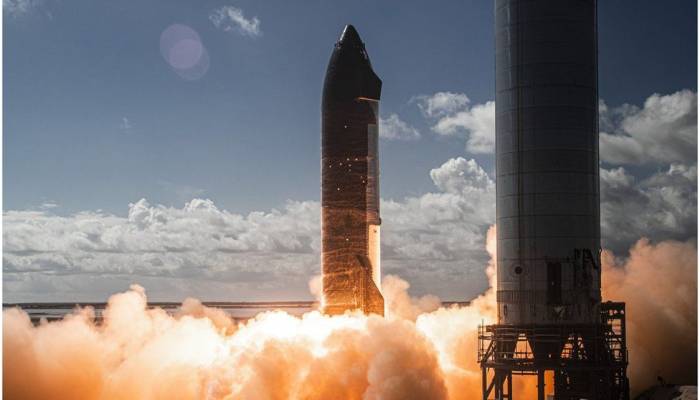
Elon Musk's dream of going to Mars could take a big leap forward next year when his company SpaceX attempts to launch Starship into orbit for the first time.
It will be the most powerful rocket ever launched into orbit, able to generate more than twice as much thrust as the Saturn V rocket, which took astronauts to the Moon half a century ago, reports BBC.
SpaceX has managed several sub-orbital test flights and Mr Musk hopes the first orbital flight, to be made by Starship SN20, will be in January.
"There's a lot of risk associated with this first launch, so I would not say that it is likely to be successful, but we'll make a lot of progress," Mr Musk told a forum of space scientists in November.
The vehicle is a two-stage rocket, the bottom part is a powerful booster called Super Heavy, on top sits a 50m (164ft) spacecraft called Starship - all up, it stands 120m tall.
SpaceX has developed its own engine called the Raptor and 29 of them will power Super Heavy, while Starship will have six.
That power will allow it to haul 100 tonnes of cargo into space.
Simeon Barber is a senior research fellow at the Open University and has spent his career developing instruments that will work in space, on planets and other bodies including the moon.
"Starship will be a re-usable transportation system, which in theory makes it cheaper," he says.
"In future they want to refuel it in Earth orbit - where it's already free from Earth's gravity and therefore every litre of fuel can be used to get a payload or human to Mars. They'd even like to refuel at Mars for the return trip to Earth.
"This for me would be the real game-changer - it's a way of zipping around the solar system without towing a massive fuel tank along behind."
If you have had a long wait for a new car or PlayStation, then you have been at the sharp end of a global shortage of computer chips.
It's been a major frustration for the technology industry in 2021.
The pandemic disrupted the production of computer chips and caused shipping problems. Meanwhile, some electronics firms shut production lines that were only marginally profitable.
But at the same time the demand for chips surged as consumers, stuck at home, bought electronic devices.
The combination has created a severe shortage and analysts say there is no immediate solution.
"Supply demand balance probably won't be coming back anytime soon, probably going well into 2022," says Wayne Lam, an analyst at CCS Insight.

