Lady chauffeurs take pride in breaking male bastion
Online Desk
23 Apr 2016 03:59 AM
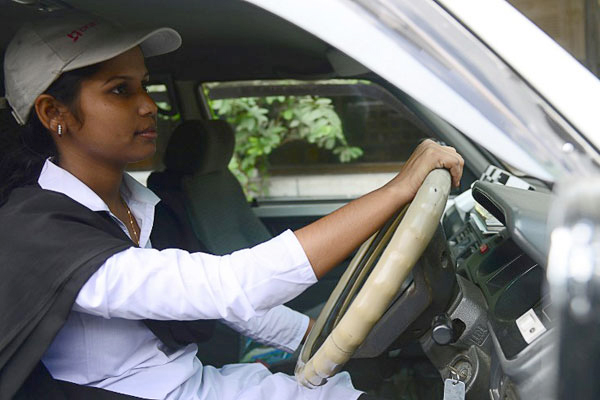
Photo- Collected
Though it is still a rare sight to see them on the driving seats of office vehicles, the number of professional female drivers is increasing in Dhaka and elsewhere across the country, reports the UNB.
More encouraging is the fact that female drivers are being preferred to the male ones by many employers as the former have already earned the reputation of being comparatively safer with the steering.
Breaking the 'social taboo' about it has been the only challenge for the women wishing a career in the driving profession, observed Aklima Khatun, director of Gonoshasthya Kendro, which runs a Motor Driving School for women.
Shahida Akhter, who received training from Gonoshasthya Kendra, has overcome many challenges as she is still there driving the vehicles of Water Aid.
Shahida said she sometimes had to face harassment by male drivers on the roads. "After my marriage, my husband and in-laws used to force me to leave the job, but I didn't," she added.
Ferdous Begum, who also received training from Gonoshasthya Kendra back in 1998, has a different story to tell.
She said she continued her driving there for six years. Later in 2004, she joined Care Bangladesh. "I always feel better...I'm enjoying this profession very much. Being a woman, I'm doing the job of a man. Even my husband and the other family members never discourage me. I have already traveled 55 districts for my professional duty but I haven't faced any trouble for being woman so far," said Ferdous Begum.
Fedous, who is currently posted in Kishorganj, draws around Tk 31,000 as the monthly payment in addition to other facilities.
She claimed that there was no record of accident in her 18-year driving career.
Bobita Rani Das chose the profession in 2003 after receiving training from Brac. She is currently employed by IDE Bangladesh for its Rangpur office.
"I'm very proud of being a driver. I started my career after taking training from Brac. I never consider me as a female when I worked with my male colleagues. My salary is around Tk 20,000. And I get other facilities, too" Babita added.
Shawkat Ali, secretary of Bangladesh Road Transport Authority (BRTA), told that the BRTA has also launched a driving school following the success of the programs initiated by Gonoshasthaya Kendra and Brac.
"Around 500 female drivers took licenses from BRTA. Female drivers normally drive safely compared to their male counterpart. The accident records of female drivers are also fewer than the male drivers,'' he said.
He also added that the number of non-professional female drivers is also increasing along with the professional ones.
According to the Bangladesh Road Transport Corporation (BRTC), about 450 female drivers have professional licenses while 12,430 female non-professional female drivers have the digital licenses.
"Female drivers are found to be more careful about traffic rules and regulations. They don't have the tendency to overtake other vehicles, which is very common in male drivers," said Engineer Nurul Islam, a director of the BRTA.
Gonoshasthya Kendra launched its driver training program in Cox's Bazar district in 1996. Following that, the NGO has launched two more free driving training programmes in Savar and Dhaka', added Aklima Khatun.
Brac kicked off its driving training program in 2012.
Begum Shamsunnanhar, acting secretary of Ministry of Expatriates' Welfare and Overseas Employment, said there is a high demand of female drivers in overseas job markets.
Aklima Khatun of Gonoshasthya Kendra said, "Till now, the number of female drivers in our country is not mentionable. Mental or physical conditions of women are not a barrier to them. Social taboo is the main reason why they do not choose driving as a career."

