Morning-after pill more effective when taken with painkiller: Study
AFP
17 Aug 2023 14:16 PM
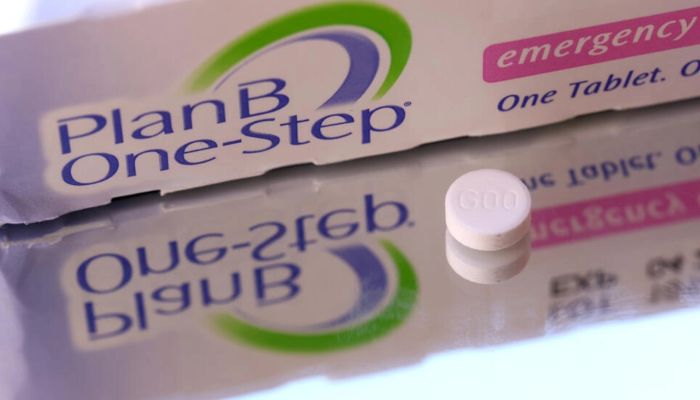
Taking a prescription painkiller alongside a morning-after pill increases its efficacy, according to a new study. AFP Photo
Women who took a prescription painkiller alongside a
morning-after pill had more success preventing pregnancies than those who only
took the emergency contraceptive, according to a new medical study from Hong
Kong.
The study, published on Wednesday in The Lancet, was
conducted at a reproductive health services centre in the Chinese city between
2018 and 2022, and used a randomised controlled trial of 860 women who
requested emergency contraception.
A 1998 trial found that levonorgestrel, one of the world's most
popular morning-after pills, was 95 per cent effective at preventing
pregnancies when taken within 24 hours of unprotected sex.
But the study's authors said taking it alongside piroxicam –
a prescription medicine commonly used to treat arthritic pain and inflammation –
"significantly improved the emergency contraception efficacy".
Out of a group of 418 women who took both levonorgestrel and
piroxicam, only one became pregnant, for an overall effectiveness rate of 99.8
per cent.
Another group of the same size that took levonorgestrel and
a placebo saw seven pregnancies, for an effectiveness rate of 98.3 per cent.
Co-investigator Sue Lo, from the Family Planning Association
of Hong Kong, told AFP the findings were "really exciting", calling
it a "pioneer discovery" that she hoped could be built on by other
researchers.
"For the general public, the emergency contraceptives
that we have been using (are) really good... We're lucky that we find something
to perfect the regimen," she said.
The two test groups showed no significant difference in the
rates of side effects such as late periods, the researchers said.
The study was the first to suggest that a "readily
available and safe" medication taken together with levonorgestrel can
boost its effectiveness, said the study's first author, Raymond Li of the
University of Hong Kong.
"It is worth considering this... combination to be put
into routine clinical use," Li told AFP, while noting that adopting it as
a "standard treatment regimen" would depend on professional health
groups like the World Health Organization.
Lo stressed that the findings still needed to be replicated
before they could lead to policy change, and suggested that women still consult
their doctors.
"Anybody who needs emergency contraception should go to
see a doctor... Whether she should add another prescription drug on top of
(levonorgestrel), she should discuss with a doctor," Lo said.
Writing in a separate commentary in The Lancet, Erica Cahill
from the Stanford University School of Medicine cautioned that the conclusion
"might not apply to all patients".
The study participants were mostly of Asian ethnicity and
weighed less than 70 kilograms (154 pounds), said Cahill, who was not involved
in the study.
The improved effectiveness "might not be generalisable
to patients with higher BMIs".
/KN/

