MRI scan could screen men for prostate cancer
Online Desk
22 Aug 2023 11:32 AM
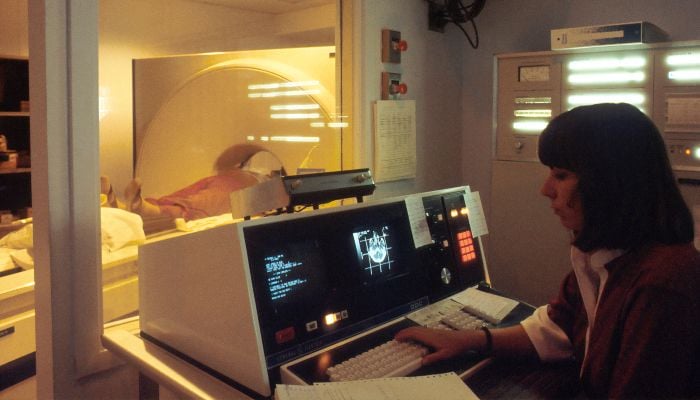
Representational Image
A 10-minute MRI scan could be used to screen men for
prostate cancer, according to a new study.
The scans proved far more accurate at diagnosing cancer than
blood tests, which look for high levels of a protein called PSA, BBC reports. MRI
picked up some serious cancers that would have been missed by PSA alone.
At present there is no national screening programme because
PSA is considered too unreliable, although men over 50 can request a PSA test.
What is prostate cancer?
- Part of the male reproductive system, the prostate gland,
about the size of a walnut, is in the pelvis, below the bladder
- It surrounds the urethra - the tube that takes urine out of
the body through the penis
- Cancer is abnormal and uncontrolled cell growth
- But in the prostate, it usually develops slowly
- There may be no signs or symptoms for years
- And some never develop any problems from it
- But in others, the cancer can be aggressive and deadly
Early diagnosis and treatment is key
For the Reimagine study, which is published in BMJ Oncology,
men aged 50 to 75 in London were invited for screening MRI and PSA tests, which
were carried out at University College Hospital.
Of the 303 who had both tests, 48 had a positive MRI that
indicated cancer and of these 25 were diagnosed with significant cancer after further
tests, including biopsies.
More than half the men whose cancer was picked up on MRI had
low PSA test scores below 3ng/ml, which is considered normal, and so would have
been falsely reassured they were free of disease.
Prof Caroline Moore, consultant urologist UCLH and chief
investigator of the study at University College London, said: "Our results
give an early indication that MRI could offer a more reliable method of
detecting potentially serious cancers early, with the added benefit that less
than 1 per cent of participants were 'over-diagnosed' with low-risk disease."
Paul Rothwell, 62, had his prostate cancer diagnosed as a
result of being on the trial. It was caught early and he was successfully
treated. He feels fortunate because his PSA test was negative and so would have
given false reassurance had it not been for his MRI.
Paul, from Hertfordshire, told the BBC: "If I'd just
had the blood test I would be carrying on life as normal walking around unaware
that there was some sort of ticking time bomb inside me of a cancer slowly
growing, and by the time I did find out, presumably it would have been much
harder to treat and much more dangerous to me."
PSA tests are considered useful but unreliable indicators of
prostate cancer. High levels, which can indicate cancer, can also be caused by
a recent infection or vigorous exercise and sex. This can lead to overdiagnosis
of cancer and, as the trial showed, a low PSA score might miss cancer.
The authors of the study suggest that prostate MRI could be
used for screening, though they say a larger study would be needed to assess
this.
For the trial, black men were five times less likely to come
forward for screening than white men, even though they have a higher risk of
prostate cancer.
Saran Green, another study author from King's College
London, said: "One in four black men will get prostate cancer during their
lifetime, which is double the number of men from other ethnicities. Given this
elevated risk, it will be crucial that any national screening programme
includes strategies to reach black men and encourage more of them to come
forward for testing."
Errol McKellar, 66, from Essex, was diagnosed with prostate
cancer 13 years ago. After successful treatment he returned to work as a car
mechanic and began offering customers a discount if they got their, or their
partner's, prostate checked.
He now runs a charity, the Errol McKellar Foundation, which
aims to raise awareness of prostate cancer and to ensure more men come forward
for testing.
He told the BBC: "When they brought their car in I'd
ask men, 'When was the last time you had a service and MOT on yourself?'.
"There's a massive mistrust of the medical system among
the African-Caribbean community, and that has to be dealt with. But also
there's two elements that we find that come up very often: one is fear, and the
other one is ignorance.
"When prostate cancer turns up at your front door, it
doesn't care whether you're black, whether you're white - if you ignore it, it
will kill you. In the end this is about all men, and leaving no-one
behind."
Prof Mark Emberton, senior author of the study, said a
screening programme could be up and running within the next decade: "The
UK prostate cancer mortality rate is twice as high as in countries like the US
or Spain because our levels of testing are much lower. Given how treatable
prostate cancer is when caught early, I'm confident that a national screening
programme will reduce the UK's prostate cancer mortality rate
significantly."
Simon Grieveson, assistant director of research at Prostate
Cancer UK, said: "When a man's prostate cancer is caught early, it's very
treatable. Sadly, more than 10,000 men each year are diagnosed too late, when
their cancer has already spread.
"MRI scans have revolutionised the way we diagnose
prostate cancer, and it's great to see research into how we might use these
scans even more effectively. These results are extremely exciting, and we now
want to see much larger, UK-wide studies to understand if using MRI as the
first step in getting tested could form the basis of a national screening
programme."
What symptoms should people check for?
The common ones are:
- needing to urinate more frequently - particularly at night
- difficulty starting to urinate, weak flow and it taking a
long time
- blood in urine or semen
These symptoms can be caused by other conditions too - but
it is important to have any changes checked by a doctor.

