What kind of Bangladesh do we want now?
Anusheh Anadil
24 Feb 2026 21:47 PM
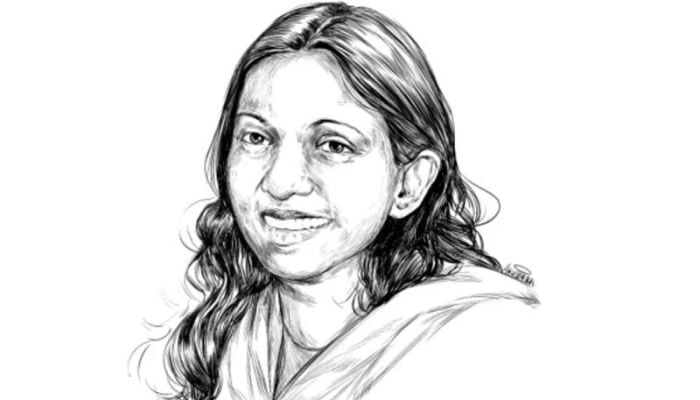
Anusheh Anadil
The recent changes in Bangladesh's politics are not simply about one leader coming to power or one party winning. They show something much deeper. The people of Bangladesh utter that extremism does not define us, fear does not control us, and religious narrow-mindedness cannot shrink our rich, multi-cultural heritage. This proves that we still value openness to different beliefs, bravery, and a clear sense of right and wrong.
For a long time, many people felt that voting was just a routine task with results already decided, so joining in seemed pointless. But now, ordinary people have come out of their homes, stood in long queues, and cast their votes. That simple act brings real hope. It shows that people are starting to believe again that their voices truly matter.
Being a leader is not only about holding power; it is about taking responsibility. What we need today is not just running the government as usual, but real change. We must leave behind the old ways of endless corruption, stealing public money, and treating the country's resources as personal property.
In the past, the main political parties weakened our institutions, destroyed people's trust, and made favoritism toward family and friends seem normal. To move ahead, we need honest reflection on our own mistakes. But accountability is not the only last resort.
The real question we face is: what kind of Bangladesh do we want to make now?
We should start with our environment. Bangladesh has some of the most fertile land and many rivers in the world. Yet we do not have enough forests to keep nature in balance. Experts say a country should have 25 to 30 percent of its land covered by forests or protected areas, but we are far short of that. This is not just a number; it is a serious warning. Without enough forests, we lose clean air to breathe, homes for animals, natural protection from floods and cyclones, peaceful quiet, and the sense of wonder in nature.
Planting trees and restoring forests should become a promise of our nation. We need protected areas around cities so that urbanisation does not harm wildlife. We want smart, modern villages, not only smart cities. We envision a balanced way of living: modern cities, then healthy and sustainable villages, then carefully protected forests. Every zone of the country should feel special, respected, and safe.
We must clean our rivers again. The Padma, Meghna, Jamuna, and others are not meant to be dumps for factory waste; they are the lifelines of our country. Saving and restoring rivers is not something from the past—it is essential for our future survival.
We need careful plans to bring back lost plants and animals. When we help bring back even one type of animal that disappeared, our whole natural system becomes stronger. A country that looks after its elephants, tigers, and migrating birds is also protecting its own people. But caring for nature is not complete without caring for our culture too.
Bangladesh draws its real strength from its variety, not from being the same. Hindus, Muslims, Buddhists, Christians—we have lived and celebrated together on this same land, sharing the same seasons and songs.
The form of Islam that grew here came through centuries of gentle Sufi teachings, beautiful poetry, and wise saints. It is a path of love, not fear. Here, spirituality has been expressed through music and art, not forced on anyone. Discussions happened through poems, not through threats. Problems start only when religion turns into a tool for scaring people, when empty rituals replace true meaning and become ways to divide us.
Freedom to speak and express ourselves is very important, but it comes with responsibility. Words that spread hate, create distrust, or turn neighbours into enemies decay the heart of our nation. Let big religious events lift people's spirits and bring them closer, not stir up anger. Let faith help us become more humane and kind, not smaller and more divided.
Bangladesh should choose a path of deep spirituality rather than strict rules, true values rather than showy displays, real depth rather than symbolic acting. The younger generation already realises this clearly. They understand how serious the climate problem is. They care more about a safe future than about old grudges. They want parks, fresh air, healthy wetlands, joyful cultural events, and the freedom to create. They want lives that feel meaningful. A sense of real purpose is the best way to fight against extreme ideas.
Meaningless rituals are just repetition. A nation that never questions itself becomes like a machine without a soul. When we stop seeing the sacred in nature—in rivers, trees, animals, and every person—disorder grows. But when we realise there is something holy in every part of creation, our values and choices change for the better.
Imagine a Bangladesh where every child learns about the environment in school, where planting trees becomes a normal part of growing up as a citizen, where cultural festivals joyfully celebrate our differences without fear, where villages produce their own clean energy from the sun or wind, and where children know the names of our local trees and birds. This is not just a nice dream; it is a practical plan.
A country that protects its environment saves money by facing fewer disasters. A country that values its multi-cultures has less conflict. A country that builds strong, fair institutions wins back people's trust.
We are not a weak nation. We are a people shaped by rivers and tides, with a quiet, unbreakable strength inside us—like water that flows around obstacles. You can see this strength in villages where people of different faiths join in festivals together, in mothers who rebuild homes and families after storms, and in young people who vote to protect tomorrow.
Let the next chapter honour that deep spirit.
True development is not only about money, big buildings, or bridges. It is about air we can breathe easily, water we can drink safely, open green spaces, different cultures living side by side peacefully, and leaders we can trust to be honest. Development means children playing under shady trees, artists creating freely, and religious teachers spreading compassion instead of control.
Bangladesh has the chance to show the world that a country can lead in protecting the environment, follow a gentle and open form of Islam, keep its culture alive and vibrant, and have honest accountable politics. These dreams are possible. They are waiting for us, and the world is paying attention.
Writer: Anusheh Anadil is Musician and Social Activist
The column was published in the print and online editions of The Daily Samakal and has been rewritten for the English version by Mohammed Humayun Kabir, Senior Sub-Editor.

