Interview: Bangladesh will face a multidimensional crisis if the war continues
Air Commodore (Retd) Ishfaq Ilahi Choudhury
03 Mar 2026 21:42 PM । Update: 03 Mar 2026 21:57 PM
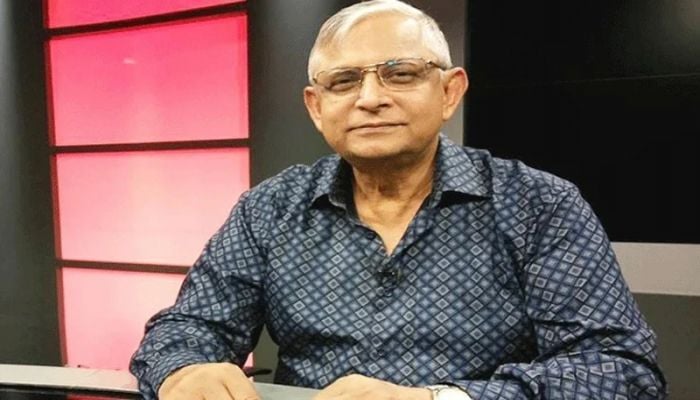
Air Commodore (Retd) Ishfaq Ilahi Choudhury
Security analyst and Treasurer of East West University, Ishfaq Ilahi Choudhury, NDC, PSC, has retired as Air Commodore in 2003 after a thirty-five-year career in the Air Force. He was also an instructor at the Staff College and National Defence College for a long time. After joining the then Pakistan Air Force as a commissioned officer in 1968, he received training from the then Soviet Union in 1975 and the United States in 1986. In addition, he received a master's degree in defence studies and an MPhil degree in national security studies.
Mahfuzur Rahman Manik, Senior Sub-Editor of Daily Daily Samakal took an interview of Air Commodore (Retd) Ishfaq Ilahi Choudhury over the evolving situation in the Middle East war and South Asian contemporary issues.
Daily Samakal: Iran's Ayatollah Khamenei was martyred in a US-Israeli attack. Earlier, we saw that the United States took away the head of government of a country. Does a systematic world order exist at all in the reckless activities of the United States, including the genocide in Gaza?
Ishfaq Ilahi Choudhury: The international laws and regulations that we are seeing have become largely irrelevant through these activities. We need to find a new definition of international regulations. If we discuss regarding Iran, we see that the United States and Israel have probably attacked Iran two or three times. The idea was that Iran would destroy all its nuclear power. Before that, the United States attacked Iran and said that they had destroyed all of its nuclear weapons. All that was left were missiles. In the end, despite discussions, they could not come to a solution to the issue. Immediately after that, on Saturday, we saw that the United States and Israel killed Iran's supreme leader Ayatollah Khamenei in the first attack. Ayatollah Khamenei has ruled Iran for thirty-seven years. In fact, US President Donald Trump initiated the announcement of regime change in Iran with this assassination. But whether that change will actually happen there remains to be seen.
Daily Samakal: In response to the war that the United States has started, several countries have already been attacked. Could this turn into a full-scale regional war?
Ishfaq Ilahi Choudhury: The war has already begun. However, it seems that it will be limited to the air. Trump also said the same. What happened in Iraq will not be seen this time. Iran has also attacked in return. They have attacked various US bases in the Middle East.
Daily Samakal: Where will the situation in Iran go after Khamenei's death?
Ishfaq Ilahi Choudhury: The United States will monitor the situation there after Khamenei's death is confirmed. Although Trump has called for the Iranian people to come out, it remains to be seen what the people there will do. A new leadership has been announced in Iran. In the absence of Khamenei, the new leadership faces the challenge of controlling Iran in a war situation. Many of the leaders of Iran's powerful armed forces, the Islamic Revolutionary Guard Corps-IRGC, have also been killed, and it may be difficult for them to control the situation. The US will want to disable Iran's internal communication system so that commanders cannot communicate with each other. Israel-US can take measures to prevent Iran from launching any missile attacks.
Daily Samakal: Do you think the Arab world will take the field on Iran's behalf?
Ishfaq Ilahi Choudhury: I think the Arab world will be limited to condemning the death of Iran's Supreme Leader Ayatollah Khamenei. It does not seem that they will get involved in the war. It does not even seem that any other power, including Turkey, will come forward.
Daily Samakal: If this conflict in the Middle East lasts long, what kind of change can there be in the balance of global power?
Ishfaq Ilahi Choudhury: If the US and Israel win in the Middle East, it does not seem that anyone will be their enemy. Jordan-Syria is already maintaining a neutral position. In other words, the Gulf countries in the Middle East can breathe a sigh of relief. Many of them consider Iran a threat. One person has stepped away from the three-way tension between Iran, Turkey and Saudi Arabia over regional leadership. Monarchy is going on in the Middle East. The US base in these countries may become stronger. Although Iran's allies are China and Russia, Russia is now busy in Ukraine. It does not seem that they will provide any kind of help to turn the tide of the war.
Daily Samakal: At the same time, we are seeing a war situation on the Pakistan-Afghanistan border. How much security crisis can this create in South Asia?
Ishfaq Ilahi Choudhury: The recent conflict between Pakistan and Afghanistan can create a security crisis in South Asia. The war is being fought with the Taliban, which Pakistan sponsored in the formation of the Taliban. India can also cooperate with Afghanistan for its geopolitical benefits. India can even cooperate with Israel. Indian Prime Minister Narendra Modi has just returned from a visit to Israel. He was given a grand reception there. India has also made many big agreements with Israel. However, Bangladesh would certainly like the conflict between Pakistan and Afghanistan to be resolved, although it does not seem likely to happen soon.
Daily Samakal: How unstable can the global energy supply and oil market become if a war situation develops on multiple fronts?
Ishfaq Ilahi Choudhury: If the war lasts a long time, the energy supply and oil market will definitely become unstable. Especially if oil transportation in the Strait of Hormuz is disrupted, the crisis will increase. However, I do not think Iran currently has that capability. Because the main responsibility of the US Navy will then be to keep the naval channels open so that the Iranian Navy cannot interfere in the Strait of Hormuz.
Daily Samakal: How much can Bangladesh be affected by this?
Ishfaq Ilahi Choudhury: The risk to our economy is very high. If the price of fuel oil increases, Bangladesh will face a major economic crisis. We import LNG from Qatar; there was an attack there. If the attack continues like this, the import will face a crisis. Even if there is a slight crisis in energy, the current economic situation of Bangladesh will suffer major losses. Remittances may also be affected. If war continues in the Middle East, many jobs may be lost. Bangladeshi workers may also be affected. But I do not think the situation will go that way. Apart from that, we have not yet seen any news of the sectors where our manpower is working abroad being affected. Especially the missiles that Iran is attacking are targeting US bases in the Middle East. If they fall on residential areas or cities, there is a fear of casualties among ordinary people.
Daily Samakal: In the context of global instability, can Bangladesh face any other crisis?
Ishfaq Ilahi Choudhury: The fear of the emergence of extremism cannot be ruled out. Especially where there is a war in Pakistan-Afghanistan. Extremism can never be tolerated in politics. Everyone, including Bangladesh, should ensure that we will not be used for anyone's benefit and that we will not allow our land to be used by anyone.
Daily Samakal: First of all, I mentioned the issue of a systematic world order. At the same time, can it also be said that this regional and international war situation proves that the UN, OIC or other organisations have failed to control the situation?
Ishfaq Ilahi Choudhury: Of course, this goes without saying. International institutions are becoming very irrelevant. We see that the United States has already pulled out of some organisations. For example, it has officially pulled out of the World Health Organisation. Without America, these organisations will not be able to play such a strong role. Just as the United Nations could not play any role in the Ukraine war, the role of the United Nations is negligible even after the destruction of Gaza and the genocide of Palestinians there. They are not saying anything in the Pakistan-Afghanistan war either. They are silent even after Saturday's attack. The United Nations and other organisations around the world have become increasingly ineffective. A unipolar world centred on US influence is visible. China may also control various situations in the near future.
Daily Samakal: What do you think Bangladesh should do in the context of regional wars in Iran, the Middle East and neighbouring countries?
Ishfaq Ilahi Choudhury: Since Bangladesh is part of the world system, we have to adopt the best strategy in any situation in the world. We should not fall under the control of any big power. We can also work for a peaceful situation in our neighbouring countries. Extremism cannot be tolerated in any way. Since many countries in the Middle East have been affected after Saturday's incident, it is necessary to inquire about the workers there. Our embassies in the concerned countries should be instructed in this regard. Meanwhile, Bangladesh has expressed deep concern about the safety of Bangladeshi citizens residing in the region in the context of the recent conflicting situation and emerging tensions in the Middle East, including Iran. Bangladesh reiterated its consistent and principled position in favour of peace, stability and security in the Middle East and called on the international community to create an environment for dialogue to restore peace. Along with the statement, the government will have to decide the best course of action according to the situation.
Daily Samakal: Thank you for your time.
Ishfaq Ilahi Choudhury: Thank you too. Best wishes for Daily Samakal.
Writer: Air Commodore (Retd) Ishfaq Ilahi Choudhury is security analyst
The article was originally published in the print and online editions of The Daily Samakal and has been rewritten for the English version by Mohammed Humayun Kabir, Senior Sub-Editor.

