World Meteorological Day
Sustainable preparedness against climate risks is essential
Dr Mohan Kumar Das
25 Mar 2026 18:07 PM । Update: 25 Mar 2026 18:15 PM
World Meteorological Day is celebrated every year on March 23 around the world. This date marks the founding of the World Meteorological Organisation in 1950. It is not simply a date on the calendar; it serves as a reminder of humanity’s ongoing struggle to survive in the face of nature’s power.
The theme chosen for 2026, “Monitoring today, protecting tomorrow,” forces us to face a difficult truth. As WMO Secretary-General Dr Celeste Saulo has said, “Early warning not only saves lives, it also protects livelihoods.”
The real question, however, is whether our present monitoring systems are strong enough to provide that protection.
An examination of weather patterns in recent years shows that climate change is no longer a distant threat. It has become a harsh reality of the present. The average temperature of the earth has already risen by 1.1 to 1.2 degrees Celsius compared with the pre-industrial period. The year 2023 was the warmest on record, and there is a strong chance that this record will be broken in 2026.
In Bangladesh, the effects of this change are clearly visible. From severe heatwaves in Chuadanga to the unprecedented floods in the eastern region in 2024 and 2025, all these events show that the usual patterns of weather have been disrupted.
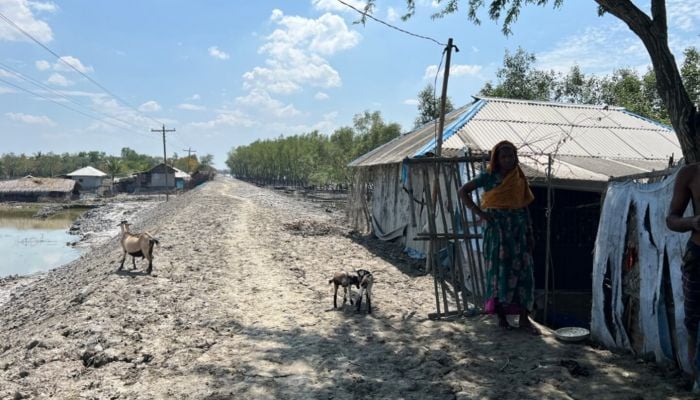
Nearly 50 million people living in coastal areas now face an existential threat. Around one million hectares of farmland have lost their fertility because of rising salinity caused by cyclones and tidal surges. This means that not only are we threatened by natural disasters, but our food security is also at serious risk.
The Bay of Bengal is the area of greatest concern for Bangladesh. Cyclones that form in these warm waters now gather energy at a frightening speed. Sometimes only a few hours remain to issue a final warning. By the time our land-based radars detect the signal, the disaster is already at our doorstep. Our main weakness here is the shortage of enough ocean buoys and automatic monitoring systems in the deep sea.
Without real-time data from the ocean floor, it is almost impossible to measure the true strength of a cyclone. Strengthening our seabed data collection network is therefore essential if we are to improve today’s observation.
People no longer ask simply whether it will rain. They now want to know whether their area will be flooded by that rain. This is where modern meteorological science becomes vital. In addition to satellite and Doppler radar data, impact-based forecasting is now necessary. This means combining weather information with geographic data through GIS to give precise warnings about which roads will be flooded or which crops will be damaged.
Although the death toll from cyclones in Bangladesh has fallen sharply over the past few decades, economic losses continue to rise. To reduce these losses, we must improve the quality and depth of our data.
Weather does not respect political borders or fences. When heavy rain falls in the foothills of the Himalayas, the lowlands of Bangladesh must face the consequences. Real-time data on rainfall and river flows from upstream countries such as India and Nepal are essential if we are to prepare for early floods in the haor region.
Although the World Meteorological Organisation’s Unified Data Policy calls for the free exchange of information among member countries, in practice this exchange is often blocked by technical or political difficulties. After the closure of the SAARC Meteorological Research Centre, organisations such as BIMSTEC and the Hydro-Climate and Ocean Centre need to play a more active role in filling this gap.
Between 1970 and 2021, around two million people lost their lives in disasters worldwide, with a large number of those deaths occurring in South Asia. During this period, Asia recorded 3,612 disasters in which approximately 984,000 people died. Cyclone Nargis in 2008 alone claimed 138,000 lives. In Bangladesh, about 520,000 people died in disasters over the same period, the highest figure among Asian countries.
Although Bangladesh is often described as a role model in disaster management, these numbers remind us that we still have a long way to go.
Protection cannot be achieved through technology and monitoring alone. We must remember that mangrove forests and coastal green belts, such as the Sundarbans, act as our natural defence walls. A single mangrove tree can slow down a cyclone far more effectively than any concrete barrier. Yet our natural defences are collapsing because of deforestation, the filling of wetlands, and the destruction of biodiversity. The meaning of security must therefore include the protection of ecosystems alongside the use of modern technology.
Today’s young people are far more aware of climate change than previous generations. Their energy and interest must be brought into the mainstream of research and action. If ordinary citizens share real-time weather information from their local areas through digital platforms using citizen science and participatory data collection, this will help make national forecasting systems more accurate.
Universities and research institutions should move beyond classroom teaching and place greater emphasis on practical field-level data analysis.
Policymakers need to understand that spending on weather monitoring and research is not a cost but a wise investment.
According to the World Meteorological Organisation and the World Bank, improved monitoring systems that deliver effective early warnings can prevent around 13 billion dollars of property damage every year. Achieving this goal requires strong political commitment, long-term planning, and the development of our own technological capacity.
The climate crisis affects everyone, and the solution must also be found together. World Meteorological Day 2026 reminds us that if we do not monitor nature closely and protect it today, tomorrow’s safety will remain only a dream.
The time to prepare is now. The right decisions we make today will determine whether we leave a safe world for the next generation.
Writer: Dr Mohan Kumar Das is Joint Secretary, South Asian Meteorological Association (SAMA), Executive Director, Hydro-Climate and Ocean Centre. He can be reached at: mohan.smrc@gmail.com

