Expectations from the government to combat climate change
Nazmul Ahsan
02 Apr 2026 21:32 PM
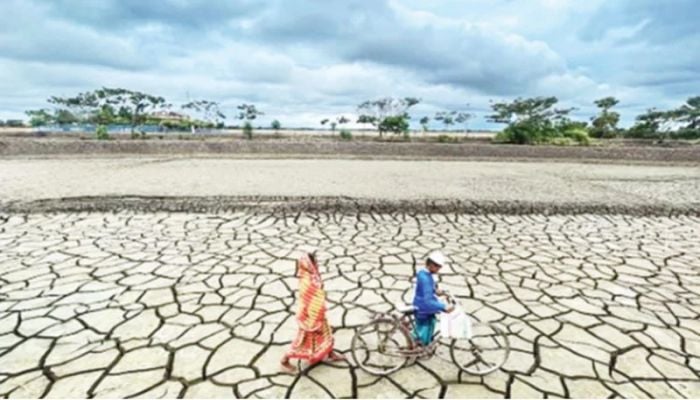
The new government’s plans to tackle climate change have drawn a lot of attention from environmental activists, researchers, and others in the climate movement. Behind this attention lies a long-standing expectation that Bangladesh’s development should be guided by environmental sustainability and climate justice. At a time when the effects of climate change are growing stronger every day, it is very important for the government to take effective and timely action in this regard.
Some early plans of the government have already appeared in the media. These include clearing forest land, reviewing the resources of aquatic animals in the Sundarbans, ending the traditional burning of waste in Matuail and Amin Bazar, and introducing more environmentally friendly ways of managing waste. At the same time, the Bangladesh Climate Change Trust Fund and other ministries have begun work on digging 1,000 kilometres of canals and planting trees. There will surely be much discussion and debate about these programmes, and the public will watch closely to see what succeeds and what fails. However, the main question is whether the 180-day programme is only meant to handle immediate problems and calm public concern, or whether it has another purpose.
It would be a short-sighted policy to see the 180-day programme as nothing more than a short-term fix or a way to please people. Instead, this period should be viewed as a strategic beginning. It can play a key role in shaping the government’s long-term vision and priorities for development. The 180-day programme can serve as the first step towards keeping the promises made during the election and as a chance to bring much-needed reforms to the existing development system.
In the context of Bangladesh, policy progress in environmental protection and addressing climate change is significant. Over the past fifteen years, Bangladesh has made significant progress in creating policies for environmental protection and fighting climate change. Important documents such as the National Adaptation Plan offer long-term guidance on how to deal with climate risks. The updated Nationally Determined Contribution (NDC 3.0) sets out ways to reduce carbon emissions and strengthens Bangladesh’s position in global climate efforts.
Recently, the National Framework and Action Plan for Locally Led Adaptation has been prepared to improve adaptation work at the local level. The Bangladesh Climate Change Strategy and Action Plan (BCCSAP) has served for many years as the main guide for development activities and budget decisions. In addition, the Bangladesh Climate Change Trust has been set up to manage climate finance, climate budget tracking has been introduced to monitor climate spending in the national budget, and a Gender Action Plan has been developed to address the special vulnerabilities faced by women. Together, these form a broad and connected policy framework.
All these steps show Bangladesh’s ability and commitment to dealing with climate change. However, the real question is how much these policies are actually improving people’s lives on the ground.
The biggest challenge remains implementation. The Bangladesh Climate Change Strategy and Action Plan, which was created in 2009, is still used as the main reference for planning and budgeting. Yet it has not been properly linked with newer policies such as the NDC or the National Adaptation Plan. This has created a gap between what the policies say and what actually happens in practice.
This gap affects ordinary people across the country, especially the most vulnerable groups, including women, children, and young people. The impacts of climate change – such as rising salinity, floods, droughts, and cyclones – are felt most strongly by those who have the least participations in making policies.
There are several main reasons for this implementation gap. Firstly, there is not enough steady and sufficient funding. Although climate budget tracking exists, questions remain about the size of the allocations and how effectively the money is spent. Secondly, there is a lack of administrative capacity and accountability, which lowers the quality of project work. Climate change cannot be tackled through projects alone; it must become part of the government’s regular programmes. Thirdly, and perhaps most important, affected communities are not properly involved in planning and carrying out these activities.
In this situation, the new government’s 180-day programme offers a valuable opportunity. If steps are taken during this time to coordinate, update, and strengthen the way existing policies are put into practice, it could bring real and lasting benefits. In particular, modernising the BCCSAP and aligning it with other current policies would be an important move.
Fighting climate change is no longer only a national matter; it has also become an important part of international diplomacy. Bangladesh can secure the climate finance, technology, and capacity-building support it needs by taking an active and strategic role in global climate talks and negotiations.
There is also real potential in areas such as carbon credits and market-based climate finance. To take full advantage of these opportunities, Bangladesh needs a well-coordinated policy framework, strong institutions, and transparent and easy systems. Otherwise, this important area may not deliver the benefits it could.
Beyond these points, the government should focus on several key issues. These include removing obstacles – including bureaucratic ones – to make locally led adaptation work more effective, and ensuring proper financing for such initiatives. Another urgent matter is a genuine transition in the energy sector. Recent events, such as the ongoing war between Iran and the United States, have once again highlighted the importance of energy security. A major part of Bangladesh’s energy future should be a shift away from fossil fuels towards renewable energy, especially through large-scale solar power projects and by encouraging greater private investment in this sector.
Writer: Nazmul Ahsan is a development worker
The article was originally published in the online edition of The Daily Samakal and has been rewritten for the English version by Mohammed Humayun Kabir, Senior Sub-Editor.

