Interview: Professor Dr Nazrul Islam
Measles outbreak means increased risk of other infectious diseases
Sadia Mahjabin Imam
04 Apr 2026 22:00 PM । Update: 05 Apr 2026 21:46 PM
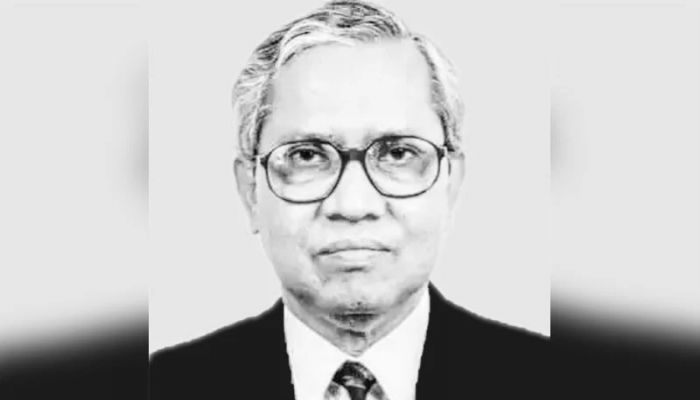
Professor Dr Nazrul Islam
Professor Dr Nazrul Islam, former Vice-Chancellor of Bangladesh Medical University, is a leading expert on infectious diseases and public health. He was a member of the National Technical Advisory Committee during the COVID-19 pandemic. After completing his MBBS in 1964, he began his career in the research department of the then Pakistan Vaccine Laboratory. He actively took part in the Liberation War in 1971. Later, he carried out research on the Hepatitis B virus in the United Kingdom. He returned to the country in 1977 and joined the Microbiology Department as a professor of virology. The interview was taken by Sadia Mahjabin Imam, Assistant Editor of Daily Samakal.
Daily Samakal: For many years, Bangladesh’s vaccination programme has been a successful example for the world. How did that system break down?
Nazrul Islam: The Expanded Programme on Immunisation (EPI) was very strong in Bangladesh. This system broke down during the interim government. The programme of the Directorate General of Health Services (DGHS), under which vaccines were purchased as part of the Operational Plan, was interrupted in August 2025 after the interim government took office. As a result, the vaccination programme faced a crisis. The process of supplying vaccines to villages became ineffective, and the smooth running of the programme was halted. During this time, many services including primary healthcare, disease control, and nutrition were disrupted. One of the results was an outbreak of measles infection. Children are losing their lives and the number of infected people is on the rise.
Daily Samakal: Can an ongoing public health programme be suddenly stopped or changed in this way? Why did this change have to be made?
Nazrul Islam: It cannot be suddenly changed or stopped like this. Any changes must be made step by step through a proper process. The authorities can best explain why the decision was changed. As far as I know, it was cancelled because of administrative reorganisation without prior preparation, the creation of new documents, and bureaucratic complications in the procurement process. This crisis arose due to a lack of coordination in the decision to use the direct procurement process through the tender system from UNICEF. When the previous Operational Plan was cancelled, there was a long delay in purchasing vaccines and releasing funds because there were no effective alternative measures or new project documents. The Ministry of Finance objected when an attempt was made to use the direct procurement method. As a result, there was a delay in approving the vaccine purchase file.
Daily Samakal: Has there ever been an increase in the outbreak of any infectious disease due to mismanagement in the EPI?
Nazrul Islam: The EPI started in 1978 in the country. After that, there were fears of disruption for many reasons. However, until 2024, this never happened because of the dedicated work of the EPI officials. There have been anti-dictatorship movements and political changes in this country, but the EPI has never been disrupted. The structure of this programme has produced good results because of the sincerity of the EPI officials. As a result, infectious diseases have been brought under control. Even during the COVID-19 pandemic, the EPI remained quite strong. People also became more aware at that time. The administration and the media regularly monitored it. As a result, the vaccination rate increased even further. However, during the previous interim government, such an important service structure and system of the country was disrupted.
Daily Samakal: Was the DGHS not aware that the vaccines would run out?
Nazrul Islam: The officials of the DGHS were negligent in carrying out their duties. There were no vaccines left in any store. Even after the measles outbreak began, no statement came from them. Of course, there is provision for punishment in government jobs. A health sector reform committee was formed in November 2024 to make the health sector people-oriented, accessible, and universal. Many recommendations were made there. However, I think nothing effective was done.
Daily Samakal: Is there a risk that the measles outbreak will create the same risk in the future for diseases like tuberculosis, kala-azar, malaria, or HIV?
Nazrul Islam: An outbreak of diseases like measles means that there is a risk of other infectious diseases increasing. Preparations are needed in advance for infectious diseases. More than three crore people live in Dhaka city, yet there is only one infectious diseases hospital with very few beds. There is no opportunity here to live life avoiding human contact. Dhaka needs four or five more infectious disease hospitals. Children affected by this outbreak would then have received care, and the number of deaths would have decreased. For now, beds for infectious diseases have been increased in some hospitals. But it is not enough to just increase beds. Along with this, there must be an intensive care unit system with oxygen facilities. If other infectious diseases increase, the situation may become even worse.
Daily Samakal: Eighty per cent of children infected with measles are under nine months old, who have not yet had time to get vaccinated.
Nazrul Islam: Children are born with immunity from their mothers at birth. It is generally believed that this immunity lasts until the age of nine months. For this reason, vaccines were given from the age of nine months. But children’s natural immunity is now decreasing. For this reason, the government is now talking about giving vaccines from six months to ten years. I think that pregnant mothers should be given these vaccines to protect children’s natural immunity. Not just for measles; all vaccines should be considered in this way. Now children are getting infected with infectious diseases before the age of six months. The EPI needs to be reactivated.
Daily Samakal: Parents are now afraid to send their children to school. How many people can measles spread from one person to another?
Nazrul Islam: Parents’ fears are not without reason. Measles is a contagious disease, and the condition can deteriorate so quickly due to pneumonia and diarrhoea that there is no time for treatment. Although very young children are most affected by the mismanagement of vaccines, school-going children can also be affected. Many children suffer from malnutrition. How many people one person can infect with measles depends on how many people they come into contact with. However, considering various factors including population density, experts estimate that in the social context of this country one person can spread measles to fifteen to eighteen people.
Daily Samakal: The Health Minister has announced that more than two crore vaccines will be administered across the country from next Sunday. However, there are still no syringes. Will it be possible to carry out the vaccination programme so quickly?
Nazrul Islam: The Health Minister said that vaccines have already been purchased. I applaud this quick initiative. However, government agencies and departments will have to work together to conduct vaccination programmes in all areas, including the most affected districts. Do you remember that the vaccination programme was disrupted in 2025? At that time, the approval of the proposal to purchase vaccines was delayed because of the delay in the decision of the Finance Division. Now that this outbreak has occurred, we must work with urgency to conduct vaccination programmes quickly across the country. Hospitals should also pay attention to management.
Daily Samakal: What is the scenario of hospital management?
Nazrul Islam: You will often hear that the X-ray machines and CT scan machines provided in government hospitals are out of order. Patients who go there return without getting services. However, the machine in the private hospital located just ten feet away from the government hospital works properly. If you go in the afternoon, you will see that doctors from government hospitals are sitting in that private hospital and treating patients. The patients who come to the government hospital are taken to private clinics by brokers. The authorities need to monitor these issues and take measures to punish those responsible. If everything can be brought under proper accountability, not only the vaccination programme but also the country’s healthcare sector will improve.
Daily Samakal: What kind of precaution is needed for ordinary people now to prevent infectious diseases?
Nazrul Islam: Common people need to be aware about vaccines. They need to get vaccinated. In addition to avoiding measles infection, wearing masks is always important. They should practise regular hand washing. They should not go to crowded places unnecessarily. The rules that were in place during the COVID-19 pandemic are the same. The disease spreads most from crowds. Whether it is a child or an elderly person, you should go to the doctor as soon as symptoms appear. If necessary, the person should be taken to the hospital.
Daily Samakal: Thank you very much.
Nazrul Islam: Thank you too. Best wishes for Daily Samakal.
Writer: Sadia Mahjabin Imam, Assistant Editor of Daily Samakal
The article was originally published in the print and online editions of The Daily Samakal and has been rewritten for the English version by Mohammed Humayun Kabir, Senior Sub-Editor.

