Lightning now a silent killer in Bangladesh
Syed Faruk Hossain
06 May 2026 20:15 PM । Update: 06 May 2026 21:44 PM
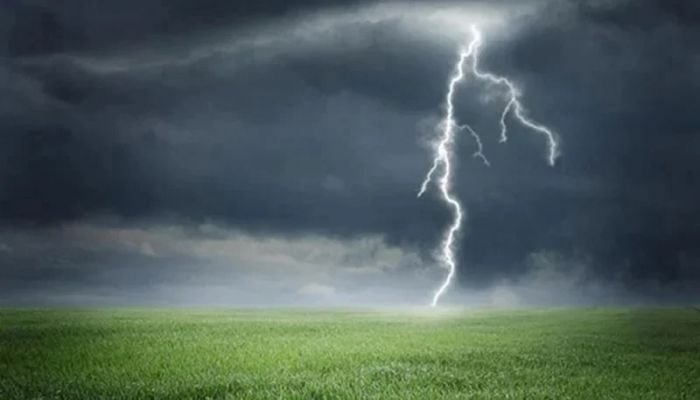
On Sunday, April 26, some 15 people died due to lightning strikes in eight districts of Bangladesh. The deaths occurred from morning to afternoon. Lightning has now become a silent killer in the country. Whenever clouds gather in the sky, people feel fear. Once seen as a seasonal natural event, lightning has grown into a deadly threat that claims hundreds of lives every year.
On average, about 300 people die from lightning strikes in Bangladesh annually. More than 50 deaths had already been reported in the first four months of this year. People concerned say the government has not taken strong and effective steps to stop this rising death toll. Several schemes were made in the past to prevent lightning deaths, but most of them were never properly implemented. The few measures taken so far have not helped much.
Weather and climate experts explain that lightning has increased because of changing weather patterns, environmental pollution, and the indiscriminate cutting of trees. It no longer occurs only in certain seasons but happens throughout the year. The number of lightning incidents has risen by 15 to 20 percent in recent years. Farmers and poor villagers are the main victims of it. Among natural disasters, lightning has lately caused great panic, killing many people every year.
Lightning was officially declared a disaster on May 17, 2016, due to the increasing number of deaths. Many injured people become permanently disabled. Deaths are especially high in Haor, Beel, and low-lying areas. People working in open fields during rain, those travelling by boat, and people on roads suffer the most. High population density has also raised the death toll. Bangladesh Meteorological Department cannot predict lightning accurately because of limited technology. Experts advise that when black clouds appear, people should immediately move to safe shelter.
Almost all clouds that form in April bring lightning. Thunderstorms are complex and can usually be predicted only half an hour to one hour in advance. Most victims are farmers and fishermen who work outdoors to support their families. Children also lose their lives while playing on rooftops or in fields. One common and dangerous mistake is taking shelter under big trees during storms.
Lightning kills in two main ways. Direct strikes, where lightning hits a person’s body directly, are rare and cause fewer deaths. Most deaths happen due to indirect strikes. When lightning hits the ground or an object, electricity spreads through the soil in a process called ground electrification. This is how the majority of people die. In treeless Haor areas, farmers standing in open fields become the highest points and are easily struck.
Climate change is a major reason for the rise in lightning. It now occurs even with light rain or strong winds. Scientists also blame higher levels of nitrogen and sulfur in the air for forming more dark thunderclouds. Deforestation has made the situation worse because tall trees once acted as natural protectors by attracting lightning strikes. With fewer trees, more people are now at risk.
Awareness is the most important tool to reduce deaths. People should follow safety rules carefully. During thunderstorms, it is best to stay indoors and avoid going out unless absolutely necessary. One should take shelter inside a strong building or concrete structure as quickly as possible. At home, people should stay away from windows, balconies, and electrical equipment. They must not touch metal faucets, railings, pipes, or wires. If many people are together in an open area, they should spread out 50 to 100 feet apart. No one should take shelter under big trees and should stay at least four meters away from them.
It is important to avoid open fields, high places, tall trees, electric poles, wires, metal poles, and mobile towers. Rubber shoes can provide some protection if one must go out when dark clouds appear. Umbrellas with plastic or wooden handles are safer than those with metal parts. Electrical plugs should be disconnected. In boats, fishing should stop and people should take cover under the canopy. Inside a car, one should avoid touching any metal parts.
Thunderstorms usually last for 30 to 35 minutes, so staying at home during this time is wise. In open paddy fields, people should crouch low with feet together and cover their ears. Children must not play outside. Fishing in open boats during storms is very risky.
To control this disaster, more actions are needed. Lightning safety should be included in school textbooks. Better early warning systems should be developed so that people, especially in Haor regions, can be informed quickly through phones and other means. Regular meetings, seminars, and awareness programmes should be held from March to May. Shelter centers should be set up in open fields, and free medical care should be given to victims.
The government should install lightning protection rods, particularly in Haor areas. More scientific research on lightning is also urgently required.
If proper steps are not taken soon, this problem may become even more serious. Although lightning is a natural event, human carelessness and lack of preparation have made it deadlier. With growing climate change and environmental damage, the threat is increasing. However, greater awareness, caution, and effective government measures can still save many lives.

