Interview: Zaffar Abbas
If government and media have differences of opinion, public interest will prevail
Sadia Mahjabin Imam
09 May 2026 10:12 AM । Update: 09 May 2026 10:43 AM
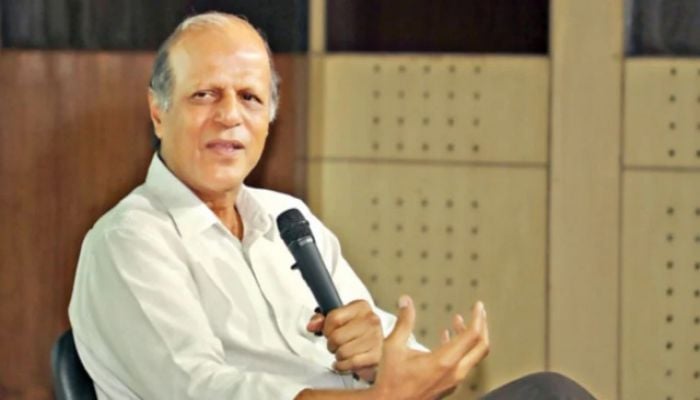
Zaffar Abbas is the editor of Pakistan’s popular English-language daily newspaper, Dawn. He has been working in journalism since 1981. He served as the Islamabad and Karachi correspondent for the British broadcaster BBC and as a special correspondent for The Herald magazine. He is also a member of the editorial board of the Asian News Network (ANN). In 2019, Zaffar Abbas received the Gwen Ifill Press Freedom Award from the Committee to Protect Journalists (CPJ).
Daily Samakal: The number of printed newspapers is decreasing around the world. How are online platforms affecting newspapers in Pakistan?
Zaffar Abbas: I can give the example of our own Dawn website and digital platforms. The level of public engagement there is so high that we can no longer think of relying only on print. News is updated one after another on digital platforms.
It is true that printed newspapers were once the main force in the news industry. Now digital media has taken that position. However, the importance of print newspapers has not disappeared. Journalists working in print are generally more experienced. Print newsrooms have clear editorial policies, skilled staff and experienced reporters. Stories published on digital platforms go through careful checking before they appear in print. At the end of the day, readers want credible news. So, while digital platforms provide a large volume of news quickly, people still rely on print media for reliable information. In this way, the two are now working together.
Daily Samakal: What kind of people are hired in the Pakistani media?
Zaffar Abbas: In the past, there was no strong system of formal journalism education in Pakistan. As a result, people from many different backgrounds entered the profession. However, language skills are given great importance in Pakistani media. Whether someone comes from an English, Urdu, Sindhi or any other regional language background, their proficiency is valued according to the needs of the organisation.
Daily Samakal: What is the state of formal journalism education? How are women journalists viewed?
Zaffar Abbas: The situation has improved in Pakistan. Many universities now offer high-quality journalism programmes. Training is also provided through various channels. This includes training on digital tools as well as investigative journalism. All of this is helping to produce skilled journalists for the future.
As for women, Dawn has always supported positive steps to ensure equal rights and opportunities for women. We continue to fulfil our responsibility in this area.
Daily Samakal: For the first time in the history of the World Press Freedom Index, more than half of the countries have fallen into the 'serious' and 'very serious' categories for press freedom. The average score for 180 countries has never been this low in the past 25 years. How do you explain this?
Zaffar Abbas: You can understand why this is happening just by looking around. Authoritarian regimes have grown stronger in many places. No one is truly giving the press freedom in their countries. Media outlets face different forms of censorship, and as a result, the position of free media has worsened in many nations.
Look at the United States, which is seen as the champion of so-called free media and democracy. Even its president has spoken negatively about the free press. He has complained that mainstream media in his country do not report accurately and follow their own political agenda. Journalists there are being directly attacked, and there are threats to close media outlets and cancel broadcasting licences. What do you say about these incidents?
In developing countries around the world, the media is also under pressure from authoritarian rulers. When the media faces such pressure globally, it is natural for the index to fall.
Daily Samakal: How has Pakistan managed to move one step forward in this index?
Zaffar Abbas: Pakistan also has its problems. However, Pakistani journalists have a long history of fighting for a free media. This struggle has continued for many years. Journalists and media organisations have achieved some successes through their efforts. There are human rights organisations, journalists’ unions and several media outlets in Pakistan that continue to fight for press freedom. Perhaps this collective effort is why Pakistan has moved slightly forward.
That said, this does not mean the media in Pakistan is fully free. The struggle to escape authoritarian control and publish independent news is still going on. Our goal is to secure as much freedom as possible for the media in the country. If there is a conflict between the government’s view of national interest and our understanding of it, we will give priority to the public interest.
Daily Samakal: Self-censorship is increasing in the media. Repressive policies and laws are also on the rise. Which is more harmful – censorship or self-censorship?
Zaffar Abbas: If the government imposes direct censorship, journalists like us are not responsible for it. People can clearly see that nothing is being published because of military rule or authoritarian control.
However, even without official censorship, governments can create many forms of pressure that force editors and journalists to censor themselves. This is happening in Pakistan, India and Bangladesh.
When the state imposes censorship, journalists can still tell the public: “We do not have the authority to publish this.” But with self-censorship, you have the right to write but choose not to. There is no way to inform the public that important information exists but is not being published. This invisible pressure is the most difficult challenge. Nothing is worse for journalism. It destroys investigative reporting.
Daily Samakal: Does the media suffer as a result?
Zaffar Abbas: Many important media outlets across the world, including in South Asia, have lost their credibility because of self-censorship by editors and journalists. This is still happening. As a result, readers and viewers naturally turn to social media for news, whether it is reliable or not.
I believe self-censorship is far more dangerous than direct censorship.
Daily Samakal: How much pressure does the intelligence agency put on the Pakistani media?
Zaffar Abbas: It is hard to say exactly. Every media outlet adapts to this pressure in its own way and reaches some kind of understanding. Those who try to act as the true voice of the people always face greater difficulties.
Whether the government is military or civilian, no one likes criticism of themselves. In Bangladesh, for example, the civilian government has acted more harshly than the military regime in some cases, with repression and legal cases against journalists.
The intelligence agencies of any country – whether Pakistan, India or Bangladesh – can use their power to pressure the media. It depends on how strongly the media owner and editor can keep the organisation independent. Of course, there is often a high price to pay for this independence.
Journalism is a responsibility to the people of the country. My effort will always be to provide them with as much accurate information as possible.
Daily Samakal: Is there any specific way to handle such a situation?
Zaffar Abbas: I believe it is very important for any media outlet to be financially self-reliant, whether it is a Bangladeshi or Pakistani one. When a media house is independent financially, it can try new things more easily and can also handle pressure better in many cases. At the same time, we must ensure it does not focus too much on profit.
Daily Samakal: Pakistan has a long history of military rule. What has been the experience of practising freedom of expression under it?
Zaffar Abbas: Military rule and freedom of expression do not go together. Under military rule, there is complete censorship and people’s basic rights are taken away. The military has always been part of Pakistan’s political system, directly or indirectly.
Daily Samakal: What factors do you consider when publishing news about extremists?
Zaffar Abbas: The media should report on violence, terrorism and extremism. That is part of its professional duty. However, we must be careful not to glorify terrorism or militant groups in any way. At the same time, we should not make those accused of extremism into victims through our reporting, nor should we encourage any inhuman behaviour towards them. The most important thing is that the media must report all news with complete impartiality.
Daily Samakal: Dawn was founded by Muhammad Ali Jinnah as a publication of the Muslim League. For more than 80 years, Dawn has faced many challenges and has sometimes been controversial. How much pressure does Dawn face now while reporting news?
Zaffar Abbas: Our values are very clear. If anything goes against democratic values, we will oppose it — whether it is a civilian government or a military one. If they take decisions that harm people or violate human rights, we will speak out. This is Dawn’s policy. As a result, we are always under some pressure for following this principle of public-interest journalism.
However, when it comes to institutional pressure, there is usually no interference from the management in editorial decisions. After a report is published, the management may discuss it and disagree with the editorial choice, but they cannot do so before publication.
Daily Samakal: You have surely noticed that Bangladesh’s relations with India, which had been good for a long time, worsened a few days ago. Meanwhile, Bangladesh’s relations with Pakistan have improved from their long-standing low point. Now India-Bangladesh relations are improving again. How does Pakistan view the India-Bangladesh relationship?
Zaffar Abbas: Well, I am not a politician, so it would not be right for me to answer this question. Pakistan certainly wants to build good relations with Bangladesh. For a long time, Pakistan-Bangladesh relations were not warm, but the situation is now changing. As for Pakistan’s view on India-Bangladesh ties, I have seen no evidence that Pakistan sees good relations between India and Bangladesh as a threat.
Daily Samakal: How sustainable do you think the current relations between Bangladesh and Pakistan are?
Zaffar Abbas: Pakistan and Bangladesh share more than just religious similarities. There are regional connections too. Despite the language difference, the two countries have important cultural ties and relations in many other areas. I believe that if both sides make a sincere effort, Bangladesh-Pakistan relations can go a long way.
Daily Samakal: Thank you for your time.
Zaffar Abbas: Thank you too.
The article was originally published in the print and online editions of The Daily Samakal and has been rewritten for the English version by Mohammed Humayun Kabir, Assistant News Editor.

