China has a lot of potential but question is how much of it we can utilise
Munshi Faiz Ahmad
28 Jun 2026 21:51 PM । Update: 28 Jun 2026 21:52 PM
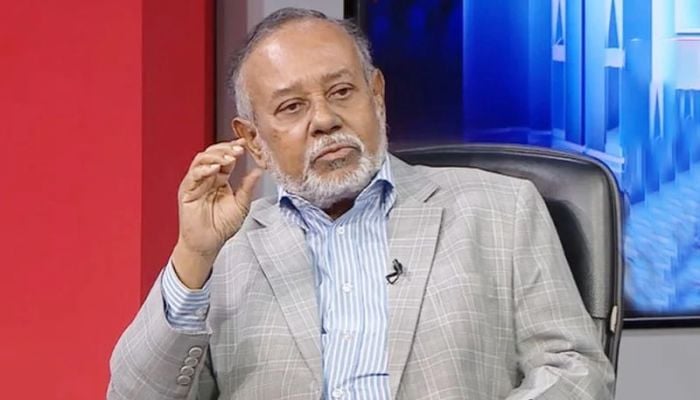
Munshi Faiz Ahmad, President of the Association of Bangladesh-China Alumni, served as the Chairman of the Bangladesh Institute of International and Strategic Studies (BIISS) from 2013 to 2019. He served in various positions in the Bangladesh Missions in Beijing, Hong Kong, London, Qatar, New York and the United Nations. He was the Ambassador of Bangladesh to China from 2007 to 2012. He served as the High Commissioner of Bangladesh to Singapore in 2003. He joined the BCS Foreign Service Cadre in 1979. Born in 1952, Faiz earned a Master's degree in Political Science from Dhaka University.
Mahfuzur Rahman Manik, Senior Sub-Editor of Daily Samakal, took an exclusive interview of Munshi Faiz Ahmad.
Daily Samakal: How do you evaluate this first visit to China after Prime Minister Tarique Rahman assumed office in the current regional and geopolitical context?
Munshi Faiz Ahmad: China is one of the most important countries in the world. It has surpassed everyone else in various fields, including technology. China’s economic situation is also very well-established. Everyone would like to have good relations with the country. China, of course, easily comes forward to cooperate with everyone. Although China has a long-standing deep relationship with Bangladesh it is one of Bangladesh’s biggest partners in trade and commerce. Therefore, I think the Prime Minister’s visit to China is the right step. Although the issue arose - should the visit to China come first or India?
Daily Samakal: What do you think?
Faiz Ahmad: We heard that the Prime Minister was supposed to visit India. There was a thought that he would go to India via Bhutan. India probably did not accept it. Meanwhile, since China did not object to going to China via Malaysia, the visit to that country came first. That does not mean that the government is giving less importance to India. However, in 2013, Bangladesh’s trade with China surpassed India and other countries, which is still ongoing. So I think it is not right to see it that way either. We have to have relations with everyone, but not by sacrificing our interests.
Daily Samakal: The ‘Teesta Master Plan’ or ‘Teesta Issue’ is emerging as one of the main issues of bilateral discussions during the Prime Minister’s visit. How can India view China’s participation in the water distribution and basin development of the Teesta River and how will Bangladesh maintain a balance here?
Faiz Ahmad: The matter of working with China in the Teesta Plan was fairly confirmed during the previous government. China has sufficient technical expertise in this regard. They have done many such projects. The company that is being considered for the work has itself played a leading role in China’s very important Yellow River renovation work. It has a lot in common with Teesta. However, it must be done on a transparent basis, keeping relations with India in order and keeping them fully informed.
Daily Samakal: It is known that Bangladesh is positively considering joining the four global initiatives of Chinese President Xi Jinping – such as the Global Development Initiative, the Global Security Initiative, etc. How do you view the issue?
Faiz Ahmad: This is not entirely new. Discussions have been going on for quite some time. This was also roughly decided during the previous government and this government will do the same. However, the decision to join will have to be made after careful consideration.
Daily Samakal: What kind of new momentum can come from this visit of the Prime Minister in financing and speeding up the implementation of the ongoing mega projects of Bangladesh under China’s ‘Belt and Road Initiative’?
Faiz Ahmad: There will definitely be new momentum. Whenever there is a high-level visit, there is a thought that we should inject new momentum into the projects we have and open the door to cooperation in new areas. As a result of that, we can see that 17 different types of agreements, protocols, memorandums, etc. are to be signed.
Daily Samakal: What kind of diplomacy is needed to reduce Bangladesh’s huge trade deficit and ensure more effective duty-free facilities in the Chinese market for Bangladeshi products?
Faiz Ahmad: China has given Bangladesh 100 percent duty-free facilities. Now, how much capacity we have to accept it and how we will accept it is important. It is important to increase our capacity here. If we are going to do business with China; I have to make it according to what China needs. There is no reason to think that China will always buy what I am making. I have to understand what China needs. We have to do research and maybe if we change some of our things a little bit, it will be enough for China. I think we have to emphasise on those things – how we can increase internal efficiency and improve the quality of our products. Then it will be possible to reduce our trade deficit with China to some extent.
Daily Samakal: Rohingya repatriation is an urgent issue for Bangladesh. Is it possible to get any visible political assurance from China during the Prime Minister’s visit?
Faiz Ahmad: There will be discussions with China on the Rohingya issue, no doubt. Needless to say, China has come forward to help us in this regard on its own initiative from the very beginning. So, there can be discussions on how to further strengthen their goodwill and how they can further influence Myanmar. However, if Bangladesh’s trade and commerce with Myanmar increases, it will also be beneficial for China. Because then there will not be just Bangladesh-China or Bangladesh-Myanmar; there will be an opportunity for the three countries to do something together. Such thoughts have been raised before. For example, BCIM was being called - Bangladesh, China, India, Myanmar. But when it was seen that everyone did not want to be together, then it was also thought about whether it could be made into three countries excluding Myanmar. Now we need to see if we can do something together in that way.
Daily Samakal: The Rohingya issue is undoubtedly a complex issue. How much role will China play in resolving the Rohingya crisis?
Faiz Ahmad: Look, is any other country coming forward on this issue besides China? We must remember that the Rohingya are now an international crisis. It will be much easier if the world community comes forward. There are two issues here. One is their return or repatriation; the other is to return and live there in peace. Both are linked to each other. If the Rohingya are not forcibly sent back, they will have to come back. So, there should be a special international arrangement to ensure that they are well after going to Myanmar. An international task force should be created in this regard. I think that China, Singapore, and Japan can join hands there and make an arrangement.
Daily Samakal: To what extent can China’s advanced technology and infrastructure partnership play a role in the sustainable transformation of the electricity, renewable energy, and IT sectors, which are among the main priorities of the current government?
Faiz Ahmad: China has a lot of capacity and potential. The question is, how much can we utilise it. We have the interest. We have the need, and they have the technology. So, a good result can be expected by combining these two. But we have to negotiate and make agreements on terms that are beneficial to both countries. The main question is how efficiently we can deal with China.
Daily Samakal: What is the equation between Bangladesh’s agreement with China and its involvement in global initiatives and its relationship with the Western world, especially the United States?
Faiz Ahmad: We have to understand that we have to look at the relationship with any country separately and develop independent relationships with everyone. So that we do not lean or depend on anyone, it can have a negative impact on others. For example, when I am making an agreement with India, it should not be negative for China. Again, the agreement with China should not create any problem for India for any reason because we have to be with everyone.
Daily Samakal: United States?
Faiz Ahmad: The United States is a faraway country, but it is very important and powerful. We have trade and commerce with the United States. Even then, if we have good relations with China or India, there should be no problem. We will explain that to the United States. Because we cannot fulfill everything we do with the United States with these two countries. However, we already have an agreement with the United States, which many call an unequal agreement. We need to reconsider that agreement. If there is anything in it that is against the interests of Bangladesh, it is important to take the opportunity to reconsider it. Even if we do that, we must always be connected with the United States. We have a separate dialogue system with all countries, and through that dialogue, we will be able to raise these problems at different levels and it will be possible to sort them out through discussions.
Daily Samakal: Do you think Prime Minister Tarique Rahman’s visit to China will have any impact on the internal politics of Bangladesh?
Faiz Ahmad: When we develop good relations with different countries of the world, the government’s strength increases. This gives the government confidence. As a result, it becomes easier for it to work in the internal sphere and it can work with confidence. If the Prime Minister can create a proper place for himself in the world, it will definitely play a big role in internal politics and internal activities.
Daily Samakal: What is your advice to the government in that regard?
Faiz Ahmad: China, India, the United States are all very important countries for us. We cannot go without anyone. I have to try to build good relations with everyone. Just as the Prime Minister went to China via Malaysia; no one will say that he went to China first. This is a strategy of going through Malaysia. So, such a strategy was in the case of India. They did not agree. They wanted us to go directly to India. So India itself is responsible here.
Daily Samakal: Thank you very much for your time.
Faiz Ahmad: Thank you too. Best wishes for Daily Samakal.

