Beyond moral panics
Mahmudul Hasan & Aoife Dempsey
22 Jul 2026 20:44 PM । Update: 26 Jul 2026 18:07 PM
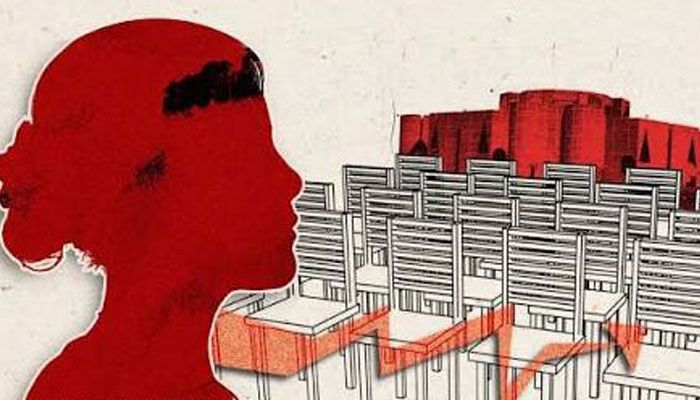
After the historic change in political landscape on August 5, 2024, the urban spaces and netizens of Bangladesh viewed a disturbing escalation in moral vigilantism and moral policing. From hotel raids by the students to online campaigns by the ‘content creators’, marginalized women have been a prime target of digital abuse, extortion, and physical violence and intimidation by the emerging youth gangs and extremists. These are not new in different social contexts in different parts of the world. The historical truth is criminalization cannot prevent or eliminate the oldest profession. Rather, punitive legal frameworks push it into dangerous situations where consenting adults are stripped of human dignity and legal protections.
Illusion of Punitive Prohibition
The prevailing legal framework is characterised by a form of ‘regulated ambiguity’. The Bangladeshi law does not directly criminalize sex work, but penalizes the surrounding activities previously through the Suppression of Immoral Traffic Act (1933), which is finally repealed by the Human Trafficking and Migrant Smuggling Prevention and Suppression Act, 2026, and Section 290 of the Penal Code in regards to public nuisance. In reality, operational mechanisms like Section 54 of the Code of Criminal Procedure (CrPC) are used against the streetwalkers by Police to execute warrantless arrests based on ‘suspicion’.
This indirect criminalization has a little impact with the abolishment of the oldest profession because the entry into the profession is devastatingly influenced by economic necessity. Academic evidence demonstrates that apart from the ones trafficked or forced, majority of this profession involves themselves through a ‘constrained choice’ avoiding low wages, workplace gendered harassment, or physical strain in other works. Overpowered by the need of feeding families and support personal survival or education, punitive laws do not meet their financial needs. They increase the risks associated and faced by them in manifolds.
Moreover, the updates in legal context like Section 13 of Human Trafficking and Migrant Smuggling Prevention and Suppression Act, 2026 significantly fails to differentiate between voluntary prostitution from human trafficking, may pose a threat to be a tool of state harassment tool.
The Constitutional Contradiction
This structural failure originated from the contradictions embedded within the Constitution of Bangladesh, particularly between Article 18(2) and Article 40. The former directs the state to take effective measures to discourage prostitution, which directly clashes with the latter’s guarantee of the right to enter any lawful profession, alongside other constitutional provisions that guarantee fundamental rights to equality, freedom of movement, and protection against arbitrary detention.
In this feminist journey towards occupational recognition, the High Court ruling in 2000, which recognised prostitution as a lawful occupation, resulted in an affidavit-based declaration mechanism that ultimately proved inadequate. Legal experts argue that this mechanism is purely a symbolic and evidentiary tool, providing no immunity against unauthorised legal practices by police, exclusion, or illegal confinement under the Vagrancy Act, despite sex workers’ exclusion from the Act.
Path to Rights
Anyone familiar with this profession would agree that the prevalent physical violence left unaddressed by legal mechanisms creates a cycle of structural violence and exclusion. To eliminate this and establish the human dignity, Bangladesh must move towards a rights-based legal framework through decriminalization and legalization under appropriate regulation. Legal professionals suggest that the state must codify dedicated statutory legislation that explicitly separates three distinct categories: human trafficking, child exploitation, and consensual adult activities, criminalizing only the first two categories. At the same time, academia proposes partial decriminalization in a manner that prevents trafficking and abuse.
Decriminalization of consensual adult activities would permit the state to regain control through labour protections, occupational health standards, and accountability mechanisms, rather than endorsing it blindly. This would promote legal protection against excessive police discretion and potentially introduce greater judicial scrutiny of arbitrary arrests, thereby mitigating structural abuses. Effective legal protection replaces moral panic with sustainable legal reform. It should establish an appropriate balance between human dignity, constitutional rights, and the State’s obligation to combat exploitation and human trafficking. The most marginalised women should be shielded by the law, rather than crushed by it.
Mahmudul Hasan: Human Rights advocate and Development Professional; Aoife Dempsey: Human Rights Professional

