Dhaka University
What message does the ‘punishment’ of teachers carry?
Shahidul Islam
24 Aug 2026 21:59 PM
If our judiciary had not become like a public university under government control, the recent punitive steps taken by Dhaka University against some teachers would, in my view, have been easily cancelled. These measures do not match with the Dhaka University Order of 1973. The University Teachers Network has already explained this to the nation in a statement, so there is no need to repeat those points here.
I will make just one point. University law gives teachers the right to hold any political ideology, to promote it, and to join or support any legal political party outside the activities of the university. That is why, the present Vice-Chancellor of Dhaka University holds that post even though he is a senior official on the central committee of the ruling BNP. If the Vice-Chancellor can be an official of a political party, why should ordinary teachers is denied the same right?
Even under the present law of Dhaka University, the President, who is Chancellor of all universities, cannot dismiss any teacher or other staff member by using his highest authority. I would like to place two cases from Rajshahi University to make it clear to readers.
Most people know about Professor Badruddin Umar. The then Chancellor Monayem Khan ordered Vice-Chancellor Professor Md. Shamsul Haque to dismiss him. Shamsul Haque knew the university law did not allow this. When Monayem Khan insisted, the Vice-Chancellor replied that the law gave him no such power. Shamsul Haque liked Umar very much and told him what had happened. Umar then left his post himself and moved to Dhaka. Even in the Pakistan period, the powerful Chancellor Monayem Khan could not dismiss Badruddin Umar.
A more serious incident occurred in 1983 under President and Chancellor Hussain Muhammad Ershad. He dismissed Professor Mujibur Rahman of the Arabic Department by using Section 92(a). However, under the Rajshahi University Act of 1973, he had no right to do so. The executive committee of the Teachers’ Association protested at once, demanded the professor’s reinstatement, and called an emergency general meeting three days later.
One other detail is worth noting here. In 1979, a group of teachers known for their Islamist views left the main Teachers’ Association, with the indirect support of Vice-Chancellor Professor Abdul Bari, and formed a separate association. They stopped paying the annual subscription of Tk12 and stayed away from the main association’s meetings.
When they heard of Professor Mujibur Rahman’s dismissal, they called a general meeting in Room 150 of Shahidullah Arts Building. Because they could not gather a quorum by evening, their leaders came to Zuberi Bhaban and asked Professor F. R. Khan and me to join them in a united campaign. We were then president and general secretary of the main association. In 1983, Bari was no longer at the university. The breakaway group returned to the main association. Three days later everyone met together and took a joint decision. Teachers eventually stopped taking classes. After a month and three days the President withdrew his order and Professor Mujibur Rahman returned to the department. The strength behind that success was the 1973 University Act and the unity of the teachers.
Sadly, teachers at Dhaka University today stand against their own colleagues. In our time, teachers supported different parties and competed in elections. Professor Mujibur Rahman belonged to the Islamist group, and Islami Chhatra Shibir was, therefore, well-disposed towards him. Even so, all the teachers opposed the President’s unlawful action.
Changes in the political scene through elections or mass uprising are a normal part of democracy. But the environment of fear, insecurity and intimidation now being created among teachers by silencing disagreement, limiting free speech and imposing punishments will stand as a dangerous example for the future.
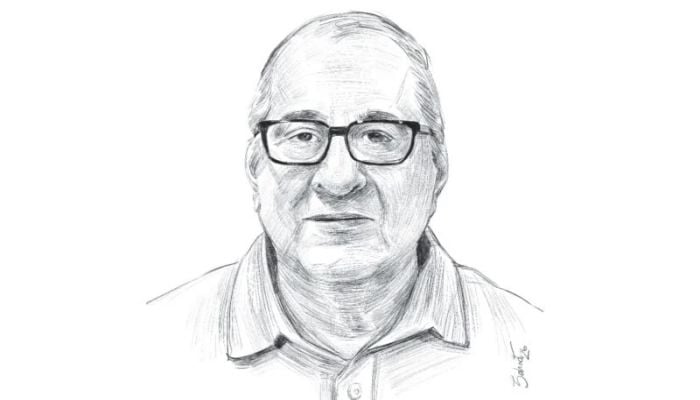
Writer: Shahidul Islam, former professor, Rajshahi University

