Energy security should be the foundation of inclusive development
Dr. AKM Shaheed Reza
7 Hours Ago । Update: 7 Hours Ago
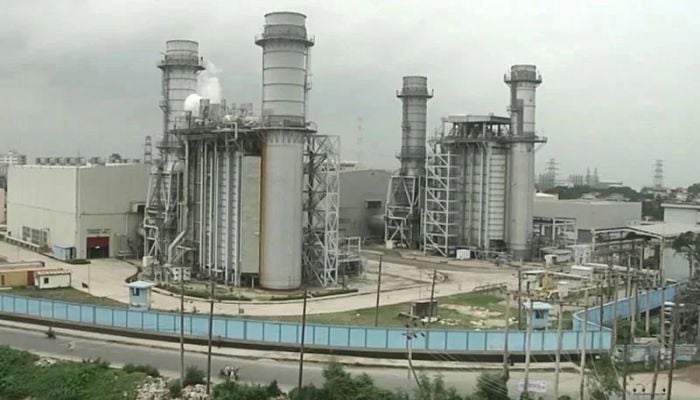
Bangladesh’s economy and people’s lives stand at a juncture where one crisis is deepening another. Uncertainty in gas and electricity is disrupting industrial production. When production is disrupted, business costs rise. Rising costs affect product prices and employment. Ultimately, the pressure falls on people’s livelihoods. Therefore, if the energy crisis is viewed merely as a problem of the industrial sector, a large part of the reality will remain invisible.
A person’s income may remain the same as before. But if it becomes difficult to buy essential goods and services with that income, their economic security effectively diminishes. This possibility surfaces in discussions about increasing the salaries of government employees. When the gap between income and the cost of living widens, it creates uncertainty and frustration among people, which sometimes reaches the stage of suicide.
The way out of this crisis is not limited to simply importing more gas or producing more electricity. What is needed now is an inclusive journey in which the benefits of economic growth reach people of various classes and professions in society, and the burden of the crisis does not fall disproportionately on any one group.
Energy security can be seen as the foundation of inclusive development. Providing energy to industry does not merely save industry; the livelihoods of the people connected to it are also protected. When production increases, employment opportunities are created widely. When businesses expand, suppliers and the service sector also benefit. In other words, reliable energy supply has a ‘multiplier effect’. For this reason, the initiative to increase gas supply in the short term through LNG imports is important. However, combining import, re-gasification, delivery, and other costs, the actual cost of energy may rise, and the government may have to provide subsidies.
This situation is where an inclusive policy is needed. If the entire cost of addressing the energy crisis ultimately falls on ordinary people through state subsidies, high production costs, or price increases, that solution will not be inclusive in the long term. On the other hand, if supply to industry is reduced because of high energy prices, production, employment, and investment will suffer. Therefore, balance is required—ensuring supply, controlling costs, and delivering the benefits to the broader sections of society. Forecasting and planning are also extremely vital in energy management.
A country’s energy management cannot be guided solely by the policy of ‘meeting immediate needs’. Leaving no one behind—development is not complete merely by increasing gross domestic product. If industry grows but workers’ real incomes do not rise; if employment opportunities remain limited; if large urban institutions receive energy while small entrepreneurs cannot sustain production; if agriculture suffers from a lack of fertilizer and irrigation—then that growth is not inclusive.
Inclusive development means keeping people at the centre of policy. People should get jobs, entrepreneurs should have investment security, industry should be able to produce, banks should be able to lend soundly, and consumers should be able to obtain essential goods and services at reasonable prices—this entire cycle must be viewed together.
The way ahead
Bangladesh now needs an integrated energy strategy. In the short term, LNG supply must be ensured. In the medium term, the capacity of re-gasification, pipelines, and supply systems must be expanded. In the long term, investment in domestic gas exploration, renewable energy, and energy efficiency must be increased. At the same time, consideration must be given to how the economic burden of these decisions can be distributed in a balanced way among the people, industry, and the state.
Our goal should be an economy that does not merely keep people alive but provides the assurance of a dignified life. Alongside this, entrepreneurs will gain the courage to invest; workers will have employment security; and small businesspeople will have the opportunity to expand their enterprises.
Writer: Dr. AKM Shaheed Reza, former director, FBCCI
The article was originally published in the Samakal online Bengali edition and has been rewritten for the English version by Mohammed Humayun Kabir, Assistant News Editor

