Climate Vulnerability, Corona and Implementation of SDG
Md Abul Kalam Azad
18 Nov 2020 07:07 AM
From Paris Declaration 2015 vulnerable countries find hopes and aspiration to keep global warming within two degrees and more ambitious proposition of 1.5 degrees with an expectation to keep the nature in favor of them. If this declaration could be achieved sea level rise will be at a slower pace and the small island countries may not be extinct or go under the sea water, inundation by saline water will come at slower pace, less cyclone and tornado, more livable planet. Unfortunately, some of the big emitters though signed Paris Declaration, less committed to follow that and all we know the biggest emitter USA finally withdrawn from the agreement. Ray of hope is USA’s election result may change the scenario.
What sorts of climate disaster are going on? Stock taking of last few months will say the frequency and magnitude of disaster are higher day by day. Just to name a few, only in September this year are North American Wildfire, September 11, Atlantic Hurricane September 11, Beirut Explosion, September 10, Sudan Flooding, September 9, Venezuelan Humanitarian and Refugee Crisis, September 7. These disasters along with this month’s Typhon Gani and super cyclone Amphan in May caused a huge damage all over the globe including, Philippines and Bangladesh.
In a report on Hurricane on October 6 it was said that all the records the 2020 Hurricane season has broken so far. The 2020 Atlantic hurricane season has been hyperactive with 25 named storms, including nine hurricanes, spinning across much of the Atlantic basin. Those storms have set several records through early October.
Global surface temperature for the first nine months of 2020 shows that in many months it had new higher record and so far, this year records show the highest temperature. So, it is most likely that the frequency of extreme environmental events, such as forest fires, hurricanes, heat waves, floods, droughts, and storms will be much higher. The number of natural disasters has tripled from thirty years ago and climate change is a factor in causing this higher rate.
Natural disasters cause huge loss of life, damage of properties, change of profession, degradation of soil, change of agriculture pattern, forced migration, health hazards, hampers education, destroys culture, reduces life expectancy; life and quality of life come at a stake. This year, Corona, another climate disaster brought the economic life almost at a halt, till October 2020 more than 1.2 million death: none knows where it will stop. It is predicted that this year additional 88 million to 115 million people has been pushed to extreme poverty for Covid 19 with the total rising to as many as 150 million by 2021, depending on the severity of the economic contraction.
At the back drop of unprecedented climate change, Agenda SDG 2030 threw a herculean challenge to the whole globe with its 17 goals, 169 targets and 232 indicators, 5P (people, planet, prosperity, peace and partnership) at the core, ‘Leaving no one behind as Mantra promote the coordinated development of the trio of economic growth, social inclusion and environmental sustainability worldwide and localization as main tool for implementation. Covid 19 made the Agenda 2030 more difficult to achieve.
We find that with digital transformation localization allows governments to effectively tailor sustainable development strategies at the local level. The local governments shall also be made to join the hands to achieve the SDGs. The SDGs shall be integrated across the three dimensions of sustainability, across all sectors of the economy and society, and from the local to national level. Localization requires local governments’ effective planning by ensuring that budgetary allocations reflect the priorities of local communities. Appropriate funding for development programs and projects and effective application at the local level are also important. Adequate data are necessary to identify and follow-up with decision makers, which requires a review of institutional competence in dealing with information and data and the use of digital transformation for this purpose.
Why localization and how it works effectively? Localizing the SDGs means making the aspirations of the SDGs become real to communities, households and individuals, particularly to those who are at risk of falling behind. Local communities and stakeholders, who know individual and collective needs and capacities best, are critical partners in implementing and realizing our global accord. In Bangladesh, while analysing the targets and indicators it was found that all these are not necessary and not equally important also. Looking into the necessity, priority and resource constrain, the government of Bangladesh identified 40 (39+1) indicators in the process of localizing SDGs, particularly in the district and upazila level. These 39 indicators from 17 goals are selected which would be crucial for the local level of our country namely poverty, both lower and higher case, stunting, arable land, infant mortality, under five mortality, maternal mortality, death in road accident, attainment in education in primary and secondary level, education institute with electricity, safe water, improved sanitation and digital connectivity, inclusive education, child marriage, involvement of women in economic activities, water and sanitation, power and renewable energy, GDP growth, unemployment, road connectivity, participation of industry in growth and employment, ratio of highest and lowest income, cost of planned migration, safe public transport for women, children and old people, industrial waste management, loss of life in natural disaster, marine resources, plantation and afforestation, birth registration, human rights and internet connection. Against 17 SDGs, one to five indicators are taken from each. More critical analysis shows that one indicator from each SDG 11, 12, 13 and 14; two indicators from each SDG 1, 2, 6, 7, 10, 15, 16 and 17; three indicators from each SDG 5 and 8, four indicators from each SDG 3 and 9; and finally, five indicators from SDG 4.
The rest one of 39+1, would cover ‘leave no one behind’ for which, different districts or upazilas have different targets based on the context and ground reality of that particular geographical area. With the guidance of SDG experts ‘Natore Model’ of local level SDG planning and implementation is developed for district level and a framework is finalized for localizing SDGs at the upazila level. This model prescribes extensive involvement of both district and upazila officials and elected public representatives. For better understanding of SDG and prepare district and upazila plans following the Natore model awareness program through workshops at the division and district level have been done. It is hoped that local level people would fix the targets and prepare corresponding action plan to implement the SDGs involving all stakeholders. More over each district has its ‘Branding’ issues like Chandpur has, ‘Elisher Bari Chandpur’ (Chandpur is the home of Hilsa), Jamalpur has ‘Nakshi Kantha’; along with localization, districts and upazilas add their branding with development and promotional activities and has opportunity to take holistic approach.
While identifying vulnerability and most deprived persons irrespective of gender the districts and sub-districts prioritized first the homeless people due to river erosion; it was followed by agriculture labour, children and labour of tea garden. Common issues they identified are child marriage and drug abuse. The report of division, district and upazila workshop reveals that costal area identified salinity, river erosion, health, drinking water and modernization of fish and shrimp cultivation as most important issue to address. While hill districts identified health, education, afforestation, tourism and drinking water to address on priority basis. Haor areas identified water logging, early flash flood, embankment, dredging and skill development as important area to address. On the other hand, planned city, waste management, technical education, protect agriculture land are issues of urban and semi urban area. Plain land identified skill development, quality education, waterlogging, road safety, crop intensity, marketing of agriculture products, river and canal dredging, ICT, water reservoir, indigenous verity of fish and industry as their area of attentions. Other major identified area of localization is inclusive education, women involvement in more economic activities, water and sanitation, internet facility, public transport, river erosion, cottage industry, migration, nutrition, vocational education and maternal health. This is to be kept in mind that the areas identified by the district and upazila are unique in nature, not common.
For monitoring and implementation of SDG government formed committee at different level of administration in division, district and upazila engaging government officials, elected representatives, civil society and NGO and this ensures whole of the society approach. All the local government bodies of our country union parishad, upazila and zila parishad has allocation from the government along with their own fund to implement their development plan which in another way may call implementation of SDG. This is evident that allocations for the local government bodies are not enough to meet their revenue budget and development projects. Government of Bangladesh started implementing district budget; this may help to address the issues of +1 and help implementing localization of SDG and ensuring ‘Leave no one behind’.
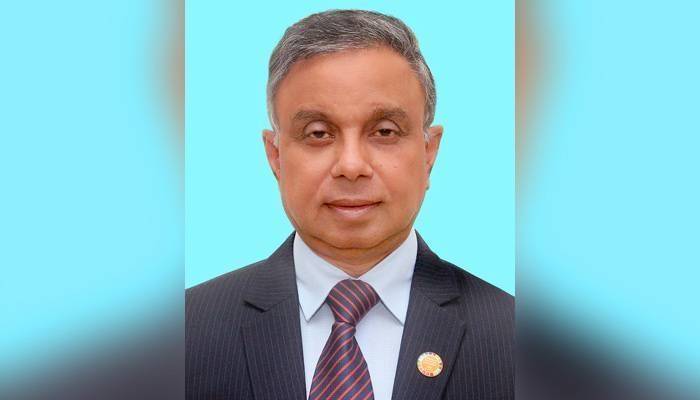
Writer: Former Principal Secretary to Prime Minister

