Forward-looking vision is needed to become a research-centric university
Professor Charalabos Doumanidis
25 Aug 2022 04:57 AM
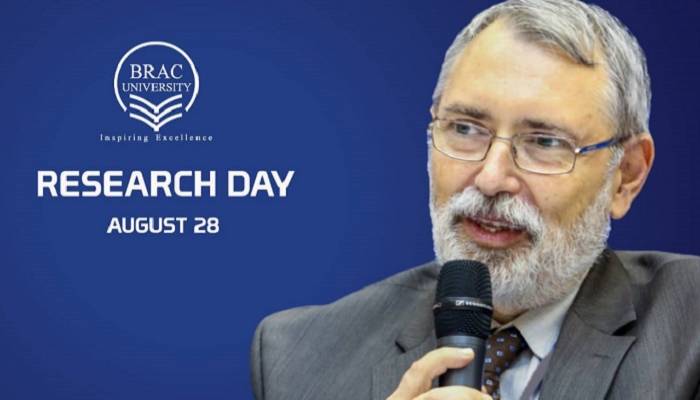
For the very first time, BRAC University is going to celebrate ‘Research Day’ on 28th August, 2022. The objective of this event is to bring together the entire BRACU community of students, faculty, staff, alumni and external partners to promote research and to establish a research culture at the university. The event will also recognize and celebrate annual research achievements and catalyze new research teams and collaborations. Research day also aims at providing research project opportunities to our student community. The Daily Samakal discussed with Professor Charalabos Doumanidis, Vice President, Research, BRAC University, where he talked about the research day and significance of it. He also talked about the research initiatives by BRACU and the importance of research in higher education in Bangladesh.
Interview is taken by Mahfuzur Rahman Manik.
Samakal: What is Research Day 2022? Why BRAC University is going to celebrate it?
Charalabos Doumanidis: BRAC University (BRACU) Research Day 2022 is our first-time ever, university-wide signature event to recognize excellence and celebrate current achievement, and to catalyze further progress in our discovery and application of new scientific and technical knowledge. We are doing this by bringing together the entire BRACU family and match-making between our students and alumni, faculty and staff, partners and community to engage them in new research projects. We are endeavoring to create a model research culture at BRACU, which has the highest social impact via the BRAC network and citation impact in Bangladesh and among the top universities worldwide. BRACU is viewed as a national model of research development in higher education of the country, and as an international research ambassador of Bangladesh.
Samakal: How an event like Research Day will help students and researchers?
Charalabos Doumanidis: BRACU Research Day 2022 is a student-centric event, aiming for every participating student to engage in a research project at the event. At the oral and poster sessions our faculty will recruit research assistants from their external and internal grant support, including the BRACU new Research Seed Grants. At the Research Expo and Research Café the students will have the opportunity to discuss with our alumni and other partners about R&D careers in industry, and their engagement in a research thesis at their schools and institutes. At the quiz competition they will get a research primer and orientation to modern open questions of science and engineering, and at the Research Excellence Awards session they will be granted best undergraduate and graduate student certificates and monetary prizes. The faculty will also be recognized by the rising and senior star scholars’ awards, they will present their projects in oral and poster presentations to recruit research assistants, and discuss new research projects with our alumni and partners.
Samakal: Tell us about BRAC University's research activities and the initiatives undertaken by the university.
Charalabos Doumanidis: After the recruitment of the first-ever Vice President Research in Bangladesh, BRACU introduced an ambitious research strategy framework aiming to take the university at the top of Bangladeshi higher education and international institutions. Its new initiatives included a new and very active Research for Development (ReD) Student Club, the Research Seed Grant and Research Excellence Awards initiative, the Research-Engaged Student Scholarship and the Distinguished Bangladeshi Diaspora Scientist programs, and International Research Ambassadors and Research Partners program. BRACU is working with UGC for 4th Industrial Revolution Innovation Hub and an Industry-Academe Cooperation framework, and with various government Ministries on Centers of Excellence and industry-university consortia in emerging advanced manufacturing and telehealth with national healthcare centers. It plans to deliver a number of public workshops on research proposal writing and project management along with ethics and responsible conduct of research. Its international impact is broadened with the new center of Research Evaluation and Development-Africa, and its research infrastructure is planned to include a state-of-the-art Shared Research Facility at its new campus in Merul Badda, Dhaka. Finally BRACU is active in research proposals to the European Union Horizon Europe and the B&M Gates Foundation programs.
Samakal: What is the significance of research for a country like Bangladesh?
Charalabos Doumanidis: Bangladesh is facing a number of challenges such as sea level rise due to climate change, healthcare in isolated populations, employment and poverty of marginalized communities, population growth and urbanization, along with pollution and infrastructure development – all active research themes at BRACU. There is also a number of opportunities for the country as well: Nationally, emerging areas such as the 4th Industrial Revolution promise new quality employment positions along with entrepreneurship for women and other underserved populations. Internationally, quality research is also an opportunity for the country to reach out and synergize with the world academic community to bring up its research and innovation standards to the global level. Finally, research and development is a vehicle for humanitarian outreach of Bangladesh to the rest of the world, prominently exemplified by the BRAC network.
Samakal: What should be done to become a research-centric university?
Charalabos Doumanidis: To become an international research university, a forward-looking vision and an intellectual identity of the institution is primarily needed, i.e. a distinctive and comprehensive signature theme such as BRACU’s vision in humanitarian digital innovation. This will place the university prominently on the global academic map and establish its unique branding and colour. This will allow the institution to establish international research partnerships and ecosystems, and position itself as a globally desirable research partner in global networks, supported by major federal and NGO funding sources and industrial consortia, through its unique human resources, infrastructure and research agenda. Finally the university should seriously invest in research infrastructure and operational resources, including making research time for its human capital, such as by introducing research projects to the teaching classroom (research-integrated teaching) and recruitment of international research grade new faculty.

