From Housewife to Prime Minister: The Journey of Khaleda Zia
Online Desk
30 Dec 2025 09:34 AM
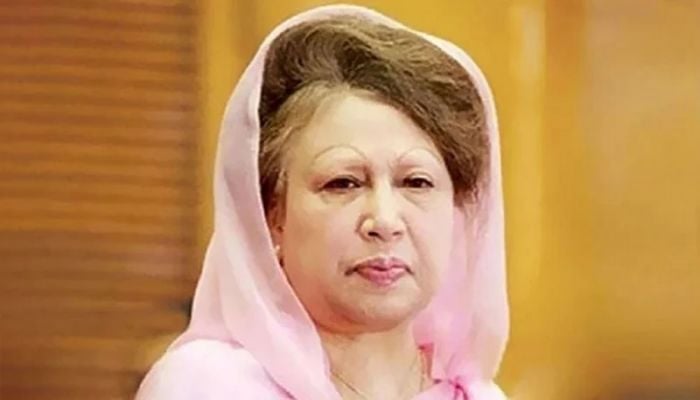
BNP Chairperson Khaleda Zia
When BNP founder and President Ziaur Rahman was assassinated in a failed military coup on May 30, 1981, Khaleda Zia was a devoted housewife. Far from the world of politics, she was rarely seen at any political events and devoted most of her time to raising her two sons. Over the years, however, she transformed from a homemaker into a three-time Prime Minister of Bangladesh. She faced numerous challenges and conspiracies, both domestic and international, to reach this position.
Khaleda Zia took charge of the party her husband had founded amid profound personal grief and immense political uncertainty. She encountered significant obstacles within the party itself. From that point onward, her life became one of relentless political struggle. She led the anti-dictatorship movement on the streets for eight consecutive years. When she first stepped onto this path, she stood almost alone, but she eventually united the entire nation behind her cause. She earned the title of "uncompromising leader" because she refused to make concessions on matters of principle. Her strong morale, deep patriotism, and unwavering commitment to democracy ensured that the people of Bangladesh never abandoned her.
After the fall of the dictatorial Ershad government in 1990, she contested elections with a weakened party, yet the BNP achieved an unexpected victory and formed the government.
Khaleda Zia won every parliamentary election she personally contested throughout her political career with substantial majorities—a record unparalleled in the country's history. She also etched her name in history as the first female Prime Minister of Bangladesh and the second in the Muslim world after Benazir Bhutto of Pakistan.
Birth and Marriage
Khaleda Zia was born on August 15, 1945. She was the third child among three sisters and two brothers. Her childhood nickname was Putul. Her father, Iskander Majumder, also known as Iskander Ali Majumder, was a businessman originally from Sreepur village in Parashuram upazila of Feni. He moved to Dinajpur to expand his business and settled there permanently after the 1947 Partition when Pakistan was created. Her mother, Taiyaba Majumder from Chandanbari in Boda upazila of Panchagarh district, came from a family known as the 'T-Family' and was actively involved in social work.
Young Captain Ziaur Rahman, serving as an army officer in Dinajpur, married Khaleda Khanam on Friday, August 5, 1960, at her father's house in Mudipara, Dinajpur.
Ziaur Rahman's father could not attend the wedding as he was in Karachi, and his mother had passed away a year earlier, so Khaleda was deprived of a mother-in-law's affection.
Khaleda's mother was a distant relative of Zia's mother. The couple had two sons: elder son Tarique Rahman (born November 20, 1967) and younger son Arafat Rahman (Koko, born August 12, 1970; died in 2015 of cardiac arrest). Both sons have daughters; Tarique's daughter has obtained a law degree in the UK, while Koko's two daughters live and study in London.
Khaleda Zia dedicated herself to serving the nation after becoming a widow at the age of 36. In a patriarchal society dominated by men, she carved out a unique position in politics. She assumed both party and governmental responsibilities at a critical historical moment, facing immense challenges under the military rule imposed by Ershad.
Zia's Successor and Khaleda Zia
On March 24, 1982, General H.M. Ershad overthrew the elected BNP government led by President Justice Abdus Sattar and imposed martial law, declaring himself Chief Martial Law Administrator and usurping state power. This move severely weakened the BNP. After Ziaur Rahman's death, the party he founded appeared adrift in a turbulent sea. Internal conflicts intensified, leadership confidence eroded, and the party's future seemed uncertain—especially as it lacked a clear, worthy successor to Zia.
By 1981, the BNP was the largest and most powerful party in terms of membership and support, but its diverse ideologies demanded a unifying leader capable of independent guidance.
With the aging and ailing Sattar unable to steer the party forward, senior leaders saw Khaleda Zia—the wife of a heroic freedom fighter and senior army officer—as the most reliable figure to reunite the party. Though accustomed to a modest life as an ordinary Bangladeshi housewife, focused on raising her sons even during her husband's presidency in 1977 (when she fulfilled First Lady duties formally but stayed out of politics), she was chosen after careful deliberation. On January 3, she joined the BNP and emerged as the party's savior.
Joining the BNP and Revealing Herself
Although not widely known to grassroots workers initially, Khaleda Zia was respected by party leaders who recognised her potential to maintain unity. This judgment proved correct over time, as the party survived numerous internal and external crises under her leadership. After Ziaur Rahman's assassination, she assumed party responsibilities and worked tirelessly to keep the BNP united while waging an uncompromising struggle against Ershad's autocratic regime. Over 35 years as party leader and in government, she remained committed to safeguarding democracy and boldly opposed forces threatening Bangladesh's independence, sovereignty, and dignity. So deeply intertwined were her dedication and the party's ideology that "Khaleda Zia" and the "Bangladesh Nationalist Party" became synonymous.
Leadership in the Anti-Ershad Movement
Despite opposition from some party quarters, Khaleda Zia became Senior Vice Chairman of the BNP in March 1983. On April 1, 1983, she delivered her first major speech at an extended party meeting. When Justice Sattar fell ill, she served as acting chairperson, and on May 10, 1984, she was elected full chairperson. Amid the party's organisational chaos, she formed a 7-party unity alliance in 1983 and launched a mass movement against Ershad's military rule. The movement began in September 1983, initially coordinated with a 15-party alliance led by the Awami League, continuing a five-point programme until 1986.
However, on March 21, 1986, the Awami League abruptly decided to participate in elections under Ershad, fracturing the unity.
Title of the 'Uncompromising' Leader
The 15-party alliance split over the election issue, with some factions (including under Sheikh Hasina) joining the 1986 polls alongside Jamaat-e-Islami. Khaleda Zia led the remaining forces in continued street protests. From 1987, she intensified a one-point movement to oust Ershad ("Ershad Hatao"). Ershad dissolved parliament amid the pressure, and when the Awami League later walked out, the unified movement resumed. After eight years of persistent, uncompromising struggle, Ershad was forced to resign on December 6, 1990. From a simple housewife to a national leader, she earned the enduring title of "uncompromising leader" from the people of Bangladesh.
The First Female Prime Minister of Bangladesh
In the February 27, 1991, parliamentary elections, the BNP secured a single majority, and Khaleda Zia became Bangladesh's first female Prime Minister. She inspired the nation to end authoritarian rule, mobilised public support against misgovernance, and restored democratic processes. Her rapid rise to become the most popular and representative leader—even shocking her opponents—was evident in the 1991 results.
Never Lost
Khaleda Zia not only led the movement but also secured unprecedented public backing. She personally won every seat she contested—often multiple in a single election—with huge margins. From 1991 to 2008, she contested 23 parliamentary seats across various elections and never lost any, a feat unmatched by any other leader of her stature in Bangladesh or the subcontinent. Elections served as the true measure of her popularity, surpassing all records.
Fighting Two Adversities
From 1983 to 1990, Khaleda Zia battled dual challenges: internal party conflicts and Ershad's autocracy. She established firm control over the BNP, emphasising grassroots unity, protection of national independence and sovereignty, upholding the legacy of President Zia, and maintaining a principled stance toward the Awami League. In power from 1991, she restored the parliamentary system via the 12th constitutional amendment. Facing demands for a caretaker government system, she held elections in February 1996 but resigned after introducing the caretaker provision through the 13th amendment. In the subsequent June 1996 election, she became Leader of the Opposition with 116 seats (the largest opposition bloc in history), while the Awami League formed the government.
Change of Scenery of 'One-Eleven' and Loss of Power
The BNP-led four-party alliance won a massive victory in the October 1, 2001, election, and Khaleda Zia became Prime Minister again. However, disputes over the caretaker government after the eighth parliament's term led to the military-backed "One-Eleven" intervention in 2007, ousting her government. Despite pressures to leave the country, she refused and endured oppression. She was arrested on September 3, 2007, spent a year in prison, and was released on September 11, 2008. Earlier arrests occurred during the anti-Ershad movement (November 28, 1983; May 3, 1984; November 11, 1987). Post-2014 controversial election, she faced prolonged sieges at the party office (93 days in 2015) while protesting for voting rights.
Forced to Live a Solitary and Uncommunicative Life
Throughout her over 35 years of active politics, Khaleda Zia vocally championed democratic rights, enduring imprisonment, attacks on her motorcades, and isolation. She remains one of the few politicians worldwide to have contested 23 seats from 1991 to 2008 without a single defeat. In 2018, she sought to contest from Feni-1, Bogura-6, and Bogura-7 but was disqualified due to corruption convictions (later acquitted in key cases by 2025). She frequently contested from Bogura, Feni, Lakshmipur, and Chattogram, with notable wins in Dhaka (1991) and Khulna (2001), always by large margins.
Addressed as ‘Deshnetri’
Khaleda Zia was the nation's unique popular leader, known as "Deshnetri" (Leader of the Country) by her supporters. She travelled extensively across Bangladesh, undertaking grueling journeys—such as covering nearly 14,000 kilometers in the 2008 campaign just 14 days before elections. Filled with indomitable energy during campaigns, she often held meetings at odd hours like 3 am, skipped regular meals, and strictly adhered to her decisions. Forbes magazine ranked her among the 100 most powerful women in the world: 14th in 2004, 29th in 2005, and 33rd in 2006. On May 24, 2011, the New Jersey Senate honoured her as a Fighter for Democracy. Her legacy endures as a symbol of resilience, democracy, and national service.
Khaleda Zia passed away on December 30, 2025, at the age of 80 after a prolonged illness, including advanced liver cirrhosis, diabetes, arthritis, and heart issues. Her contributions to Bangladesh's democratic journey and women's empowerment remain a profound part of the nation's history.

