US experts carry out second pig-to-human heart transplant
AFP
24 Sep 2023 10:35 AM
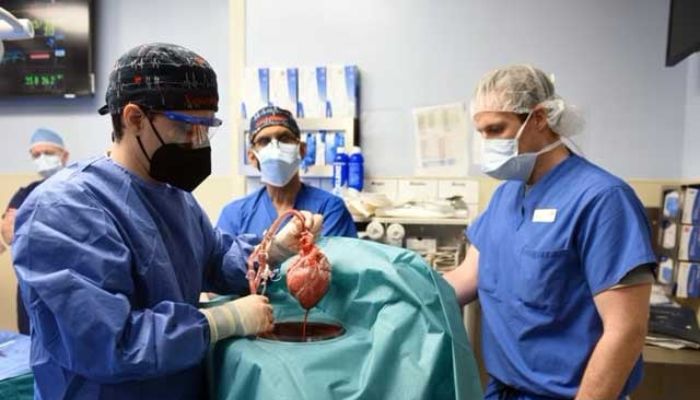
A 58-year-old man this week became the world's second
patient to receive a transplant of a genetically modified pig heart, the latest
milestone in a growing field of medical research.
Transplanting animal organs into humans, called
xenotransplantation, could offer a solution to the chronic shortage of human
organ donations. More than 100,000 Americans are currently on waiting lists for
organ transplants.
Both heart procedures were carried out by experts from the
University of Maryland School of Medicine, with the first patient dying two
months after his transplant last year due to "a multitude of factors
including his poor state of health" prior to the operation, the university
said in a statement Friday.
The latest operation took place on Wednesday, with patient
Lawrence Faucette ineligible for a donated human heart due to pre-existing
vascular disease and internal bleeding complications.
Without the experimental transplant, the father of two and
Navy veteran was facing near-certain heart failure.
"My only real hope left is to go with the pig heart,
the xenotransplant," Faucette was quoted as saying prior to the procedure.
"At least now I have hope, and I have a chance."
Following the transplant, Faucette was breathing on his own
and the new heart was functioning well "without any assistance from
supportive devices," the university said.
He was taking conventional anti-rejection drugs as well as
receiving a new antibody therapy to prevent his body from damaging or rejecting
the new organ.
Xenotransplants are challenging because the patient's immune
system will attack the foreign organ. Scientists are trying to circumvent the
problem by using organs from genetically modified pigs.
In the past few years, doctors have transplanted kidneys
from genetically modified pigs into brain-dead patients.
The NYU Langone Hospital Transplant Institute in New York
announced this month that a pig kidney transplanted into a brain-dead patient
had functioned for a record-breaking 61 days.
Early xenotransplantation research focused on harvesting
organs from primates – for example, a baboon heart was transplanted into a
newborn known as "Baby Fae" in 1984, but she survived only 20 days.
Current efforts focus on pigs, which are thought to be ideal
donors for humans because of their organ size, their rapid growth and large
litters, and the fact they are already raised as a food source.
/KN/

