Bottled water contains thousands of plastic bits: Study
AFP
09 Jan 2024 12:34 PM
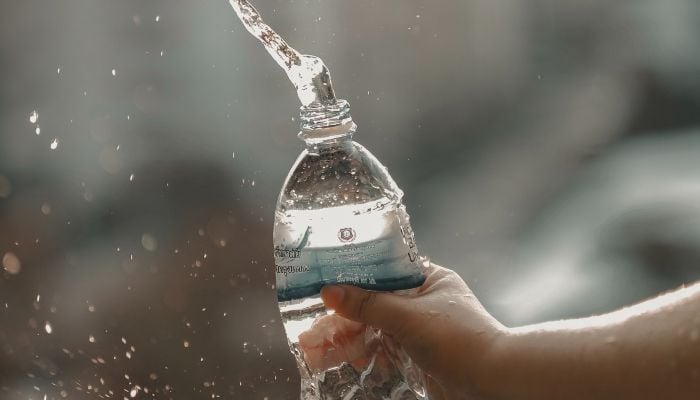
Bottled water is up to a hundred times worse than previously
thought when it comes to the number of tiny plastic bits it contains, a new
study in the Proceedings of the National Academy of Sciences said Monday.
Using a recently invented technique, scientists counted on
average 240,000 detectable fragments of plastic per liter of water in popular
brands – between 10-100 times higher than prior estimates – raising potential
health concerns that require further study.
"If people are concerned about nanoplastics in bottled
water, it's reasonable to consider alternatives like tap water," Beizhan
Yan, an associate research professor of geochemistry at Columbia University and
a co-author of the paper told AFP.
But he added: "We do not advise against drinking
bottled water when necessary, as the risk of dehydration can outweigh the
potential impacts of nanoplastics exposure."
There has been rising global attention in recent years on
microplastics, which break off from bigger sources of plastic and are now found
everywhere from the polar ice caps to mountain peaks, rippling through
ecosystems and finding their way into drinking water and food.
While microplastics are anything under 5 millimeters,
nanoplastics are defined as particles below 1 micrometer, or a billionth of a
meter – so small they can pass through the digestive system and lungs, entering
the bloodstream directly and from there to organs, including the brain and
heart. They can also cross the placenta into the bodies of unborn babies.
There is limited research on their impacts on ecosystems and
human health, though some early lab studies have linked them to toxic effects,
including reproductive abnormalities and gastric issues.
To study nanoparticles in bottled water, the team used a
technique called Stimulated Raman Scattering (SRS) microscopy, which was
recently invented by one of the paper's co-authors, and works by probing
samples with two lasers tuned to make specific molecules resonate, revealing
what they are to a computer algorithm.
They tested three leading brands but chose not to name them,
"because we believe all bottled water contain nanoplastics, so singling
out three popular brands could be considered unfair," said Yan.
The results showed between 110,000 to 370,000 particles per
liter, 90 percent of which were nanoplastics while the rest were microplastics.
The most common type was nylon – which probably comes from
plastic filters used to purify the water – followed by polyethylene
terephthalate or PET, which is what bottles are themselves made from, and
leaches out when the bottle is squeezed. Other types of plastic enter the water
when the cap is opened and closed.
Next, the team hopes to probe tap water, which has also been found to contain microplastics, though at far lower levels.
/KN/

