India launches space mission to study black holes
Online Desk
01 Jan 2024 15:36 PM
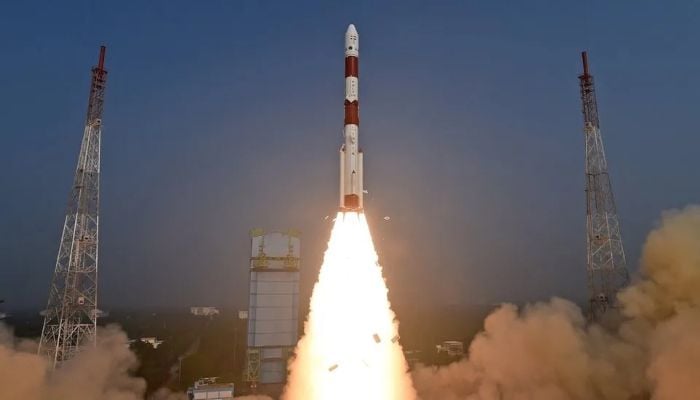
ISRO Photo
India's space agency has successfully launched a rocket that
is carrying an observatory which will study astronomical objects like black
holes, BBC reports.
It was launched from Sriharikota spaceport at 09:10 local
time (03:40GMT) on Monday.
This is only the second mission in the world of this nature
after Nasa launched one in 2021.
The space agency said it wanted to help scientists improve
their "knowledge of black holes".
"We will have an exciting time ahead," Indian
Space Research Organisation (Isro) chairperson S Somanath said after the
launch.
A black hole is a region of space where matter has collapsed
in on itself. The gravitational pull is so strong that nothing, not even light,
can escape.
Black holes emerge from the explosive demise of certain
large stars, and some are truly huge - their size billions of times the mass of
our Sun.
Isro's satellite - X-ray Polarimeter Satellite (XPoSat) -
will aim to conduct in-depth research on black holes.
Built at an approximate cost of 25m rupees ($30m; £23.5m),
the XPoSat satellite is estimated to have a lifespan of five years.
The launch comes after a hugely successful year for Isro. In
August, its Moon mission Chandrayaan-3 touched down near the lunar South Pole
region, an area that no one had reached before. Days later, it launched
Aditya-L1 - its first observation mission to the Sun.
Monday's launch is just one among several projects Isro has
planned to carry out this year.
"2024 is going to be the year for Gaganyaan
readiness," Mr Somnath said, referring to the project which aims to send
three astronauts into low-Earth orbit and bring them back after three days.
Isro carried out the first in a series of test flights for
the mission in October 2023 and aims to be ready for the manned mission by
2025.
/KN/

