Four people shot dead in Tunisia synagogue attack
AFP
10 May 2023 10:02 AM । Update: 10 May 2023 10:05 AM
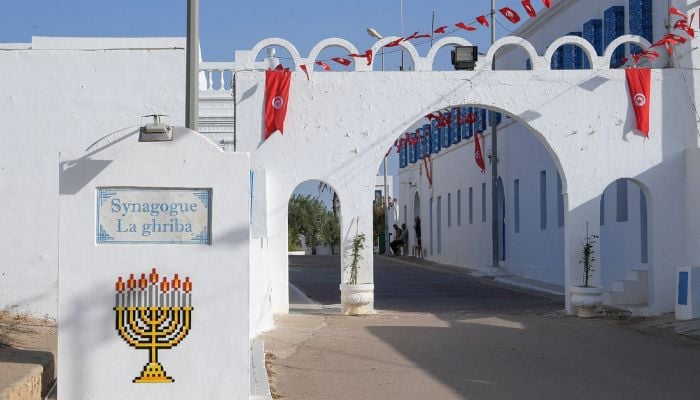
Ghriba synagogue in Djerba, Tunisia. Picture: AFP
A police officer shot dead two people participating in an
annual pilgrimage to a renowned Tunisian synagogue as well as two members of
the security services before he was killed on Tuesday, the interior ministry
said.
Four other visitors to the Ghriba synagogue on Djerba island
and five more security officers were wounded in the attack, according to the
ministry.
In a statement, the Tunisian foreign ministry identified the
two worshippers killed as a Tunisian, aged 30, and a French national, aged 42,
but did not give their names.
The attack took place after the assailant first shot dead a
colleague and took his ammunition, according to the interior ministry.
He then went to the Ghriba synagogue – Africa's oldest – as
hundreds of people were taking part in the annual pilgrimage, which was drawing
to a close on Tuesday night.
The synagogue was previously targeted in a suicide truck
bombing that killed 21 in 2002.
"Investigations are continuing in order to shed light on
the motives for this cowardly aggression," the interior ministry said,
refraining from referring to the shooting as a terrorist attack.
The French embassy in Tunisia announced it had set up a
"crisis unit" and an emergency hotline following the attack.
The sound of gunshots at the synagogue had sparked panic
among the hundreds of pilgrims, according to local media.
According to organisers, more than 5,000 Jewish faithful,
mostly from overseas, participated in this year's pilgrimage to Ghriba, which
resumed in 2022 after two years of pandemic-related suspension.
Heart of tradition
Coming between Passover and Shavuot, the pilgrimage to
Ghriba is at the heart of Jewish tradition in Tunisia, where only about 1,500
members of the faith live – mainly on Djerba – compared with around 1,00,000
before independence in 1956.
Pilgrims also travel from Europe, the United States and
Israel to take part, though their numbers have dropped since the attack in
2002.
Tuesday's shooting came as the tourism industry in Tunisia
was finally enjoying a rebound from pandemic-era lows, as well as from the
aftereffects of a pair of attacks in Tunis and Sousse in 2015 that killed
dozens of foreign visitors.
After the Arab Spring ousted dictator Zine El Abidine Ben
Ali in 2011, Tunisia experienced a boom in Islamist militancy, but the
authorities claim to have made significant progress in the fight against
terrorism in recent years.
The Ghriba attack also comes as Tunisia goes through a
severe financial crisis that has worsened since President Kais Saied seized
power in July 2021 and rammed through a constitution that gave his office
unlimited powers and neutered parliament.

