WHO backs farmers to grow food instead of tobacco
AFP
27 May 2023 13:33 PM
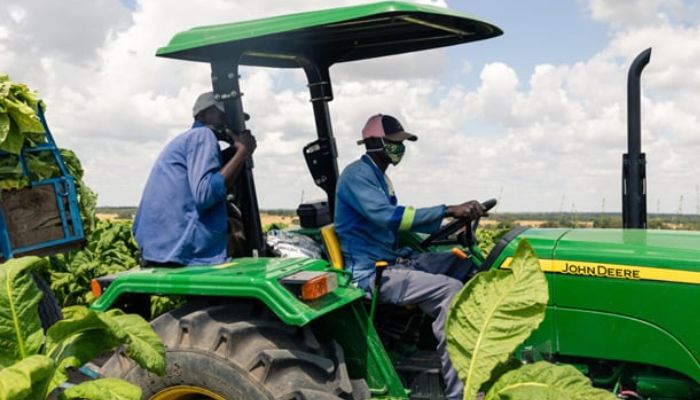
The World Health Organization said Friday it was helping a
growing number of farmers turn away from tobacco to help strengthen food
security, particularly in Africa.
Ahead of World No Tobacco Day on Wednesday, the WHO said it
had teamed up with other United Nations agencies to support farmers wishing to
convert from growing tobacco to growing food.
The scheme's pilot in Kenya has proved successful and now
the UN wants to export it to other countries and continents.
"A record of 349 million people face acute food
insecurity and that is up from 135 million in 2019," Ruediger Krech, the
WHO's director for health promotion, told reporters in Geneva.
"Then we have 124 countries which grow tobacco as a
cash crop, covering an estimated 3.2 million hectares of land. Approximately 2,00,000
hectares of land are cleared every year for tobacco crop growing."
Beyond its effects on the health of smokers and farmers,
tobacco growing poses a problem for food security, according to the WHO.
The UN health agency is concerned that tobacco companies are
gaining an increasing foothold in Africa, with a rise of nearly 20 per cent in
tobacco plantations across the continent since 2005.
"It is often said that tobacco farming would be so
important for economic growth. This is a myth that we urgently need to
dispel," said Krech.
He said it only accounts for more than one percent of gross
domestic product in five countries: Malawi, Mozambique, Zimbabwe, Tanzania and
North Macedonia.
"So, the profits go to the global tobacco
companies."
Dependency 'trap'
The WHO accuses the tobacco industry of trapping farmers in
a "cycle of dependency", giving them little control over product
prices and quality.
"They're trapped. They need to repay the debt before
they can discontinue the work for big tobacco," said Krech.
Three UN agencies – the WHO, the Food and Agriculture
Organization and the World Food Programme – have set up a credit programme to
help farmers pay off their tobacco industry debts and change their crop.
The scheme was launched in Migori county in southwest Kenya,
where 2,040 farmers have been helped in the first year.
"We were really positively surprised to see so much
interest," said Krech. "But they saw that this is a viable
alternative," making triple the profits.
"They have already shifted to growing high iron beans.
This moving away from growing also meant that children can go to school instead
of growing tobacco.
"Mind you, 1.3 million children are working in tobacco
fields."
Krech said the concept had been proven in the first year and
it hopes to have around 5,000 farmers on board – 4,000 in Kenya and 1,000 in
Zambia – by the end of the next season.
"From there, we will move to other countries in Asia
and South America, because that's where the big tobacco growth still takes
place," he said.
WHO chief Tedros Adhanom Ghebreyesus said in a statement:
"Tobacco is responsible for eight million deaths a year, yet governments
across the world spend millions supporting tobacco farms.
"By choosing to grow food instead of tobacco, we
prioritise health, preserve ecosystems, and strengthen food security for
all."

