Sudan fighting intensifies despite US sanctions
AFP
02 Jun 2023 19:47 PM । Update: 02 Jun 2023 19:49 PM
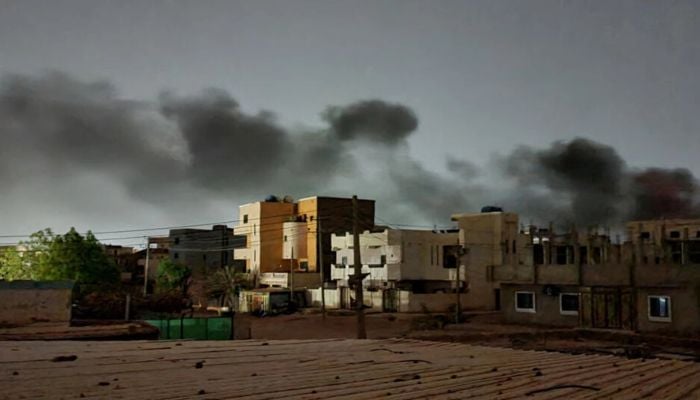
Smoke billows over Khartoum after heavy fighting between Sudan's rival security forces earlier this week. AFP Photo
Witnesses reported artillery fire around the state
television building in the capital's sister city of Omdurman, just across the
Nile.
For nearly seven weeks, deadly fighting between the regular
army and the paramilitary Rapid Support Forces has gripped Khartoum and the
flashpoint western region of Darfur despite repeated efforts to broker a
humanitarian ceasefire.
The army announced it had brought reinforcements to the
capital from other parts of Sudan to participate in "operations in the
Khartoum area".
Sudan analyst Kholood Khair said the army was "expected
to launch a massive offensive" to clear the paramilitaries from the
streets of Khartoum.
Washington slapped sanctions on the warring parties
Thursday, holding them both responsible for provoking "appalling"
bloodshed.
The US Treasury placed two major arms companies of the
Sudanese Armed Forces, Defence Industries System and Sudan Master Technology,
on its blacklist.
In parallel, it placed sanctions on gold miner Al Junaid
Multi Activities Co and arms trader Tradive General Trading, two companies
controlled by RSF commander Mohamed Hamdan Daglo and his family.
The State Department meanwhile imposed visa restrictions on
both army and RSF officials, saying they were complicit in "undermining
Sudan's democratic transition." It did not provide their names.
Army eyes 'military gains'
Analysts question the efficacy of sanctions on Sudan's
warring sides, both of which amassed considerable wealth during the rule of
longtime dictator Omar al-Bashir, whose government was subjected to decades of
international sanctions before his overthrow in 2019.
So far neither side has managed to gain a decisive
advantage. The regular army has air power and heavy weaponry, but analysts say
the paramilitaries are more mobile and better suited for urban warfare.
Just hours after the army announced it was quitting US- and
Saudi-brokered ceasefire talks on Wednesday, troops attacked key bases of the
RSF in Khartoum.
One air and artillery bombardment by the army struck a
Khartoum market, killing 18 civilians and wounding 106, a committee of human
rights lawyers said.
The army will want to make "some military gains before
committing to any future talks, in order to improve their bargaining
position", said Khair, the founder of Khartoum-based think tank Confluence
Advisory.
Since fighting erupted on April 15, more than 1,800 people
have been killed, according to the Armed Conflict Location and Event Data
Project.
The UN says 1.2 million people have been displaced within
Sudan and more than 4,25,000 have fled abroad.
UN mission up for renewal
Later Friday, the UN Security Council was set to review its
mission in Sudan, whose mandate expires on Saturday.
The majority of mission staff have been evacuated and Burhan
has demanded the replacement of its current chief, Volker Perthes, accusing him
of stoking the brutal conflict with the RSF.
When the fighting erupted, the UN envoy had been focused on
finalising a deal to restore Sudan's promised transition to civilian rule which
was derailed by a 2021 coup by the two generals.
Growing differences between them had threatened to torpedo
the deal, which they were supposed to iron out in UN-backed talks on the day
they turned Khartoum into a war zone.
Some 25 million people – more than half Sudan's population –
are now in need of aid and protection, the UN says.
Aid corridors that had been promised as part of the abortive
humanitarian truce never materialised and relief agencies say they have managed
to deliver only a fraction of the needs.
Medics and relief agencies say 18 aid workers have been killed as widespread looting has gripped the main battlegrounds.

