Rescuers embark on all-night race to save Titanic sub crew
AFP
22 Jun 2023 11:07 AM
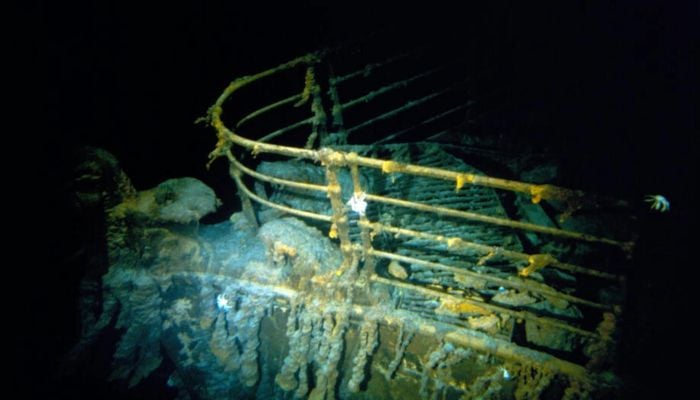
Titan began its descent at 8:00 am on Sunday and had been due to resurface seven hours later. AFP Photo
A massive search and rescue effort for a missing submersible
near the wreck of the Titanic entered a critical stage late Wednesday, with
just one night left before the oxygen supply for the five people on board runs
out.
While coast guard officials insisted they remained
"hopeful," with a surge of assets and experts joining the operation
and sonar picking up unidentified underwater noises, the challenge of locating
and recovering the crew alive appeared increasingly formidable.
"Sometimes you're in a position where you have to make
a tough decision. We're not there yet," said US Coast Guard Captain Jamie
Frederick, adding that it remained a search-and-rescue mission "100 per cent."
Organizers of the multinational response – which includes US
and Canadian military planes, coast guard ships, and teleguided robots – are
focusing their efforts in the North Atlantic close to multiple "underwater
noises" detected by sonar late Tuesday and Wednesday.
The sounds raised hopes that the passengers on the small
tourist craft are still alive though experts have not been able to confirm
their source.
"We don't know what they are, to be frank with
you," said Frederick, who added: "We have to remain optimistic and
hopeful."
Titan began its descent at 8:00 am on Sunday and had been
due to resurface seven hours later, according to the US Coast Guard.
Rescuers, who have received help from around the world,
estimate that passengers may run out of oxygen on Thursday morning, based on
the sub's capacity to hold up to 96 hours of emergency air.
The 21-foot (6.5-meter) tourist craft lost communication
with its mothership less than two hours into its trip to see the remains of the
Titanic, which sits more than two miles (nearly four kilometers) below the
surface of the North Atlantic.
The submersible, named Titan, was carrying British
billionaire Hamish Harding and Pakistani tycoon Shahzada Dawood and his son
Suleman, who also have British citizenship.
OceanGate Expeditions charges $2,50,000 for a seat on the
sub.
'Mr Titanic'
Also on board is the company's CEO, Stockton Rush, and a
French submarine operator Paul-Henri Nargeolet, nicknamed "Mr
Titanic" for his frequent dives at the site.
Ships and planes have scoured 10,000 square miles (around
20,000 square kilometers) of surface water – roughly the size of Massachusetts –
for the vessel, which was attempting to dive about 400 miles off the coast of Newfoundland,
Canada.
After the noises were detected by a Canadian P-3 aircraft,
rescuers relocated two remotely operated vehicles (ROV) that search under the
water and one surface vessel with sonar capability.
The ROV searches have not yielded results but data from the
Canadian aircraft has been shared with US Navy experts for acoustics analysis.
"There have been multiple reports of noises and every
one of those noises is being analyzed," said Carl Hartsfield, from the
Woods Hole Oceanographic Institution.
He added that the sounds "have been described as
banging noises." Frederick said the number of surface vessels in the
search would double from five to 10 within 24 to 48 hours.
The Navy has sent a specialised winch system for lifting
heavy objects from extreme depths, other equipment and personnel; and the
Pentagon has deployed three C-130 aircraft and three C-17s.
A deep-sea underwater robot sent by France's oceanographic
institute was due to arrive early Wednesday afternoon.
Fears of a leak
Titan's mission was expected to be the only manned trip to
the Titanic this year due to bad weather, Harding wrote in on Instagram
beforehand.
The Titanic hit an iceberg and sank in 1912 during its
maiden voyage from England to New York with 2,224 passengers and crew on board.
More than 1,500 people died. It was found in 1985 and remains a lure for
nautical experts and underwater tourists.
The pressure at that depth as measured in atmospheres is 400
times what it is at sea level.
Mike Reiss, an American television writer who visited the
Titanic wreck on the same sub last year, told the BBC the experience was
disorientating.
Alistair Greig, professor of marine engineering at
University College London, has suggested two possible scenarios based on images
of the Titan.
He said if it had an electrical or communications problem,
it could have surfaced and remained floating, "waiting to be found" –
bearing in mind the vessel can reportedly be unlocked from the outside only.
"Another scenario is the pressure hull was compromised –
a leak," he said in a statement.
"Then the prognosis is not good."
In 2018, OceanGate Expeditions' former director of marine
operations David Lochridge alleged in a lawsuit that he had been fired after
raising concerns about the company's "experimental and untested
design" of the craft.
/KN/

