Huge crowds circle Kaaba as hajj begins in Saudi heat
AFP
25 Jun 2023 09:05 AM
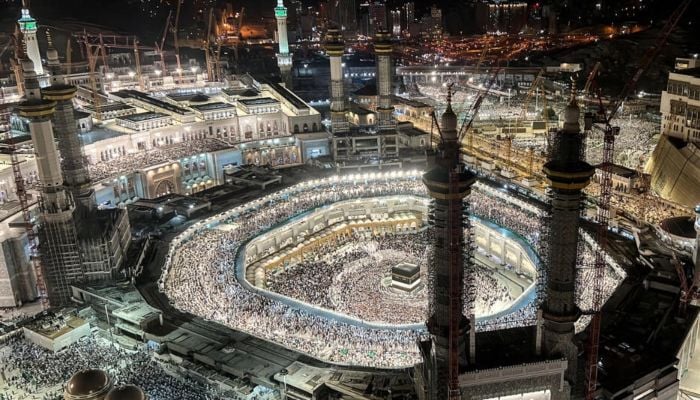
Huge crowds of pilgrims throng the Grand Mosque in Mecca, Islam's holiest site, as the biggest hajj in years gets under way in the searing Saudi Arabian heat. AFP Photo
Vast crowds of robed pilgrims made solemn circles around the
Kaaba, the black cube at Mecca's Grand Mosque, on Sunday as the biggest hajj
pilgrimage in years began in the heat of the Saudi summer.
Islam's holiest site is expected to host more than two
million worshippers from 160 countries during the annual rites that could break
attendance records, with 1.6 million foreigners already arriving by Friday
evening.
The hajj began early on Sunday with the "tawaf" –
the circumambulation of the Kaaba, the large cubic structure draped in black
cloth with gold trimmings that millions of Muslims pray towards every day.
"I am living the most beautiful days of my life,"
said Abdel-Azim, a 65-year-old Egyptian as he performed the ritual.
"The dream has come true," said the retiree, who
saved up for 20 years to pay the $6,000 fee to take part.
The hajj is one of the five pillars of Islam and must be
undertaken by all Muslims with the means at least once.
A series of rites are completed over four days in Mecca and
its surroundings in the west of oil-rich Saudi Arabia.
On Sunday night, pilgrims will start moving to Mina, about
five kilometres (three miles) from the Grand Mosque, ahead of the hajj's climax
at Mount Arafat, where the Prophet Mohammed is believed to have delivered his
final sermon.
'Great blessing'
Outside the Grand Mosque, thousands prayed on colourful
carpets that adorned the pavement, with male pilgrims wearing a simple white
robe. The area was dotted with ambulances, mobile clinics and fire trucks.
The hajj poses a considerable security challenge and has
seen several disasters over the years, including a 2015 stampede that killed up
to 2,300 people.
There have been no major incidents since, and catastrophe
was the last thing on pilgrims' minds.
"I cannot describe my feelings," said 25-year-old
Indonesian student Yusuf Burhan.
"This is a great blessing. I never imagined that I
would perform the hajj this year."
This year's summer timing for the hajj, which follows the
lunar calendar, will test the endurance of worshippers during the mostly
outdoor ritual.
Carrying white umbrellas to protect themselves from the
scorching sun, policemen in the mountainous city have conducted foot patrols
and set up checkpoints to inspect hajj permits.
Others splashed water on pilgrims as temperatures climbed
towards 45 degrees Celsius (113 degrees Fahrenheit).
Inside the Grand Mosque, thousands of paramedics stood on
standby. Saudi authorities said more than 32,000 health workers will be on hand
to help fend off heatstroke, dehydration and exhaustion.
'Not a single vacant bed'
The hajj, with its hefty fees, makes billions of dollars a
year for the world's biggest oil exporter, which is trying to diversify its
economy beyond fossil fuels.
This year's will be the biggest since 2019, when about 2.5
million people took part. Only 10,000 were allowed in 2020, at the height of
the coronavirus pandemic, rising to nearly 59,000 in 2021. Last year's cap of
one million has been removed.
Saudi businessman Samir Al-Zafni said all his hotels in
Mecca and Madinah are at full capacity until the first week of July.
"This year there is not a single vacant bed in our
group of 67 hotels," he told AFP from his office.
The hajj also demonstrates social reforms in the deeply
conservative country. This year’s pilgrimage will be the biggest since Saudi
Arabia scrapped rules in 2021 that banned women who weren't accompanied by a
male relative.
Leaving the Grand Mosque after evening prayers on Friday,
Ramot Ali from Niger struggled to describe the feeling of performing hajj for
the first time.
"I am very happy," she said.
/KN/

