2,000 hajj pilgrims hit by heat stress
AFP
30 Jun 2023 08:33 AM । Update: 30 Jun 2023 09:46 AM
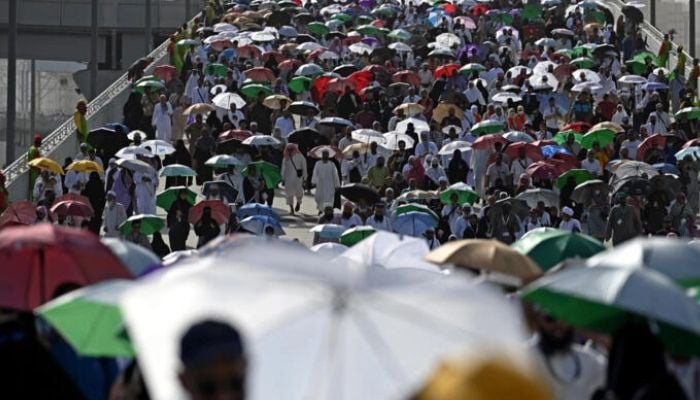
Many pilgrims used umbrellas to shield themselves from the heat. AFP Photo
More than 2,000 people have suffered heat stress during the
hajj pilgrimage, Saudi officials said Thursday, after temperatures soared to 48
degrees Celsius (118 degrees Fahrenheit) during the annual rites.
Over 1.8 million Muslim worshippers performed the days-long
hajj, mostly held outdoors at the height of the Saudi desert summer. Many
elderly were among the pilgrims after a Covid-era maximum age limit was
scrapped.
Saudi officials said about 1,700 heat stress cases were
recorded on Thursday alone – as huge numbers of pilgrims remain at the holy
sites, a day after the main rituals finished – added to the 287 reported
earlier.
"The number of heat stress cases since the beginning of
this day has reached 1,721," the Saudi health ministry said, urging people
to stay out of the sun and drink plenty of water.
Officials did not provide a death toll but at least 230
people – many from Indonesia – died during the pilgrimage, according to numbers
announced by various countries which did not list causes of death.
According to the consul general of Indonesia, the world's
largest Muslim country, at least 209 Indonesians died during the hajj.
"It is inaccurate to say that a lot of Indonesian
pilgrims died because of heat strokes," said Eko Hartono, adding that
causes of death were mostly due to heart and respiratory ailments.
But he did acknowledge that some pilgrims had
"fainted" during the days-long pilgrimage "because of the
heat".
Iran's oldest pilgrim this year, aged 114, died of a heart
attack, the semi-official Fars news agency said, reporting 10 Iranian deaths.
Eight Algerians and four Moroccans died, officials said,
while an Egyptian pro-government media outlet said eight pilgrims from the
country had passed away.
Extreme temperatures
Hundreds of people were treated for heart problems,
including one 78-year-old Filipino man who had successful open-heart surgery in
Mecca, the health ministry said.
The real figure for heat stress – which includes heatstroke,
exhaustion, cramps and rashes – is probably far higher, as many sufferers were
not admitted to hospitals or clinics.
People struggling in the heat was a common sight, especially
after the day-long outdoor prayers at Mount Arafat where overheating phones
shut down and shade was hard to find.
The hajj has a history of deadly catastrophes including
stampedes and militant attacks, but this year's main challenge came from the
extreme temperatures.
The kingdom dispatched thousands of paramedics and set up
field hospitals to help contain the risks. It was the biggest hajj since 2.5
million visitors came in pre-Covid 2019.
The Gulf climate is so harsh that in 2021, the United
Nations' Intergovernmental Panel on Climate Change warned parts of it could
become uninhabitable by the end of the century due to global warming.
Maximum summer temperatures of 50 degrees Celsius (122
degrees Fahrenheit) could become an annual occurrence by the end of the
century, experts say.
/KN/

