Nuclear-contaminated water
China to screen all Japanese food imports
Online Desk
07 Jul 2023 11:51 AM । Update: 07 Jul 2023 12:03 PM
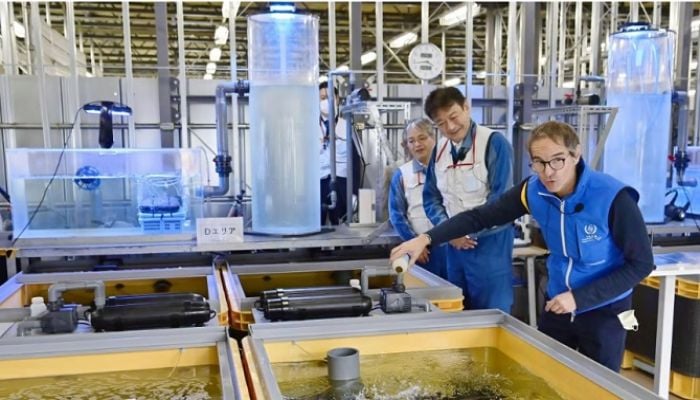
International Atomic Energy Agency director general Rafael Grossi feeds flounder raised in treated water containing radioactive materials at the Fukushima Daiichi nuclear power plant in Futaba, Fukushima Prefecture, northeastern Japan. Photo: Kyodo
Faced with mounting concerns over the safety of edible imports from Japan, China has vowed to take “all necessary measures” to abate the worries of its consumers.
This includes extending a ban on imports from 10 Japanese prefectures, including Fukushima, while also deciding to fully screen all shipments from other regions, instead of just spot checking, amid concerns of residual nuclear contamination, reports South China Morning Post.
The General Administration of Customs said the plan to discharge the water from the 2011 nuclear disaster “failed to fully reflect expert opinions” and that it will take “all necessary measures” to ensure the safety of Chinese consumers.
China first placed a ban on food imports from the 10 Japanese prefectures 12 years ago following the nuclear meltdowns and releases of radioactive materials at the Fukushima nuclear power plant in northeastern Japan in March 2011.
Food from other parts of Japan, especially edible aquatic products, will also receive “strictly 100 per cent” screening of their certification documents and be inspected.
“Chinese customs will continue to strengthen the detection and monitoring of radioactive substances, ensure the safety of Japanese food exported to China, and strictly prevent the import of risky products,” the customs agency said on Friday.
It will also “maintain a high level of vigilance and take absolute responsibility to domestic consumers as the principle”.
On Tuesday, the International Atomic Energy Agency approved Japan’s plan to release the water, saying it met international standards.
But the China Atomic Energy Authority responded to the report by saying over 70 per cent of nuclear-contaminated water failed to meet discharge limits after going through a filtration system and that it requires further treatment.
“The discharge of nuclear-contaminated water from Japan into the sea has become the focus of global attention,” Chinese customs added.
“It has also caused Chinese consumers to worry about the safety of food imported from Japan.”
/MHK/

