Iran enforcing 'intensified' hijab crackdown: Amnesty
AFP
26 Jul 2023 12:58 PM
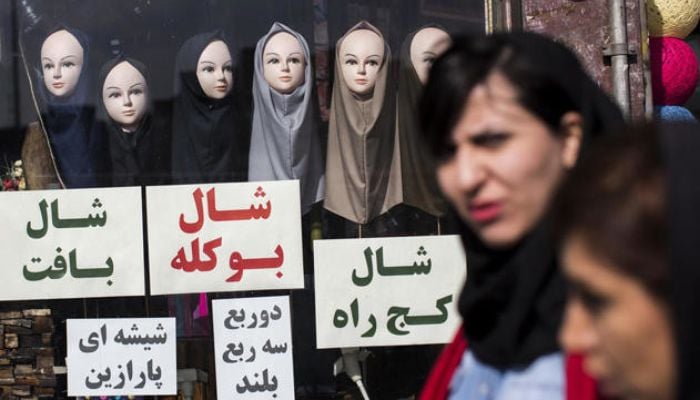
Iranian women have been forced to wear headscarves since the Islamic revolution of 1979. AFP Photo
Iranian authorities have in the last months launched an
intensified crackdown against women deemed to have violated the Islamic
republic's strict dress rules, Amnesty International said on Wednesday.
Iran was convulsed for months by unprecedented protests
sparked by the September 2022 custody death of Mahsa Amini, 22, who had been
arrested by the morality police for purportedly breaking the rules.
Some politicians inside Iran had argued in the wake of the
protests that the rules should be loosened and there were even indications –
never confirmed – that the morality police could be abolished.
But with the intensity of protests diminishing over the last
months, Amnesty said Iranian authorities had launched a new crackdown on
women's dress since April.
"The Iranian authorities are doubling down their
oppressive methods of policing and punishing women and girls to quell
widespread defiance of degrading and discriminatory compulsory veiling
laws," Amnesty said.
It has been obligatory for women to cover their heads and
necks since shortly after the Islamic revolution of 1979 that ousted the
secular shah.
Police patrols
Viral images posted online during the protest movement
showed women removing their headscarves as well as carrying out daily tasks
such as shopping bareheaded.
Some images showing women without headscarves at cafe tables
in relatively secular northern Tehran had suggested a more permissive attitude
in some areas.
But Amnesty said there is in fact "an intensified
nationwide crackdown", and noted that police this month announced the
return of car and foot patrols enforcing compulsory veiling across the country.
According to Amnesty, more than a million women have
received SMS warnings threatening that their vehicles will be confiscated if
they are found travelling in a car while unveiled.
"Morality policing in Iran is back," said Agnes
Callamard, Amnesty International secretary general.
She added the stepped-up enforcement was "intensified
by mass surveillance technologies capable of identifying unveiled women in
their cars and pedestrian spaces".
Hundreds of businesses such as hotels, restaurants,
pharmacies and shopping centres have been forcibly closed for refusing to
enforce compulsory veiling laws while women have been denied access to
education, banking services and public transport, Amnesty said.
Earlier this month a "disturbing video" went viral
on social media showing a female police officer "harassing and
assaulting" an unveiled woman in Tehran, pushing her against a wall and
attempting to violently arrest her and take her into a van, the watchdog said.
"The international community must not stand idly by as
the Iranian authorities intensify their oppression of women and girls,"
Callamard added.
Iran's conservatives, who dominate the parliament and
leadership, have passionately defended the dress code. But with many Iranians
demanding change, in May the judiciary and the government proposed a bill which
sparked heated debate.
It would increase fines for "any person removing their
veil in public places or on the internet" but withdraws the threat of a
prison sentence.
/KN/

