Aung San Suu Kyi moved out of jail to house arrest
Online Desk
27 Jul 2023 18:07 PM
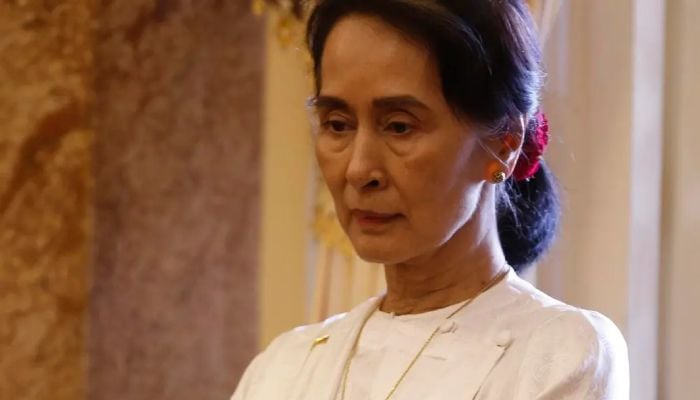
Aung San Suu Kyi . AFP File Photo
Myanmar's ousted civilian leader Aung San Suu Kyi has been
moved to house arrest, reports BBC.
Suu Kyi was taken to a government building in Nay Pyi Taw on
Monday, prison sources told BBC Burmese. She'd spent a year in solitary
confinement.
The 78-year-old is serving a 33-year sentence, after being
jailed in closed-door, military-run trials. The military detained her following
a coup in February 2021. Almost no news has emerged about her condition in more
than two years.
There has been no confirmation from the military of her
transfer from jail, but the move to house arrest could be a positive sign from
the authorities, who have faced numerous calls to release the country's
democratically-elected leader.
Suu Kyi was rumoured to have been ill, but the military has
denied the reports. Earlier this week a source from the Nay Pyi Taw prison
where she was being held told BBC Burmese that she was in good health.
Thailand's foreign minister also revealed this month that he
had visited Suu Kyi – however, he disclosed no further detail.
The military has arranged a meeting between Suu Kyi and T
Khun Myat, the Speaker of the lower house of parliament, BBC Burmese reported.
However, the military has not confirmed these talks are taking place either.
Since the coup, Myanmar has spiralled into a civil war,
which has killed thousands of people. Sanctions imposed on the military have
failed to stop the violence.
The 78-year-old Nobel laureate was under house arrest until
June this year, when she was moved to solitary confinement in a prison in the
country's capital. She denies all of the accusations and rights groups have
condemned the court trials as a sham.
The daughter of independence hero General Aung San, she
emerged as a leader of the pro-democracy movement against the military
dictatorship. She co-founded the National League for Democracy (NLD), but was
put under house arrest in 1989.
Awarded the Nobel peace prize, Suu Kyi was one of the
world's leading democracy icons. Her release from detention in 2010 was
celebrated in Myanmar and around the world.
But she was later criticised for defending her country
against allegations of genocide at the UN International Court of Justice (ICJ)
after widespread claims that Myanmar had committed atrocities against Muslim
Rohingya while her government was in power.
Nearly a million of them have fled Myanmar in recent years,
and now live as refugees in neighbouring Bangladesh.
/KN/

