Brazil police raids leave at least 45 people dead
Online Desk
03 Aug 2023 08:22 AM
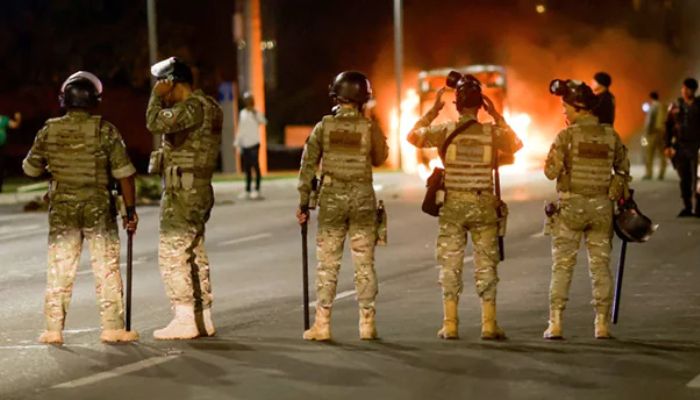
Representational Image
Police raids targeting drug gangs in three Brazilian states
have left at least 45 people dead, BBC reports.
In the latest operation in Rio de Janeiro, police said they
returned fire in a shoot-out in the Complexo da Penha area, killing at least
10.
Earlier, 16 people died in clashes during a five-day police
raid in São Paulo state, dubbed Operation Shield. And in the north-eastern
state of Bahia, officials say 19 suspects have been killed since Friday.
Fifty-eight people were arrested during the operation in São
Paulo state, which began after a special forces police officer was killed on
Thursday in the coastal town of Guarujá.
Police seized 385kg of narcotics, as well as guns, according
to local media.
The operation in Guarujá was criticised by Brazil's Justice
Minister Flavio Dino, who said the police's reaction was not proportional to
the crime committed.
During an interview on Tuesday, São Paulo state governor
Tarcisio de Freitas said two police officers were among those killed during
clashes.
Amnesty International said the Guarujá police raid showed
"clear signs of seeking vengeance for the death of a police officer".
In Rio de Janeiro, a drug trafficking kingpin and a
trafficker were among the 10 people killed on Wednesday, according to local
media reports.
Four others were injured, including a police officer.
According to the city's military police, the operation in
Complexo da Penha, a group of favelas in the north of the city, was launched
after intelligence information suggested that a meeting of drug traffic
ringleaders would be taking place in the area.
Eyewitnesses told local media they heard several gunshots
and clashes between heavily armed gang members and the police.
Talíria Petrone, a member of the Rio state legislature,
condemned the operation. She said there was "no explanation for the state
to continue turning life in favelas into a hell like this".
Schools around Complexo da Penha did not open on Wednesday,
forcing about 3,220 pupils to stay at home.
House visits organised by the national health service were
also suspended because of security concerns.
Instituto Fogo Cruzado, an organisation that looks into
armed violence data in Brazil, described the raids as "mass
killings".
In a statement published after the police raid in Rio, the
institute said there had been 33 such incidents in the city since the start of
the year - with a total of 125 people dead.
Instituto Marielle Franco - an NGO named after campaigning
politician Marielle Franco who was murdered in 2018 - also publicly criticised
the latest events.
"The slaughter repeats itself," it said in a
statement.
Before her death, Franco was an outspoken councillor who had
been critical of the police's often deadly raids in densely populated shanty
towns, or favelas, and denounced paramilitary groups run by retired and
off-duty police known as milícias.
Police violence is not new here - every week there are
shootouts, leaving people dead.
Rio de Janeiro though is one of Brazil's most violent states
- operations to tackle drug crime in areas such as favelas often lead to
fatalities and accusations that the authorities are poorly-trained and trigger-happy.
While the focus is usually on Rio, the fact that this past
week has seen a series of operations across the country brings into sharp focus
the issue of police violence across Brazil.
In the north-eastern state of Bahia, clashes between police
and gang members between Friday and Monday revolved around three cities -
Salvador, Itatim and Camaçari.
The deaths included seven people killed in Camaçari on
Friday and another eight people killed during clashes in Itatim on Sunday.
In Salvador, clashes between police and armed suspects
killed four others and led to school closures in the area on Tuesday.
Guns, phones and drugs were seized during the three
operations.
It is a complicated picture in a country with a high level
of gun violence where fears about security are also growing. But there are
increasing calls to look into human rights abuses committed by the police.
There have been some initiatives to improve the situation.
Since 2020, São Paulo's military police have worn cameras on their uniforms -
and in the first two years of the programme, the number of people killed by
police fell by 61 per cent.
It is an initiative that President Luiz Inácio Lula da Silva
is reportedly keen to implement on a federal level.
/KN/

