West African leaders make plan for military intervention in Niger
Online Desk
05 Aug 2023 11:45 AM
Collected Photo
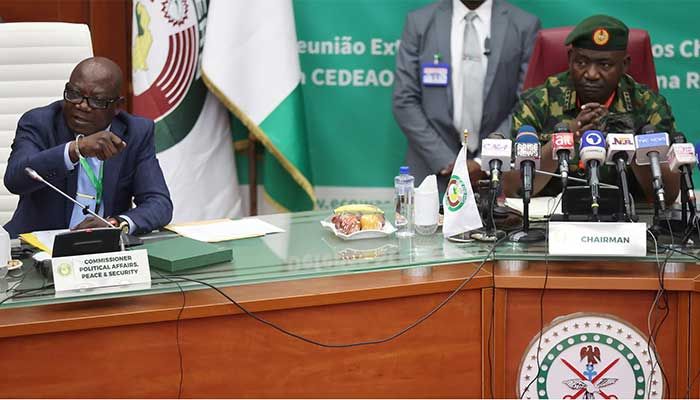
West African defence chiefs have made a plan for potential
military intervention to reverse last week’s coup in Niger, including how and
when to deploy forces, reports Al Jazeera.
The Economic Community of West African States (ECOWAS) will
not divulge to the coup plotters when and where it will strike, but Abdel-Fatau
Musah – ECOWAS commissioner for political affairs, peace and security – said on
Friday the decision will be taken by the bloc’s heads of state.
“All the elements that will go into any eventual
intervention have been worked out here, including the resources needed, the how
and when we are going to deploy the force,” Musah said at the close of a
three-day meeting in Nigeria’s capital, Abuja.
ECOWAS has already imposed sanctions on Niger and said it
could authorise the use of force if the coup leaders do not restore power to
elected President Mohamed Bazoum by Sunday.
The 15-member body sent a delegation to Niger on Thursday
seeking an “amicable resolution”, but a source in the entourage said a meeting
at the airport with the military’s representatives yielded no breakthrough.
“We want diplomacy to work, and we want this message clearly
transmitted to them that we are giving them every opportunity to reverse what
they have done,” Musah said.
Nigerian President Bola Tinubu told his government to
prepare for options, including the deployment of military personnel, in a
letter read out to the Senate on Friday. Senegal has also said it would send
troops.
Niger’s military rulers denounced outside interference and
said they would fight back.
The 59-year-old coup leader, Abdourahamane Tchiani, served
as battalion commander for ECOWAS forces during conflicts in Ivory Coast in
2003, so he knows what such missions involve.
Support for him from other military leaders in neighbouring
Mali and Burkina Faso, which are both ECOWAS members, could also undermine the
regional response. The two countries have said they would come to Niger’s
defence.
Borders opened
The coup leaders closed the borders of Niger on July 26 when
announcing they had removed Bazoum from power. The borders were opened five
days later.
Niger, which borders seven African countries – including
Libya, Chad and Nigeria – is seen by the United States and former colonial
ruler France as an important partner to address security threats in the region.
The country is the largest recipient of US military
assistance in West Africa, having received an estimated $500m since 2012.
The country also hosts more than 2,000 Western troops,
mostly from the US and France. Various Western nations have cancelled aid and
cooperation agreements with the military administration since the putsch.
Niger’s coup was the seventh military takeover in less than
three years in Western and Central Africa.
Given its uranium and oil riches and pivotal role in the war
with rebels in the Sahel region, Niger also has strategic significance for
China, Europe and Russia.
Bazoum, 63, who was elected in 2021, was detained at the
presidential residence in Niamey. He said in his first remarks since the coup
that he was a hostage in need of US and international help.
“If it [the coup] succeeds, it will have devastating
consequences for our country, our region and the entire world,” he wrote in a
Washington Post opinion piece.
Linda Thomas-Greenfield, the US envoy to the UN, said the
United States recognised Bazoum as the legitimate leader of Niger, and
Washington supported ECOWAS to find a path forward in resolving the situation.
“We are engaging diplomatically with countries in the region
and at the United Nations to condemn what this military has done, and we will
continue to keep pressure on them until they make the decision to allow this
democratically elected government resume its place,” she told Al Jazeera.
/KN/

