Hawaii fire death toll nears 100, and anger grows
AFP
14 Aug 2023 08:15 AM
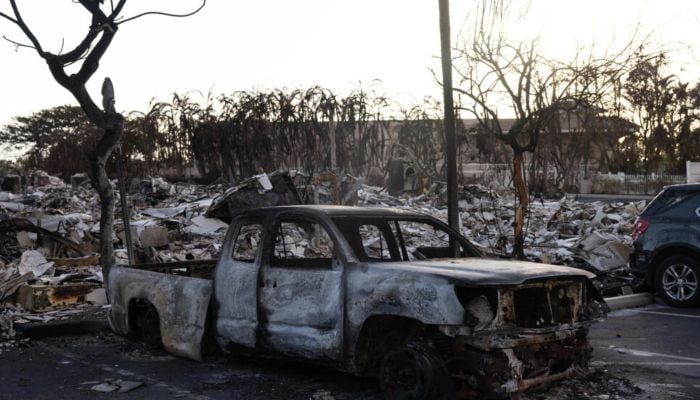
Lahaina, a historic coastal town on the Hawaiian island of Maui, was almost completely destroyed by the fast-moving overnight inferno, with survivors saying there had been no warnings. AFP Photo
The death toll in Hawaii from the deadliest US wildfire in
more than a century was expected to cross the 100-mark Sunday, fueling
criticism that government inaction contributed to the heavy loss of life.
Officials say 93 people are known to have died, but warned
the figure was likely to rise as recovery crews with cadaver dogs continued the
grim task of searching burned out homes and vehicles in Lahaina.
The historic coastal town on the island of Maui was almost
completely destroyed by the fast-moving inferno early Wednesday morning, with
survivors saying there had been no warnings.
When asked Sunday why none of the island's sirens had been
activated, Hawaii Senator Mazie Hirono said she would wait for the results of
an investigation announced by the state's attorney general.
"I'm not going to make any excuses for this
tragedy," Hirono, a Democrat, told CNN's "State of the Union."
"We are really focused, as far as I'm concerned, on the
need for rescue, and, sadly, the location of more bodies."
More than 2,200 buildings were damaged or destroyed as the
fire tore through Lahaina, according to official estimates, wreaking $5.5
billion in damage and leaving thousands homeless.
"The remains we're finding are from a fire that melted
metal," said Maui Police Chief John Pelletier. "When we pick up the
remains... they fall apart."
That was making identification difficult, he added,
appealing for those with missing relatives to give DNA samples that might speed
the process.
Pelletier said cadaver dogs still had a vast area to search
in the hunt for what could still be hundreds of people unaccounted for.
"We're going as fast as we can. But just so you know,
three percent -- that's what's been searched with the dogs," he said.
Questions over alert system
The wildfire is the deadliest in the United States since
1918, when 453 people died in Minnesota and Wisconsin, according to the
nonprofit research group the National Fire Protection Association.
The death toll surpassed 2018's Camp Fire in California,
which virtually wiped the small town of Paradise off the map and killed 86
people.
Questions are being asked over how prepared authorities were
for the catastrophe, despite the islands' exposure to natural hazards like
tsunamis, earthquakes and violent storms.
In its emergency management plan last year, the State of
Hawaii described the risk wildfires posed to people as being "low."
Yet the layers of warning that are intended to buffer a
citizenry if disaster strikes appear not to have operated.
Maui suffered numerous power outages during the crisis,
preventing many residents from receiving emergency alerts on their cell phones.
No emergency sirens sounded, and many Lahaina residents
spoke of learning about the blaze from neighbors running down the street or
seeing it for themselves.
"The mountain behind us caught on fire and nobody told
us jack," resident Vilma Reed, 63, told AFP.
"You know when we found that there was a fire? When it
was across the street from us."
Reed, whose house was destroyed by the blaze, said she was
dependent on handouts and the kindness of strangers, and was sleeping in a car
with her daughter, grandson and two cats.
For some survivors, the difficult days after the tragedy
were being worsened by what they see as official intransigence, with roadblocks
preventing them from getting back to their homes.
Maui police said the public would not be allowed into
Lahaina while safety assessments and searches were ongoing -- even some of
those who could prove they lived there.
Some residents waited for hours Saturday hoping to be given
access to comb through the ashes or look for missing pets or loved ones, but
police warned that people entering the disaster zone could be fined -- or even
jailed.
When asked about growing anger at the response, Hirono told
CNN she understood the frustration because "we are in a period of shock
and loss."
Europe and parts of Asia have also endured soaring temperatures, with major fires and floods wreaking havoc. Scientists say human-caused global warming is exacerbating natural hazards, making them both more likely and more deadly.

